
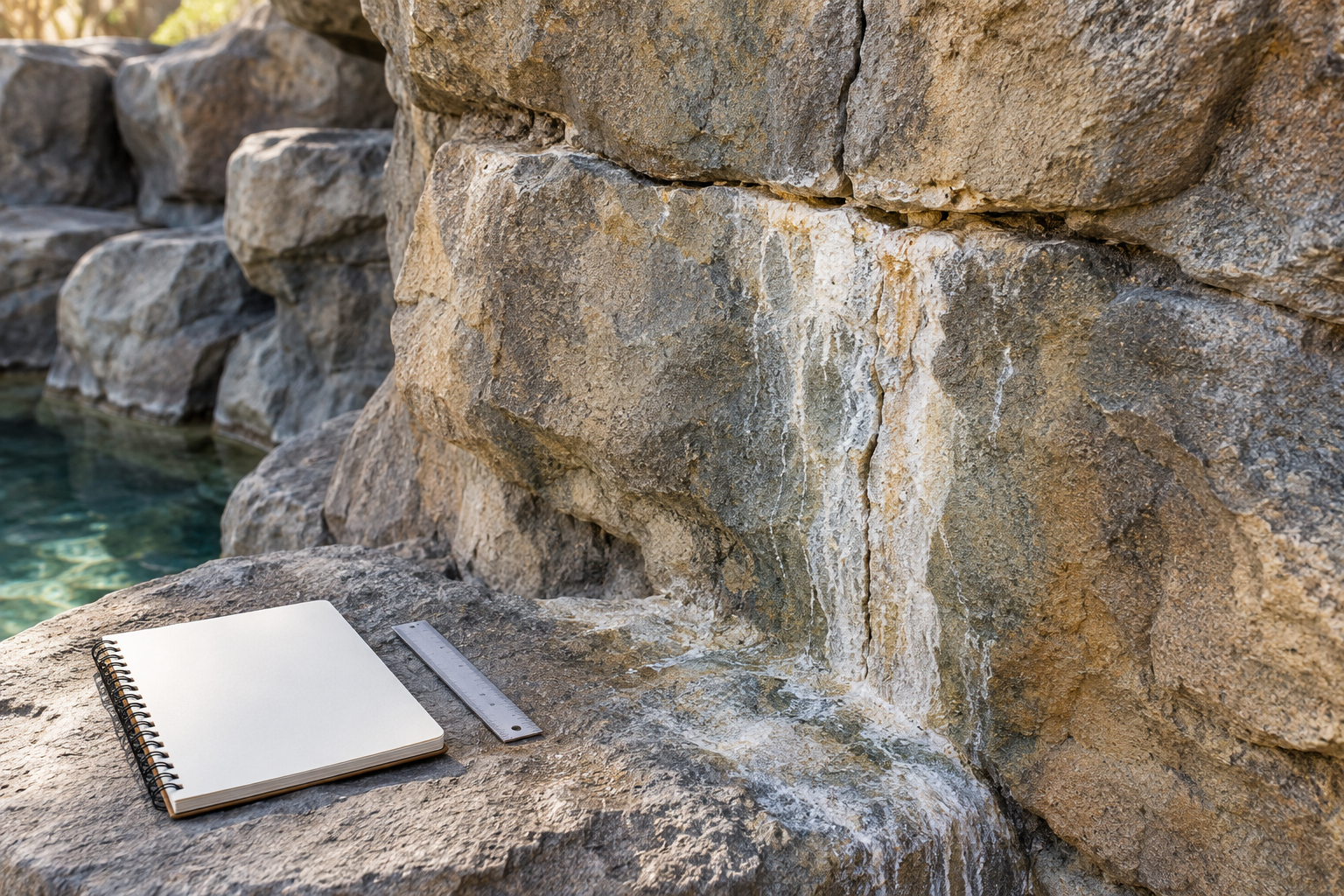
A useful grotto inspection record begins with change: a joint that looks wider, a damp patch that appears after rain, a new stain beneath a fitting, or a water pattern that no longer reaches its usual landing. The goal of a routine walkthrough is to notice and communicate those changes clearly.
This is an observation guide for owners and operators, not a structural assessment or permission to keep using a damaged space. Stay on normal accessible routes. If loose overhead material, exposed electrical components, sudden movement, or another immediate hazard is apparent, keep people away and arrange appropriate professional attention rather than continuing the walkthrough.
A: No. It is an observation record, not a structural or systems assessment.
A: No. Keep people away and arrange appropriate professional attention.
A: No. Its significance depends on the material, assembly, location, and change over time.
A: Document them first, then select any treatment through the appropriate maintenance process.
A: Pair a location overview with a clear detail and retain the originals.
A: Operating conditions help distinguish possible sources and patterns.
A: No. Follow the facility's water-quality procedures.
A: Leave electrical intervention to qualified personnel.
A: After the responsible assessment, action, and agreed follow-up support that conclusion.
A: Use consistent locations, photographs, dates, and action records.
Set up a record that can be repeated
Divide the grotto into recognizable zones: approach, entrance, left wall, rear seating area, overhead enclosure, waterfall face, and equipment access, for example. Use names that someone else can locate. “Crack near the back” becomes less helpful when several similar rock faces exist.
Establish a small set of fixed photograph positions. Include an overall view of each zone and closer views of any changes. Similar framing and lighting make later comparisons more meaningful. Keep original files with dates rather than relying on images passed repeatedly through messaging apps.
Record the operating condition. A dry feature with the pump off cannot be compared directly with a wet feature during operation without acknowledging that difference. Weather, recent rainfall, cleaning, and maintenance work also belong beside the observations.
At the approach, look for changes in use
Begin before entering the enclosure. Note new ponding, displaced paving, encroaching planting, or objects that narrow the route. These are easy to overlook when attention is fixed on the dramatic rockwork above.
Describe what is visible without assigning a cause. “Water remains beside the entrance after the surrounding paving dries” is a more useful first observation than “the drain has failed.” The first preserves evidence; the second may prematurely narrow the investigation.
At the rock face, distinguish marks from movement
Record cracks, open joints, flaking finishes, exposed backing, and changes around attachments. Include location, direction, extent, and whether the feature appears new compared with earlier photographs. Do not probe, pull, tap, or climb onto questionable material to test it yourself.
A visible line may be a designed joint, a superficial finish crack, or evidence of something requiring more detailed assessment. Appearance alone does not establish which. Existing drawings and maintenance records can help identify intended joints, while an appropriate specialist can evaluate uncertain or changing conditions.
Where it is safe to photograph from the normal route, include a scale reference without touching unstable material. Consistency is more valuable than false precision. A comparison showing a changed pattern can be useful even when an owner is not equipped to measure it accurately.
Along the water route, note patterns and timing
Look for unfamiliar wet areas, changes in the waterfall’s distribution, mineral streaks, and water appearing outside its intended receiving area. Note whether the change is present only during operation or also after rain. These distinctions help the responsible team decide what to investigate.
Do not clean away a newly observed deposit before documenting it. The location and shape may provide information about where water has traveled. Cleaning methods should be selected for the actual material and finish; aggressive pressure or chemicals can alter the surface and complicate later assessment.
Water appearance is not a substitute for the facility’s required water-quality testing and operating procedures. A routine visual record complements those systems rather than replacing them.
At fittings and access points, observe without dismantling
Note damaged covers, unusual corrosion, missing fasteners, loose-looking trim, or a changed mechanical sound. Keep electrical enclosures closed and leave equipment intervention to qualified personnel. The useful contribution is a precise location and description, not an improvised repair.
Access itself deserves attention. A service panel concealed by new planting or furniture may no longer be usable as intended. Record that obstruction before it turns a routine maintenance task into a disruptive operation.
Turn observations into a clear handoff
| Record field | Example wording |
|---|---|
| Location | Rear wall, beneath the left light recess |
| Visible change | Pale streak extending below the joint |
| Timing | First noticed after yesterday’s rain; waterfall was off |
| Comparison | Not visible in the previous monthly photograph |
| Action | Sent to the maintenance lead for assessment |
These are examples of record wording, not findings from a tested installation. A useful log keeps observation, interpretation, and action in separate fields. That makes it easier to update the assessment without rewriting the original evidence.
Close the loop after work is completed
When a repair or maintenance action occurs, add the date, responsible provider, work description, and any supplied instructions. Photograph the result from the same positions used before. Keep material and product details where future caretakers can find them.
Do not mark an issue resolved simply because it has been painted over or is no longer visible on one visit. Resolution should follow the responsible assessment and the agreed follow-up. Recurring dampness or a changing joint may require comparison over relevant operating or weather conditions.
The value of a walkthrough grows over time. A single photograph records an appearance; a consistent series records a history. That history helps the people responsible for the grotto make better-informed decisions about maintenance, investigation, and continued use.
Related Articles
Waterproofing a Grotto: Where Water Gets In and How Assemblies Manage It
Understand grotto waterproofing by tracing rain, splash, plumbing, groundwater, and condensation through the complete assembly.
Natural Stone, Sculpted Concrete, or GFRC: Comparing Grotto Rockwork
Compare natural stone, sculpted concrete, and GFRC grotto rockwork through appearance, support, joints, fabrication, and repair.

Sheet, Cascade, or Segmented Flow? Choosing a Grotto Waterfall
Choose sheet, cascade, or segmented grotto waterfalls by comparing water shape, splash, sound, viewing distance, and upkeep.