
Pools & Waterfalls Glossary

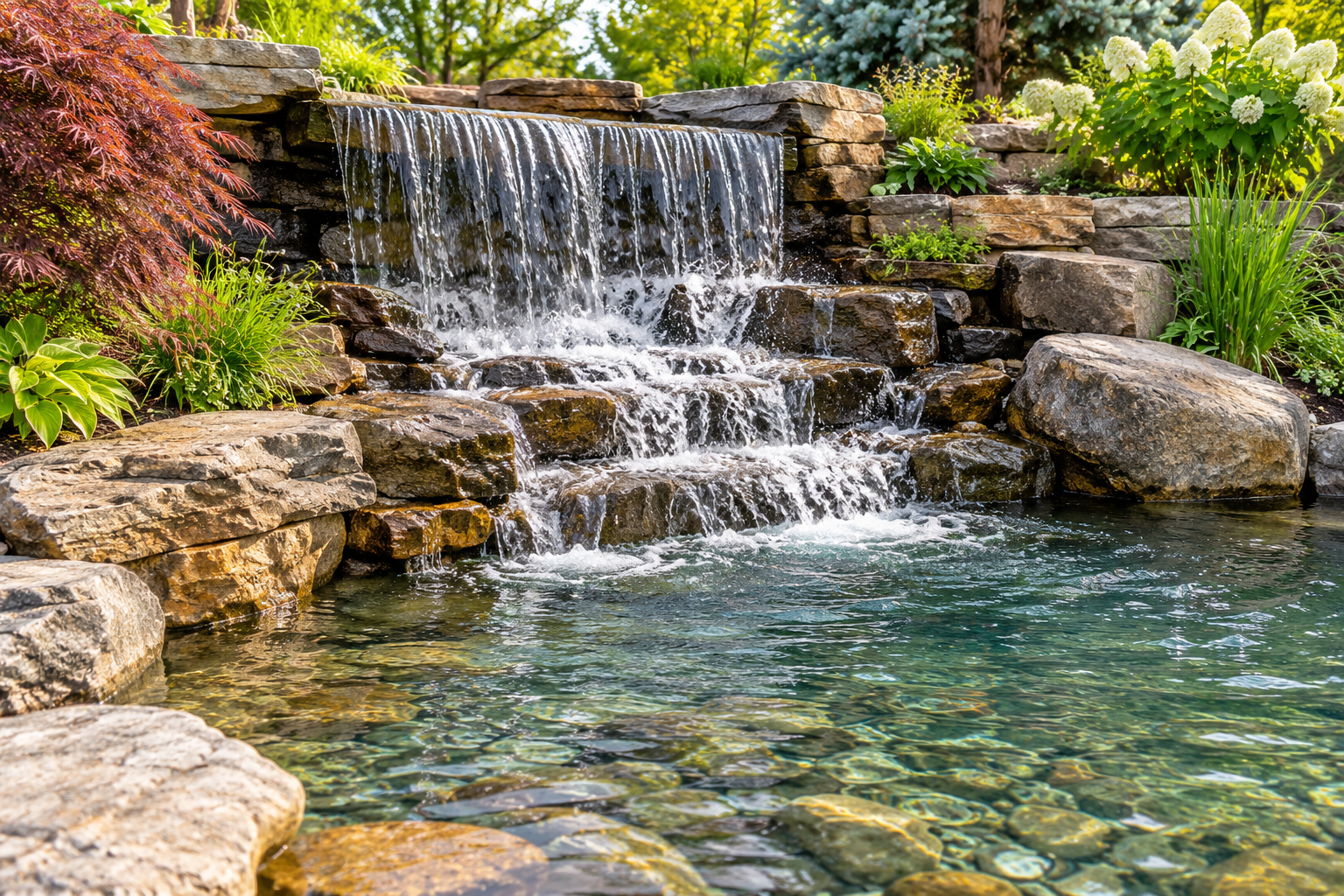
Concept illustration of a small designed cascade, broad spillway lip, stepped rock channel and receiving ornamental basin, natural layered stone, daytime

A waterfall is visible movement, but the language behind it describes a complete route for water. Flow leaves a source, crosses an edge, falls or follows a surface, enters a receiving area, and returns through a system shaped by equipment and controls. The Pools & Waterfalls Glossary gives readers names for those parts and relationships. Explore spillways, cascades, basins, circulation, filtration, valves, fittings, and the difference between a scenic water effect and a bathing environment. Terms such as flow rate and head describe different properties, while turnover describes a calculated circulation relationship rather than proof that every part of a pool has been equally treated. This reference supports reading plans and product information without turning a glossary into equipment-selection instructions. It also includes words that describe appearance: sheets, ribbons, splash, and ripples can help communicate a visual goal. Readers can connect that goal to the technical questions a qualified aquatic designer or installer needs to resolve. Understanding the vocabulary makes it easier to discuss a water feature as an operating system with a sensory character.

Spillway: An edge or channel over which water flows.
Cascade: Water descending through a sequence of drops.
Basin: A receiving or containing area for water.
Waterfall lip: The edge from which water leaves.
Channel: A defined route carrying water.
Pool shell: The constructed enclosure containing pool water.
Waterline: The boundary marking a water surface level.
Circulation: Movement of water through the system.
Filtration: Removal of selected particles through a filter process.
Treatment: Processes used to manage water quality.
Flow rate: Volume of water moving per unit time.
Head: Energy per unit weight expressed as a water-column height.
Static head: Head associated with elevation or pressure differences.
Friction loss: Energy loss as water moves through components.
Pump curve: A graph relating pump performance variables.
Valve: A device controlling or isolating flow.
Fitting: A component joining or changing pipe arrangements.
Return: A point delivering circulated water back to a pool.
Skimmer: A device collecting water and debris near the surface.
Turnover time: A calculated period based on volume and circulation flow.
Pump: Equipment adding energy to move water.
Filter: Equipment separating selected material from circulating water.
Strainer: A component intercepting larger debris.
Flow meter: An instrument measuring flow rate.
Pressure gauge: An instrument indicating pressure at a location.
Controller: Equipment managing specified operating functions.
Test kit: Tools for appropriate water-quality measurements.
System schematic: A diagram showing functional connections.
Equipment schedule: A record of selected models and duties.
Operating log: A record of system conditions and actions.
Visual flow versus duty: Appearance goals must translate into system requirements.
Operating point: The condition where pump and system behavior intersect.
Hydraulic balance: Coordinated distribution through the intended paths.
Filtration versus disinfection: Particle removal and microbial control are different tasks.
Bathing versus ornamental use: Exposure changes management requirements.
System resistance: Pipes, fittings, and equipment influence required energy.
Access for service: Concealed equipment still needs workable maintenance routes.
Water loss: Evaporation, splash, and leakage require different assessment.
Control coordination: Several effects may share connected equipment.
Commissioned performance: Installed operation needs verification against the design intent.
Sheet flow: A broad continuous-looking water curtain.
Ribbon flow: A narrower stream or band of falling water.
Splash: Droplets dispersed by impact or turbulence.
Ripple: A small wave on the water surface.
Turbulence: Irregular fluid motion and mixing.
Reflection: Light returned from the water surface.
Aeration: Introduction or mixing of air into water.
Plunge area: The receiving zone below a fall.
Stepped run: A sequence of short drops along a watercourse.
Quiet pool: A comparatively calm surface within the composition.
Q: Are flow rate and head the same?
A: No. They describe different hydraulic properties.
Q: Does a larger pump always improve a waterfall?
A: Equipment must match the complete system and intended effect.
Q: Is filtration the same as disinfection?
A: No. They address different water-management tasks.
Q: What does a spillway do?
A: It provides an edge or route for water to pass over.
Q: Can turnover time prove all water is equally treated?
A: No. It is a calculated circulation measure.
Q: Why keep a system schematic?
A: It clarifies connections, isolation points, and equipment relationships.
Q: Are ornamental basins automatically suitable for swimming?
A: No. Intended use and requirements differ.
Q: What makes a water sheet look consistent?
A: Edge geometry, flow, and operating conditions interact.
Q: Who selects equipment for a complex grotto pool?
A: Qualified aquatic and system professionals.
Q: What should a visual brief describe?
A: Width, movement, sound, splash, viewpoints, and intended activities.