
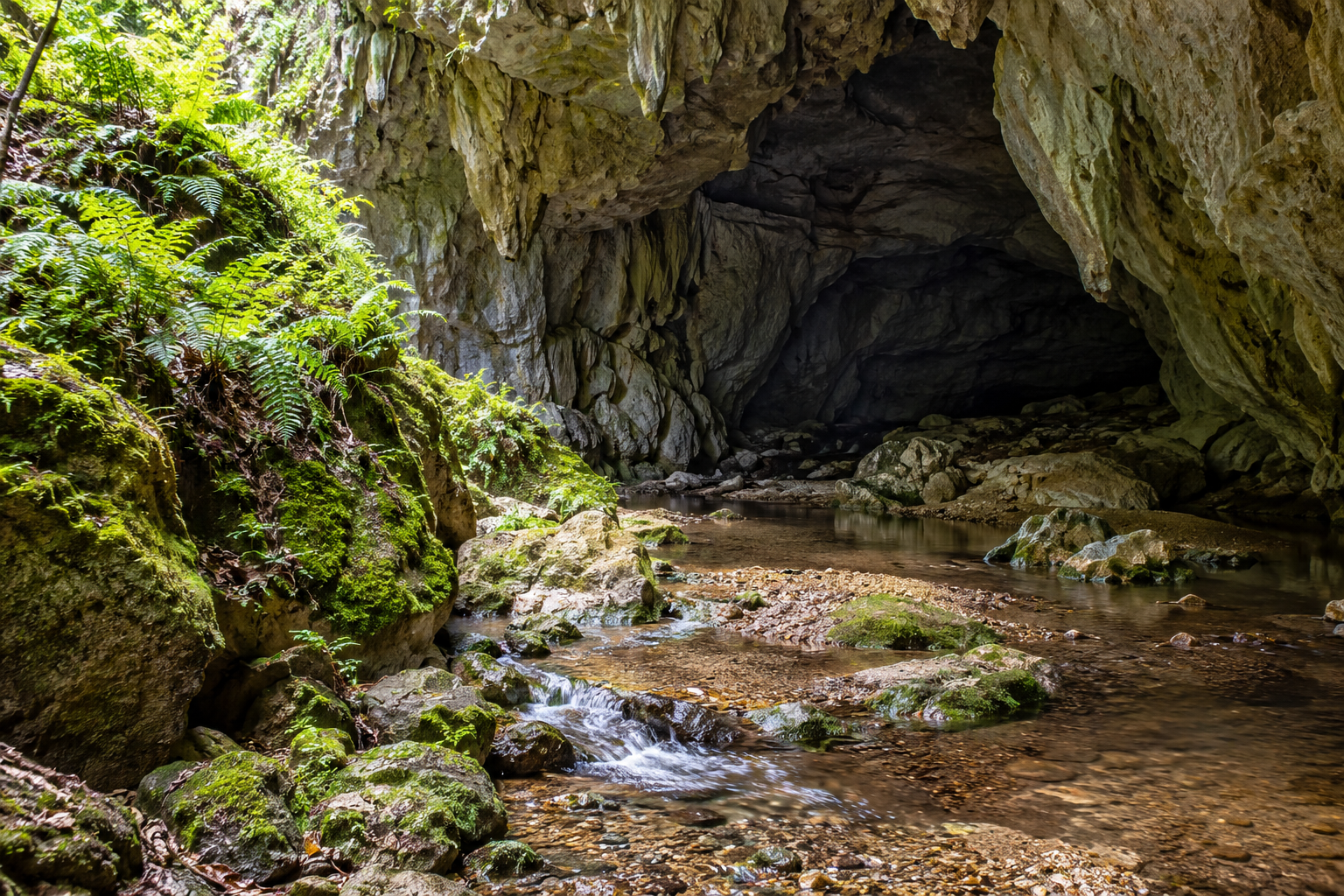
The boundary between sunlight and darkness is also an ecological transition. Leaves, flowing water, animals, and air connect a cave with the landscape outside, even where green plants cannot grow. Cave Ecology & Conservation explores those connections and the reasons underground environments deserve careful protection. Look beyond the spectacular chamber to the entrance vegetation, sediment, moisture, and small habitats that support living communities. Learn how cave-adapted organisms differ from occasional visitors, why food sources matter, and how disturbance can affect more than the feature immediately touched. Conservation also protects geological deposits, historical evidence, and the information preserved in an undisturbed setting. This collection welcomes readers interested in natural history and designers seeking to understand the environments that inspire them. A themed cavern can evoke an underground world, but a natural cave is a functioning habitat with relationships that scenery alone cannot reproduce. By following energy, water, and seasonal movement across the entrance, the cave becomes part of a larger living landscape rather than a room awaiting exploration, decoration, or a brighter light to reveal it.
A: No. Many support organisms and ecological relationships.
A: No. Adaptations vary, and many cave visitors retain ordinary vision.
A: Organic material can enter through water, animals, gravity, and other connections.
A: Closures may protect sensitive wildlife use or other site conditions.
A: Yes. Artificial illumination can change environmental conditions.
A: No. Geological deposits, sediments, and historical evidence also matter.
A: Scenic resemblance does not reproduce a natural ecological system.
A: No. Observation should follow site guidance without disturbing animals.
A: Water and other inputs connect the surface with underground habitats.
A: Use the responsible land manager's current site-specific guidance.