
Natural Stone & Rockwork

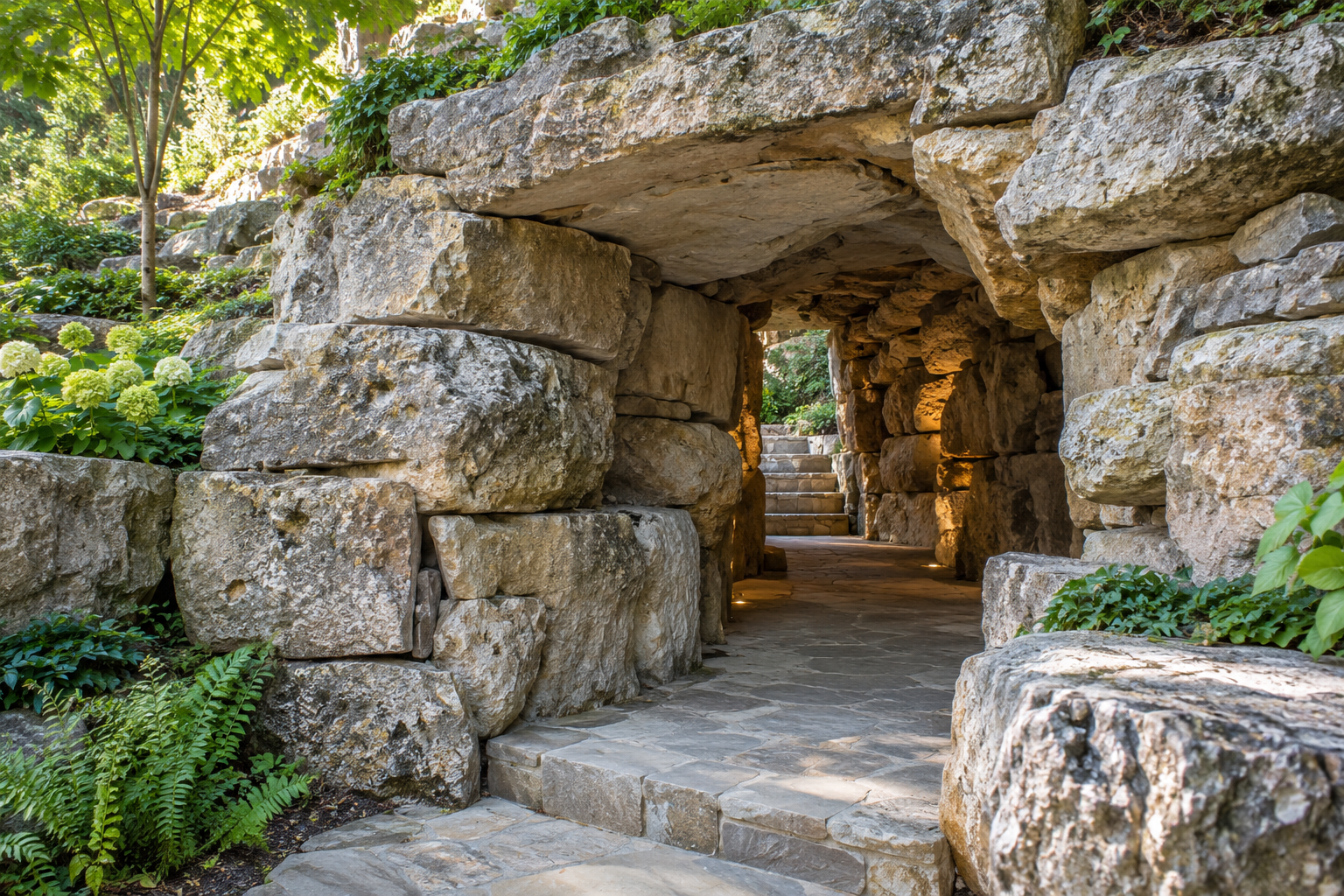
Illustration of natural stone blocks forming a garden grotto entrance

Natural stone brings an existing history into a constructed grotto. Bedding, mineral variation, weathered edges, and fracture surfaces give each piece a character that cannot be selected by color alone. The challenge is arranging those differences into a coherent assembly with an appropriate purpose and support. Natural Stone & Rockwork examines stone as both a visual material and a physical component. Explore selection, orientation, joint appearance, transitions, sourcing information, and the relationship between large masses and smaller infill. A rock that looks ideal in a photograph may differ substantially in weight, dimensions, or suitability from another piece with a similar face. This collection helps readers develop a precise vocabulary for discussions with suppliers, designers, and installers. It also distinguishes the geological identity of a stone from the name under which it may be sold. Look closely at a single surface, then step back to consider the complete wall, opening, or water edge. Successful rockwork allows individual variation to enrich the composition while keeping the assembly’s intended use, exposure, maintenance, and structural requirements clearly in view.

Stone identity: Confirm the actual material being supplied.
Bedding: Layer direction influences visual organization.
Piece geometry: Measure more than the visible face.
Weight: Appearance does not establish handling requirements.
Assembly: Individual stones need appropriate support.
Joints: Connections affect both appearance and performance.
Exposure: Wet and dry settings differ.
Finish: Surface treatment changes tactile character.
Sourcing: Preserve supplier and material records.
Use: Decorative rock is not automatically occupiable.
Variation: Adjacent pieces need not match exactly.
Orientation: Rotating stone changes its visible character.
Weathering: Aged surfaces differ from fresh cuts.
Color: Wet stone may appear darker.
Scale: Large masses organize smaller infill.
Edges: Fractures can guide natural-looking transitions.
Base: Ground contact influences perceived weight.
Openings: Stone arrangement should frame the intended space.
Trade names: Commercial labels may not identify geology precisely.
Samples: One small piece cannot represent every variation.
Supplier records: Request material identification and relevant data.
Stone samples: Compare wet and dry appearance.
Dimension schedules: Record the intended piece sizes.
Geological references: Understand bedding and mineral character.
Assembly drawings: Clarify support and connection arrangements.
Mockups: Review joints at realistic scale.
Photographic logs: Track selected pieces and orientation.
Finish guidance: Retain appropriate care information.
Site access plans: Coordinate delivery with installation needs.
Qualified installers: Discuss the complete proposed assembly.
Visual continuity: Related bedding can connect separate pieces.
Material variability: Natural differences require deliberate selection.
Support distinction: A convincing arrangement still needs technical design.
Joint hierarchy: Recesses can emphasize or soften boundaries.
Surface history: Existing weathering may influence the chosen face.
Exposure matching: Suitability depends on actual conditions.
Repair planning: Replacement stone may differ from originals.
Whole-system cost: Material price omits installation complexity.
Interface care: Stone meets other materials at vulnerable transitions.
Documentation: Records make later identification less speculative.
Hidden faces: A stone has more possibilities than its display face.
Layer clues: Bedding can remain visible across broken edges.
Color shifts: Moisture changes the reading of a surface.
Unequal pairs: Contrasting sizes can produce balanced composition.
Quiet planes: Broad faces give detailed areas breathing room.
Embedded bases: Partial concealment can strengthen visual grounding.
Fresh cuts: New surfaces reveal a different appearance.
Local identity: Regional stone can connect a grotto with its setting.
Small infill: Minor pieces strongly affect joint rhythm.
Aging: The installed appearance can evolve over time.
Q: Does a trade name establish stone geology?
A: Not always; obtain appropriate identification.
Q: Can stone be selected by color alone?
A: No. Properties, geometry, and use also matter.
Q: Are all stones suitable beside water?
A: Suitability depends on material and exposure.
Q: Why review bedding?
A: It affects appearance and may inform technical decisions.
Q: Does natural stone need structural design?
A: The complete assembly requires appropriate assessment.
Q: Can a sample show all variation?
A: No. Natural material varies between pieces.
Q: Why photograph selected stones?
A: Records preserve face and orientation decisions.
Q: Should joints disappear completely?
A: Their treatment must preserve functional requirements.
Q: Can replacement stone match perfectly?
A: Exact matching may be difficult after aging.
Q: What should be retained after installation?
A: Material records, drawings, and care guidance.