
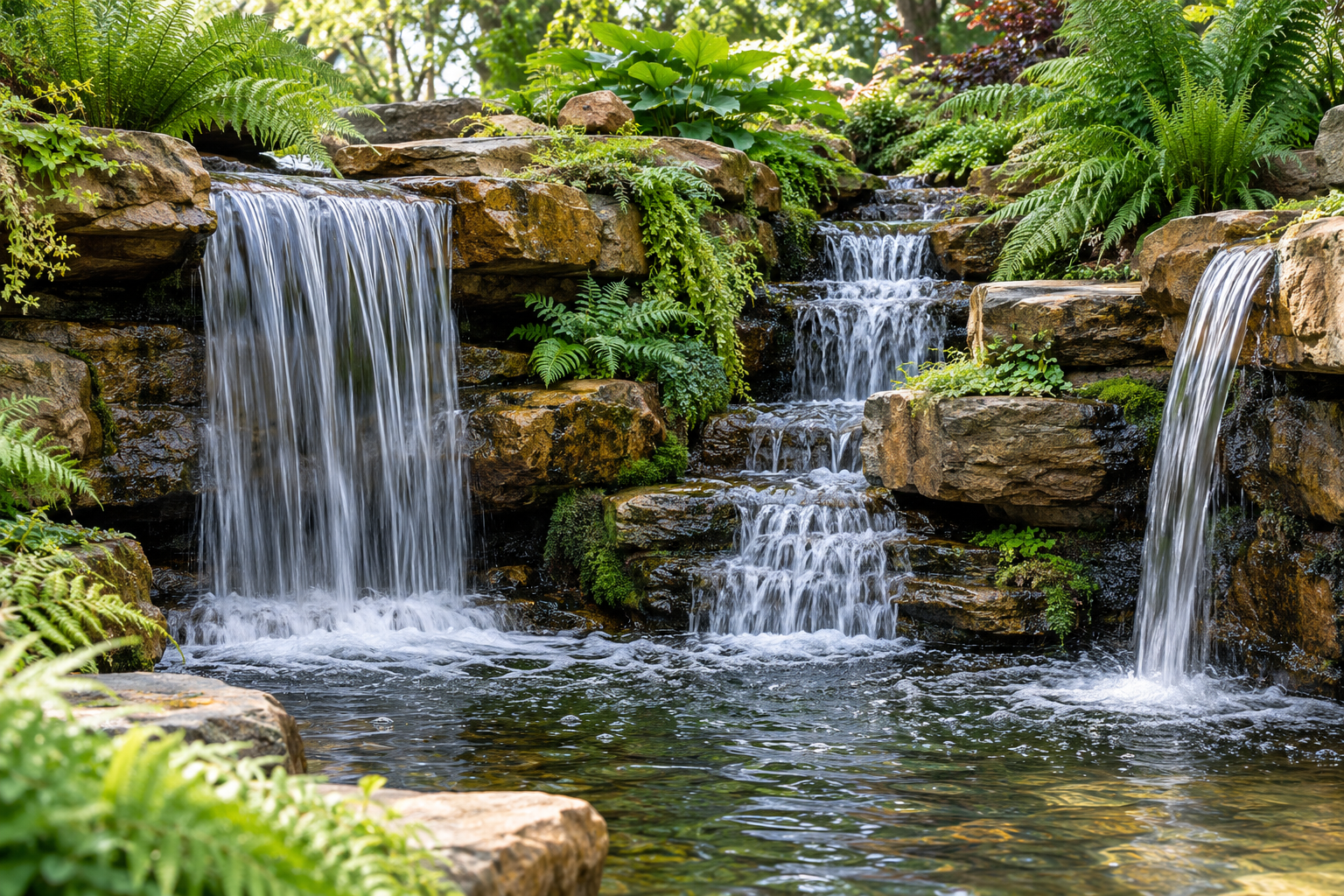
A smooth ribbon of water, a tumbling sequence of ledges, and several separated streams can emerge from equally convincing rockwork. They will not create the same grotto. Each gives the opening a different visual rhythm, changes the places where water strikes, and asks different questions of the delivery system.
Rather than choosing a waterfall from a single photograph, compare its moving shape. Follow the water from the lip to its landing, then imagine the scene from the seat, the path, and the room beyond the garden. The right form is the one whose behavior suits those places, not simply the one with the most dramatic drop.
A: No. Edge geometry, supply, operating conditions, and exposure affect its shape.
A: No. Its impacts and setting determine the sound.
A: Yes, but the gaps and water paths must suit how the entrance is used.
A: Define the intended effect first so the hydraulic design can support it.
A: Its exposed rockwork and outlets remain part of the setting.
A: Exposure can alter water and spray movement even on smaller features.
A: The water shape, landing pattern, intended operating range, and service access.
A: No. It records one instant and usually omits operating conditions.
A: Pool use introduces additional aquatic requirements that need coordinated design.
A: At the places where people will sit, walk, and spend time.
Sheet flow: a deliberate edge and a readable plane
A sheet waterfall presents water as a broad surface leaving a lip. The effect can frame a grotto with a luminous curtain or establish a crisp line against irregular stone. Its visual success depends heavily on how evenly water reaches and leaves that edge.
Do not assume a rough rock shelf will produce the same sheet as a purpose-designed spillway. The geometry of the lip, the distribution of supply water, and the intended flow range work together. A photograph taken at one operating point says little about how the waterfall behaves when adjusted or exposed to wind.
At a grotto entrance, the sheet has two faces. From outside it may read as a bright surface; from behind it may become a moving filter over the view. Decide whether looking through water is central to the experience. If clear views are more important, move the sheet away from the principal opening rather than relying on it to remain transparent.
Cascade: the rock becomes part of the motion
In a cascade, water meets successive surfaces. It may slide over one shelf, gather in a small pocket, and break into droplets at the next. The rock profile contributes to the effect throughout the descent, giving a designer many opportunities to vary direction and rhythm.
That complexity makes the landing pattern worth studying. A ledge that adds an attractive intermediate splash can also send water toward a path. A recess may collect debris where it is difficult to reach. Review the intended wet surfaces and maintenance access together, especially where the cascade sits beside planting or a dry seat.
A cascade can remain visually engaging at a modest scale because the eye follows several events rather than one uninterrupted drop. This does not guarantee quiet operation or low water demand. Those qualities depend on the actual geometry, flow, impact surfaces, and surrounding space.
Segmented flow: several strands with space between them
Separated streams can give a grotto a lighter visual boundary. The gaps preserve glimpses of rock and the space beyond, while individual strands create a repeated rhythm. A design may use a series of controlled outlets or a deliberately shaped rock edge to establish the pattern.
The important question is whether the separation is intentional and repeatable. A broken sheet caused by uneven distribution is not necessarily the same as a designed series of streams. Ask what establishes each strand and what happens when leaves, mineral deposits, or small operating changes affect the outlet.
Segmented flow also makes imbalance easy to see. If one strand weakens while its neighbors remain strong, the visual pattern changes. Access to the distribution area is therefore part of the composition’s long-term success, not merely a service detail hidden behind it.
Compare the whole route of the water
| Form | Visual emphasis | Useful review question |
|---|---|---|
| Sheet | A broad moving plane | How consistent is the edge across the intended operating range? |
| Cascade | Successive interactions with rock | Where does each impact send water and spray? |
| Segmented | Repeated strands and intervening gaps | How is each stream supplied and kept accessible? |
Three scenes, three different priorities
For a shaded conversation alcove, the seat is the evaluation point. The waterfall should be heard and seen from there, with the effect on conversation assessed directly. A visually gentle sheet can still be intrusive if its landing is close to the listeners.
For a garden viewed through a window, the distant silhouette may matter more than fine droplets. A cascade with readable terraces can remain interesting when the water is off, while a sheet may depend more heavily on its running effect. Consider both views before choosing the form.
For a pool grotto, the waterfall shares space with people and an aquatic system. Its delivery, return, water quality, visibility, and access must be coordinated with that setting. An ornamental basin demonstration is useful for appearance but does not establish suitability for a swimming environment.
Specify an experience before specifying a pump
A useful brief describes the desired shape, viewing distance, operating schedule, sound character, and acceptable splash area. The hydraulic designer can then evaluate the equipment and distribution needed to produce that effect. Selecting a pump first and expecting the rockwork to transform its output into any desired shape reverses that process.
Request a representative demonstration or mockup where practical. View it from the intended distance and ask to see more than one operating condition. Notice whether water clings to the underside, separates unevenly, or lands beyond the intended receiving area. These observations help refine the design without pretending that a photograph is a performance specification.
Finally, inspect the still composition. The lip, channels, basin, and rock face remain when the system is stopped. A waterfall that belongs to the grotto in both states is more convincing than an impressive effect attached to a setting that only works while running.
Related Articles
Why Some Waterfalls Roar: Planning the Sound of a Grotto
Explore waterfall sound through impact, reflected noise, equipment, seating position, and the intended grotto experience.
Waterproofing a Grotto: Where Water Gets In and How Assemblies Manage It
Understand grotto waterproofing by tracing rain, splash, plumbing, groundwater, and condensation through the complete assembly.
Pool Grotto Layouts: Balancing Shelter, Sightlines, and Swimming Space
Compare pool grotto layouts through shelter, swimming routes, sightlines, seating, and waterfall placement.