
Pumps, Plumbing & Circulation

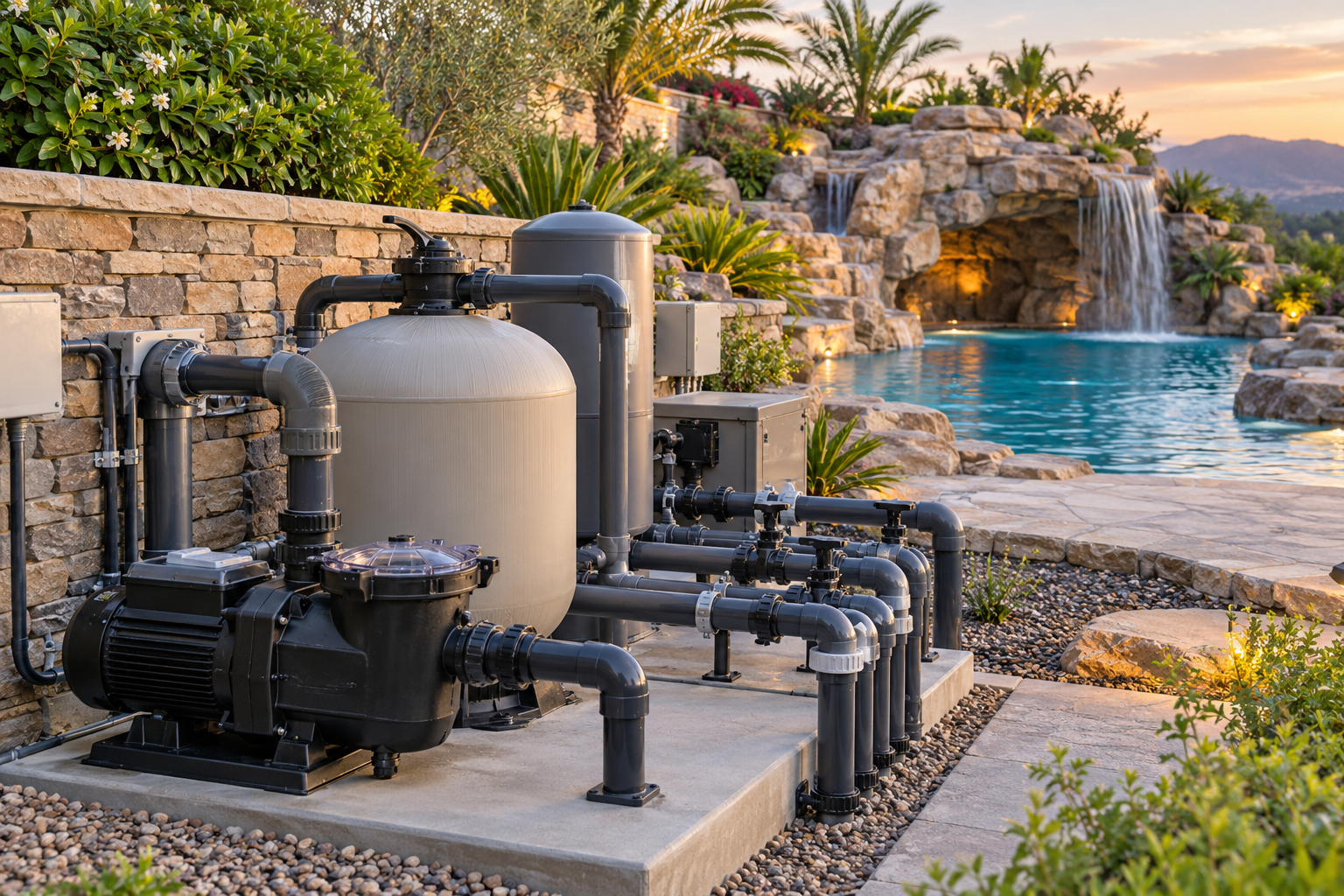
Concept illustration of pool pumps, filter vessels, and plumbing beside a grotto pool

The water emerging from a grotto wall is the visible end of a larger route. Somewhere beyond the scenic surface, equipment moves it through pipes, fittings, controls, and the systems appropriate to its intended use. Pumps, Plumbing & Circulation makes that hidden arrangement easier to discuss. Explore the difference between decorative flow and aquatic treatment, the meaning of pump performance information, and the practical value of accessible valves, clear records, and coordinated equipment locations. The collection explains concepts rather than prescribing a pump from a photograph or offering a universal plumbing layout. A small garden cascade and a public pool feature can have very different requirements even when their falling water looks similar. Owners can use these topics to read proposals and operating documents more confidently, while designers can understand why service space belongs in the earliest drawings. Follow the complete circuit, including what happens during shutdown and maintenance. Planning connects the desired visual effect with a documented system that can be inspected, operated, and cared for without dismantling the grotto’s scenic identity each time.

Circuit: Trace the complete water route rather than one visible outlet.
Flow rate: Describe water movement using stated units and conditions.
Head: Pump performance depends on the system's hydraulic demands.
Pump curve: Published data relates performance to operating conditions.
Piping: Routes and fittings contribute to system behavior.
Valves: Their function and location should be documented.
Treatment: Water quality requirements differ from decorative appearance.
Controls: Operating modes determine how equipment is used.
Access: Service space must accommodate real maintenance tasks.
Qualified design: System selection requires project-specific technical assessment.
Separate functions: A waterfall circuit may differ from treatment circulation.
Model specificity: Similar-looking pumps can have different performance.
Route effects: Pipe arrangement matters alongside pump selection.
Operating point: Equipment and system characteristics interact.
Noise location: A concealed pump may still be audible nearby.
Shutdown behavior: Water movement can change when power stops.
Isolation planning: Maintenance needs should inform system organization.
Labeling value: Clear identification supports future service.
Replacement access: A component must be removable, not merely visible.
Documentation: As-built records preserve the installed arrangement.
Manufacturer curves: Use data for the exact proposed model.
System drawings: Show equipment, routes, and relevant connections.
Operating manuals: Preserve installation and care requirements.
Equipment schedule: Record model identifiers and component roles.
Control descriptions: Explain normal and maintenance modes.
Professional calculations: Establish appropriate hydraulic performance.
Service clearances: Review the working space required by components.
Commissioning records: Retain verified settings and observations.
Maintenance logs: Connect later changes with operating history.
Spare-parts information: Identify compatible replacements accurately.
System matching: Choosing equipment begins with defined operating requirements.
Visual uncertainty: A photograph cannot establish hydraulic demand.
Energy context: Operating duration affects resource use alongside equipment performance.
Interface coordination: Scenic outlets and technical piping must meet reliably.
Serviceability: Hidden complexity becomes costly when access is poor.
Control logic: Multiple effects may need separate operating arrangements.
Change consequences: Altering an outlet can affect the wider system.
Record quality: Accurate installation documents reduce future guesswork.
Treatment distinction: Attractive movement does not prove suitable water quality.
Operational review: Performance should be assessed under relevant use conditions.
Invisible distance: Water may travel far behind a nearby outlet.
Quiet infrastructure: Good equipment placement can protect the intended atmosphere.
Small fittings: Minor-looking components can influence system behavior.
Shared appearance: Similar cascades can use different hydraulic arrangements.
Hidden rooms: Service areas are part of the grotto's real footprint.
Changing demand: Different scenes may require different operating settings.
Documented clues: A model label can resolve a replacement question.
Dry access: Equipment care often happens away from the visible water.
System stories: Operating logs can reveal patterns missed during a single visit.
Complete routes: The returning water matters as much as the falling water.
Q: Can a pump be selected from waterfall width alone?
A: No. The complete hydraulic requirements and intended effect must be assessed.
Q: Is decorative circulation the same as water treatment?
A: No. They serve related but distinct purposes.
Q: What does a pump curve show?
A: It describes performance across stated operating conditions.
Q: Why preserve the exact model number?
A: Similar equipment can have different specifications and replacement requirements.
Q: Can scenic rock hide every valve permanently?
A: No. Necessary service access must remain available.
Q: Does more pump power guarantee a better result?
A: No. Equipment must match the system and intended effect.
Q: Why document shutdown behavior?
A: Water movement and equipment conditions can differ when operation stops.
Q: Should plumbing changes be reviewed technically?
A: Yes. A local change can affect the wider system.
Q: What records should an owner retain?
A: Drawings, manuals, model details, commissioning information, and maintenance history.
Q: Who should resolve design calculations?
A: Qualified professionals should assess the specific aquatic installation.