
Rockwork & Materials Glossary

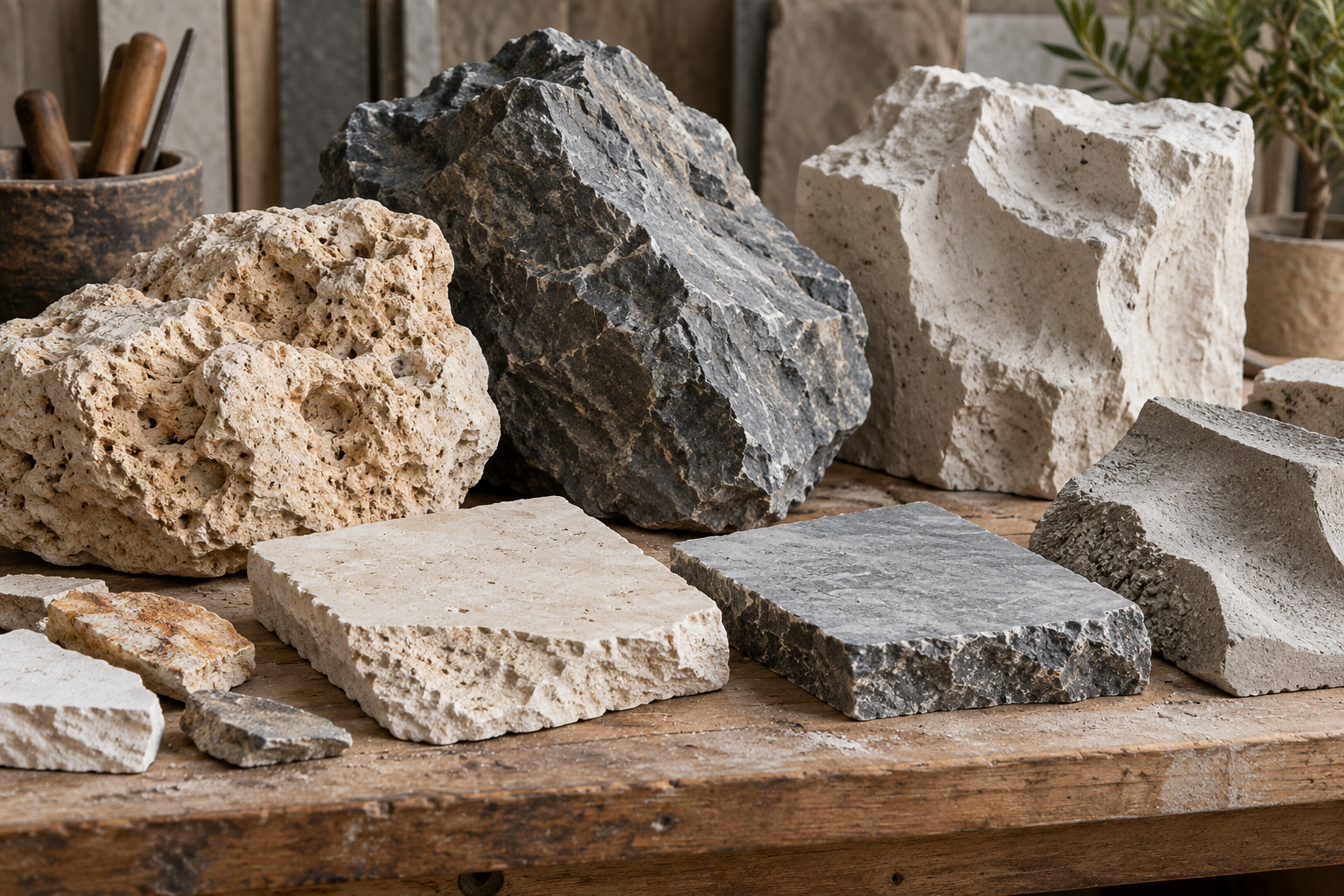
Concept illustration of distinct natural stone and sculpted cementitious rock samples arranged on a clean artisan workbench, revealing surfaces and cut edges, natural colors

Rockwork can describe an arrangement of natural stone or a constructed surface that suggests it. The distinction matters because appearance alone says little about composition, support, weight, or care. The Rockwork & Materials Glossary introduces the terms used to describe those visible surfaces and the materials behind them. Explore stone, aggregate, mortar, cementitious coatings, reinforcement, pigments, molds, and protective finishes. Some words identify ingredients; others describe processes or completed assemblies. Concrete is not simply another name for cement, and a scenic skin does not automatically provide the structural role implied by its appearance. This reference helps readers interpret product descriptions, material schedules, and conversations with fabricators without treating trade names as complete technical explanations. It also considers surface language, from relief and texture to sheen and weathering. Those qualities influence how light reads a grotto and how a repair will appear beside older work. Understanding the vocabulary creates a better starting point for selection, documentation, and maintenance while leaving specific performance requirements to the system, manufacturer information, and professional design for the application and exposure.

Natural stone: Rock used as a building or landscape material.
Cement: A binder used in many construction mixtures.
Concrete: A composite commonly containing cement, water, and aggregates.
Mortar: A mixture used for bonding, bedding, or surface applications.
Aggregate: Granular material incorporated into a mixture.
Cementitious: Containing or relating to a cement-based binder.
GFRC: Glass fiber reinforced concrete, using suitable reinforcing glass fibers.
Scenic skin: The visible layer creating a themed surface.
Substrate: The material beneath an applied layer.
Assembly: The combined layers and components of construction.
Pigment: A material used to impart color.
Stain: A coloring treatment applied to a surface.
Coating: A layer applied over a substrate.
Sealer: A product intended to modify surface absorption or protection.
Reinforcement: Material incorporated to contribute specified mechanical performance.
Armature: A framework supporting modeled or scenic form.
Mesh: An open network used in various reinforcing or shaping roles.
Mold: A form that gives material a reproduced shape.
Casting: Forming material within a mold.
Curing: Conditions and processes supporting intended material development.
Sample panel: A representative surface for evaluation.
Material data sheet: A document describing product properties.
Safety data sheet: Information on handling hazards and precautions.
Batch record: Documentation of a particular production mixture.
Color reference: An agreed standard for appearance.
Texture mold: A tool reproducing surface relief.
Sculpting tool: An implement used to shape workable material.
Release agent: A product assisting separation from a mold.
Mixing equipment: Tools selected for the specified material system.
Maintenance guide: Instructions suited to the installed finish.
Binder versus composite: Cement is an ingredient; concrete is a mixture.
Skin versus support: Scenic appearance does not establish structural function.
Compatibility: Materials must work together under intended conditions.
Porosity: The proportion of void space within a material.
Absorption: Uptake of liquid into a material.
Adhesion: Bonding at an interface between materials.
Cohesion: Internal holding together of a material.
Delamination: Separation between layers.
Efflorescence: Surface salt deposits carried and left by moisture.
Weathering: Change caused by environmental exposure over time.
Relief: The projection and recession of surface forms.
Sheen: The degree and character of reflected gloss.
Veining: Visible streaks or bands within a surface.
Bedding appearance: A visual suggestion of rock layers.
Fracture texture: Surface character resembling broken rock.
Patina variation: Uneven appearance developed with age or treatment.
Tool marks: Traces left by shaping implements.
Color wash: A thin coloring application used for tonal effects.
Surface grain: Fine-scale texture visible or felt at the face.
Edge character: The visual form of a boundary or break.
Q: Are cement and concrete interchangeable words?
A: No. Cement is commonly a binder within concrete.
Q: Does artificial rock identify one material?
A: No. Several systems can create a rocklike appearance.
Q: What does GFRC stand for?
A: Glass fiber reinforced concrete.
Q: Can a scenic skin carry any intended load?
A: Its structural role must be specifically designed and verified.
Q: Is a sealer the same as waterproofing?
A: Product purpose and system performance need separate confirmation.
Q: Why keep a sample panel?
A: It provides an agreed reference for appearance and later repairs.
Q: Can color alone identify natural stone?
A: Reliable identification may require additional information or analysis.
Q: What is delamination?
A: Separation between layers of an assembly.
Q: Why document batches and products?
A: Records support compatibility checks and future maintenance.
Q: Which description matters when ordering?
A: The exact material, system, specification, and intended application.