
Grotto Styles & Concepts

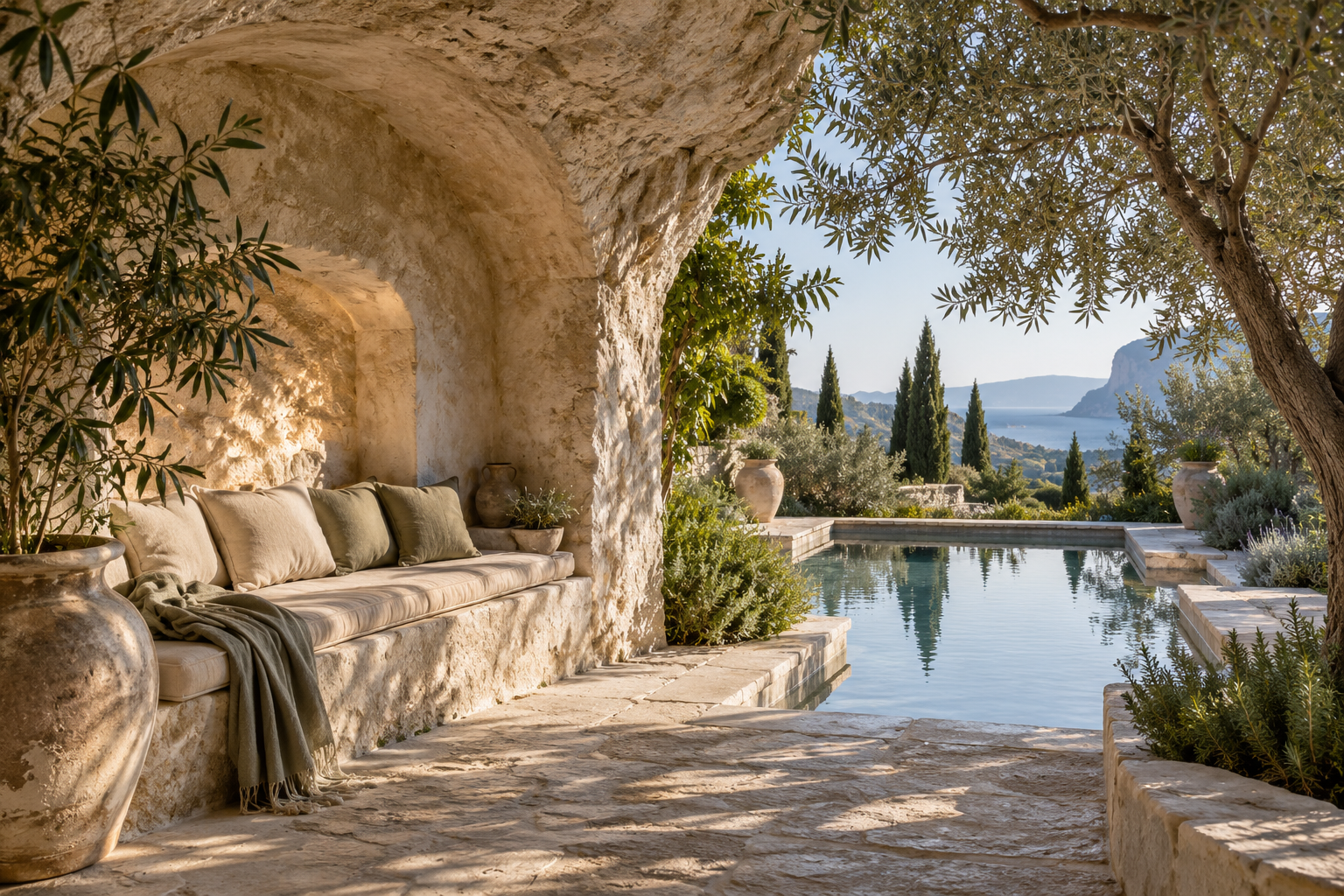
Illustration of a Mediterranean-style grotto with a bench and reflecting pool

A grotto does not have to resemble an underground cavern. It might be a shallow garden niche, a sheltered pool edge, a coastal-inspired retreat, or an imaginative chamber that belongs to a larger story. Choosing a style means deciding what kind of experience the space should offer before selecting its decorative details. Grotto Styles & Concepts compares these possibilities through enclosure, geological character, water, planting, and the relationship with surrounding architecture. Explore restrained stone recesses alongside theatrical caverns, and consider why the same feature can feel restful in one setting and out of place in another. This collection helps homeowners assemble a clear brief and gives designers a framework for sorting visual references. Style is most useful when it describes a consistent set of choices rather than a fashionable label. A convincing concept can be modest or elaborate, dry or aquatic, naturalistic or openly fantastical. The essential question is how its parts work together: what visitors see first, where they pause, what surrounds them, and which detail gives the place an identity of its own.

Concept: A central idea coordinates the space's visible choices.
Style: Repeated material and spatial decisions establish a recognizable character.
Enclosure: Shelter can range from a shallow niche to a room.
Reference: A documented example gives inspiration a concrete basis.
Mood: Restful, mysterious, playful, and monumental imply different choices.
Setting: Surrounding architecture influences what feels appropriate.
Water role: Water may lead the composition or remain absent.
Rock identity: Geological references help organize texture and form.
Restraint: Leaving some surfaces quiet strengthens focal details.
Consistency: A concept should survive beyond its most attractive viewpoint.
Garden niche: Limited depth can still create a distinct retreat.
Pool cave: Aquatic use changes the spatial brief.
Coastal inspiration: Openings and reflected light can carry the theme.
Mineral cavern: Formations become a major visual language.
Volcanic character: Flow textures differ from layered sedimentary rock.
Fantasy setting: Invented forms benefit from their own internal logic.
Dry retreat: Shade and seating can replace water spectacle.
Formal garden: A grotto can contrast deliberately with ordered planting.
Rustic enclosure: Rough stone does not require random composition.
Contemporary interpretation: Simplified rock masses can suit modern architecture.
Mood boards: Group references by shared qualities rather than attractiveness alone.
Thumbnail sketches: Compare several ideas before detailing one.
Material samples: Test the tactile character implied by a concept.
Scale figures: Check whether dramatic forms overwhelm occupation.
Reference captions: Record why each image belongs in the board.
Color studies: Separate stone color from lighting effects.
Small models: Compare enclosure and opening proportions physically.
Site photographs: Place inspiration beside the actual surroundings.
Brief worksheets: Rank experiential priorities in plain language.
Comparison matrix: Evaluate concepts against the same requirements.
Borrowed atmosphere: A reference's lighting may matter more than its rock shape.
Visual hierarchy: One dominant idea can organize many smaller details.
Contextual fit: Contrast can be intentional without becoming arbitrary.
Scale translation: Enlarging a niche changes its spatial effect.
Material honesty: Constructed scenery can be convincing without claiming natural origin.
Narrative limits: Too many unrelated motifs weaken recognition.
Use compatibility: An intimate concept may conflict with large gatherings.
Seasonal identity: A style should work beyond its ideal photograph.
View dependence: Evaluate the concept from approach and interior positions.
Design evolution: Refinement should preserve the central idea while resolving constraints.
Small beginnings: A bench recess can carry an entire grotto concept.
Shadow shapes: Darkness can define form as strongly as stone.
Water optional: Some memorable grottos are entirely dry.
Contrasting gardens: Ordered planting can emphasize irregular rock.
Framed skies: An opening overhead can become the main feature.
Unexpected simplicity: One geological texture may be enough.
Color shifts: The same stone changes character under different light.
Layered discovery: A partially concealed view can invite curiosity.
Quiet details: A minor ledge can become a favorite sitting spot.
Personal meaning: A concept can reflect a landscape without copying it literally.
Q: Is a grotto style the same as a construction system?
A: No. Similar appearances can use different assemblies.
Q: Must a grotto contain water?
A: No. Enclosure, shade, texture, and views can define it.
Q: Can several styles be combined?
A: Yes, when their relationship is deliberate and understandable.
Q: How many reference images are useful?
A: Enough to explain the concept without collecting conflicting directions.
Q: Should fantasy rock resemble real geology?
A: It need not, but consistent visual rules help it feel intentional.
Q: What distinguishes a concept from a mood board?
A: A concept explains how the space works, not only how it looks.
Q: Can a small niche feel immersive?
A: Proportion, framing, and atmosphere can create a strong experience at modest scale.
Q: When should materials be considered?
A: Early enough to test whether the proposed character is achievable.
Q: Why compare concepts against the same brief?
A: It makes tradeoffs clearer than comparing rendering quality alone.
Q: What signals an unfocused concept?
A: Competing motifs with no clear hierarchy often obscure the intended experience.
Latest Grotto Styles & Concepts Articles