
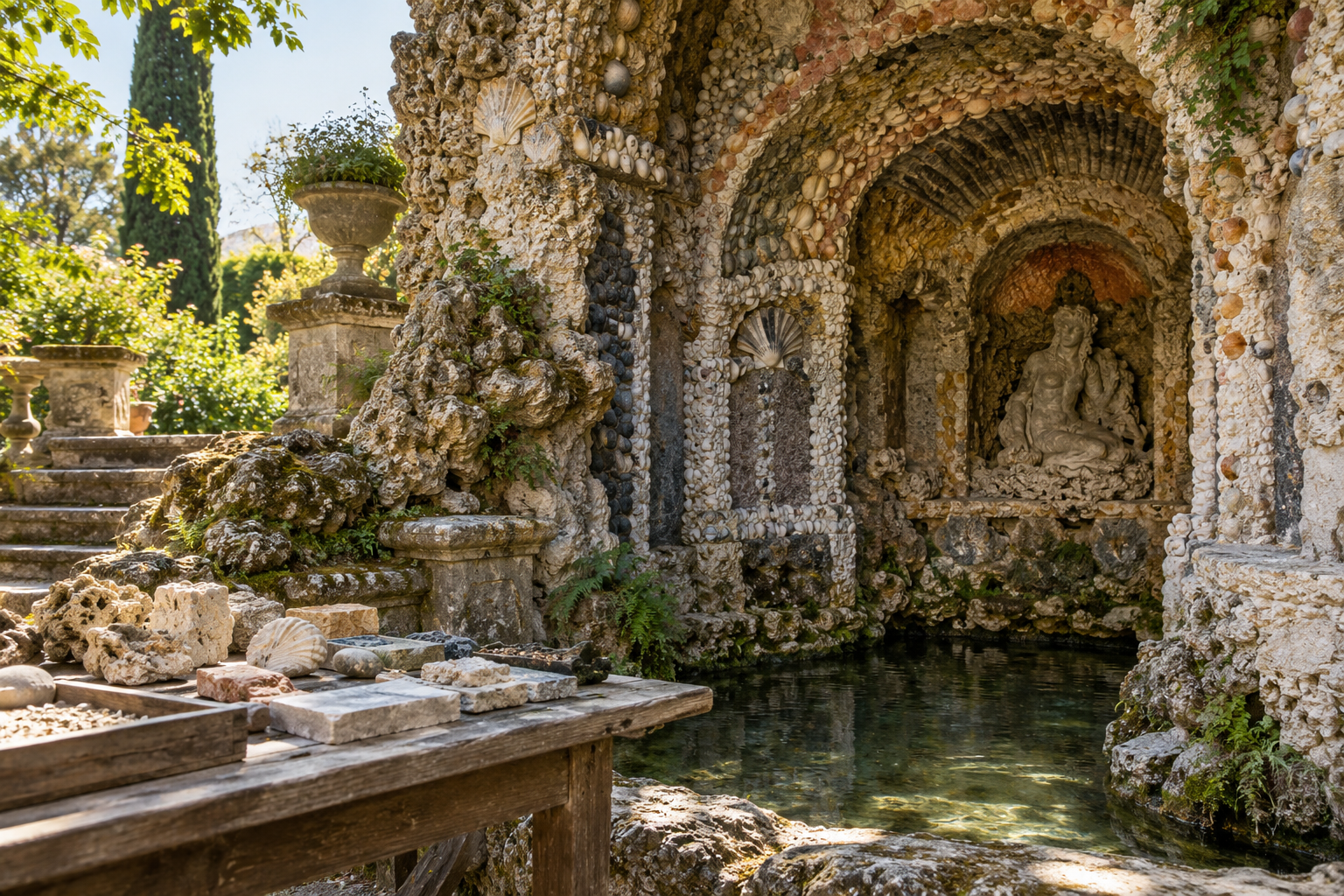
An older grotto may hold several histories at once: its original design, later repairs, changing planting, and the marks of years of use. Restoration & Long-Term Renewal asks which of those qualities should be retained and which conditions need intervention. The answer depends on purpose. Conserving historic fabric, renewing a resort amenity, and adapting a residential retreat are different projects, even when all involve weathered rockwork. This collection explores condition assessment, significance, repair records, material matching, phased work, and the relationship between visual character and functional performance. It encourages a clear project brief before surfaces are stripped, recolored, or replaced. Some changes may be necessary to address access, water management, or deteriorated systems; others may erase valued character without improving use. Readers can examine how documentation and carefully evaluated trials support better choices. Long-term renewal also looks ahead, preserving service access and leaving a record for the next caretaker. A project respects the setting’s identity while making its future care more understandable, achievable, and consistent with the way the grotto will be used over time.
A: No. The project purpose determines the appropriate result.
A: Qualified conservation expertise and reliable documentation help establish it.
A: Their condition, compatibility, and significance need review.
A: It prevents appearance changes from becoming the default objective.
A: Appropriate adaptation can be considered with relevant professionals.
A: Investigation should precede broad treatment decisions.
A: They reveal visual and material compatibility before wider work.
A: Phasing depends on risk, scope, access, and operations.
A: Records of retained materials, interventions, systems, and suitable care.
A: Preserved character, resolved problems, usable function, and sustainable maintenance.