
Grotto Lighting Design

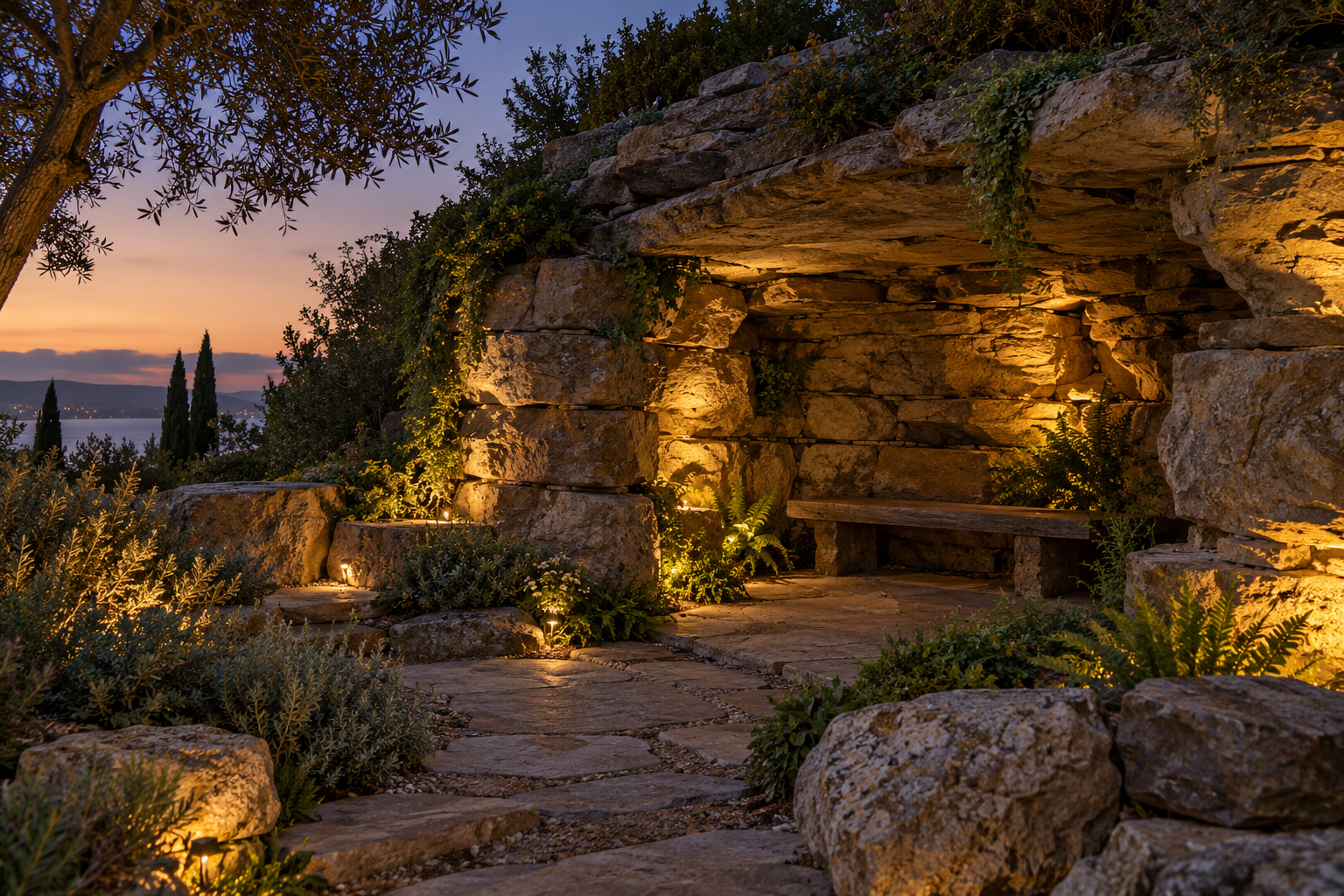
Concept illustration of a dry garden grotto at twilight with discreet warm grazing illumination on layered stone and a shaded bench, calm sophisticated lighting

Light decides which parts of a grotto become visible and which remain suggested. A narrow beam can reveal a fracture, a soft wash can connect a broad wall, and a preserved shadow can make an opening feel deeper. Grotto Lighting Design explores these choices as a composition rather than a contest in brightness. Begin with the intended viewpoints and activities, then examine direction, contrast, color appearance, fixture concealment, and the practical needs of circulation and maintenance. A photograph may hide glare that becomes obvious when someone sits down or approaches from the side. This collection encourages that wider review, including daylight transitions and the quieter scenes used after active hours. It also distinguishes the visual brief from the technical requirements of equipment installed near moisture, water, or difficult access. Designers and owners can use the vocabulary to discuss what should be illuminated, why it matters, and how the result will be judged. The strongest lighting scheme gives the grotto a hierarchy while allowing stone, water, and darkness to retain their own roles within the experience.

Focal point: Decide where attention should settle.
Direction: Light angle changes perceived texture.
Contrast: Relative brightness organizes the scene.
Grazing: Close-angle light emphasizes surface relief.
Wash: Broader illumination connects larger areas.
Glare: Visible sources can distract or discomfort.
Color appearance: Light changes how materials are perceived.
Concealment: Hidden fixtures still need service access.
Task light: Practical activities require suitable illumination.
Scene: A coordinated setting supports a particular use.
Seated views: Low viewpoints can expose hidden fixtures.
Approach views: Arrival may reveal glare absent inside.
Shadow value: Darkness can clarify rather than obscure form.
Texture response: Different surfaces need different treatment.
Wet reflections: Water adds secondary light paths.
Daylight transition: Interior visibility changes through the day.
Fixture spacing: Repetition can become visually obvious.
Maintenance access: Replacement affects placement choices.
Quiet scenes: Reduced effects can support relaxation.
Technical suitability: Equipment must match installation conditions.
Lighting mockups: Test on representative rock surfaces.
Viewpoint sketches: Mark seated and standing positions.
Fixture data: Review the exact proposed equipment.
Material samples: Compare color and sheen under light.
Control schedules: Describe intended scenes clearly.
Access drawings: Preserve service routes to components.
Glare observations: Review sources from occupied locations.
Night photographs: Document settings consistently.
Professional design: Coordinate electrical and environmental requirements.
Maintenance records: Keep model and replacement information.
Hierarchy first: Decide the scene before selecting every fixture.
Surface interaction: Relief and reflectance shape the result.
Source visibility: Concealment depends on more than one viewpoint.
Brightness restraint: Additional light can flatten useful shadows.
Context adaptation: Exterior brightness affects interior perception.
Scene coordination: Accent and practical lighting serve different needs.
Color discipline: Saturation should support the intended atmosphere.
Service integration: Accessible equipment can remain visually discreet.
Evaluation timing: Review under actual intended operating conditions.
Design longevity: Future replacements should preserve the original effect.
Shadow edges: A dark line can define a rock layer.
Reflected movement: Water can animate a stationary ceiling.
Quiet planes: Broad surfaces offer calm between accents.
Hidden brightness: A concealed source can dominate the composition.
View changes: One step can reveal a previously hidden lamp.
Night identity: The grotto can feel different after sunset.
Texture surprises: Raking light exposes small irregularities.
Color shifts: The same finish changes under different sources.
Subtle scenes: Limited illumination can feel more immersive.
Service light: Practical brightness need not define the visitor scene.
Q: Does brighter always mean better?
A: No. Direction and contrast often matter more.
Q: Why test seated views?
A: They can reveal glare missed while standing.
Q: Can one scene serve every task?
A: Resting and maintenance usually need different arrangements.
Q: Should fixtures be permanently buried?
A: Service access must remain workable.
Q: Is colored light required?
A: Naturalistic light and shadow can create atmosphere.
Q: Why use actual finish samples?
A: Surface texture and sheen change the effect.
Q: Can lighting correct every form problem?
A: No. Geometry still shapes the scene.
Q: When should electrical suitability be checked?
A: During equipment selection and coordinated design.
Q: What should a lighting brief state?
A: Activities, viewpoints, focal points, scenes, and operating conditions.
Q: How is success judged?
A: Review the intended experience from real occupied positions.
Latest Grotto Lighting Design Articles