
GFRC & Lightweight Rock Systems

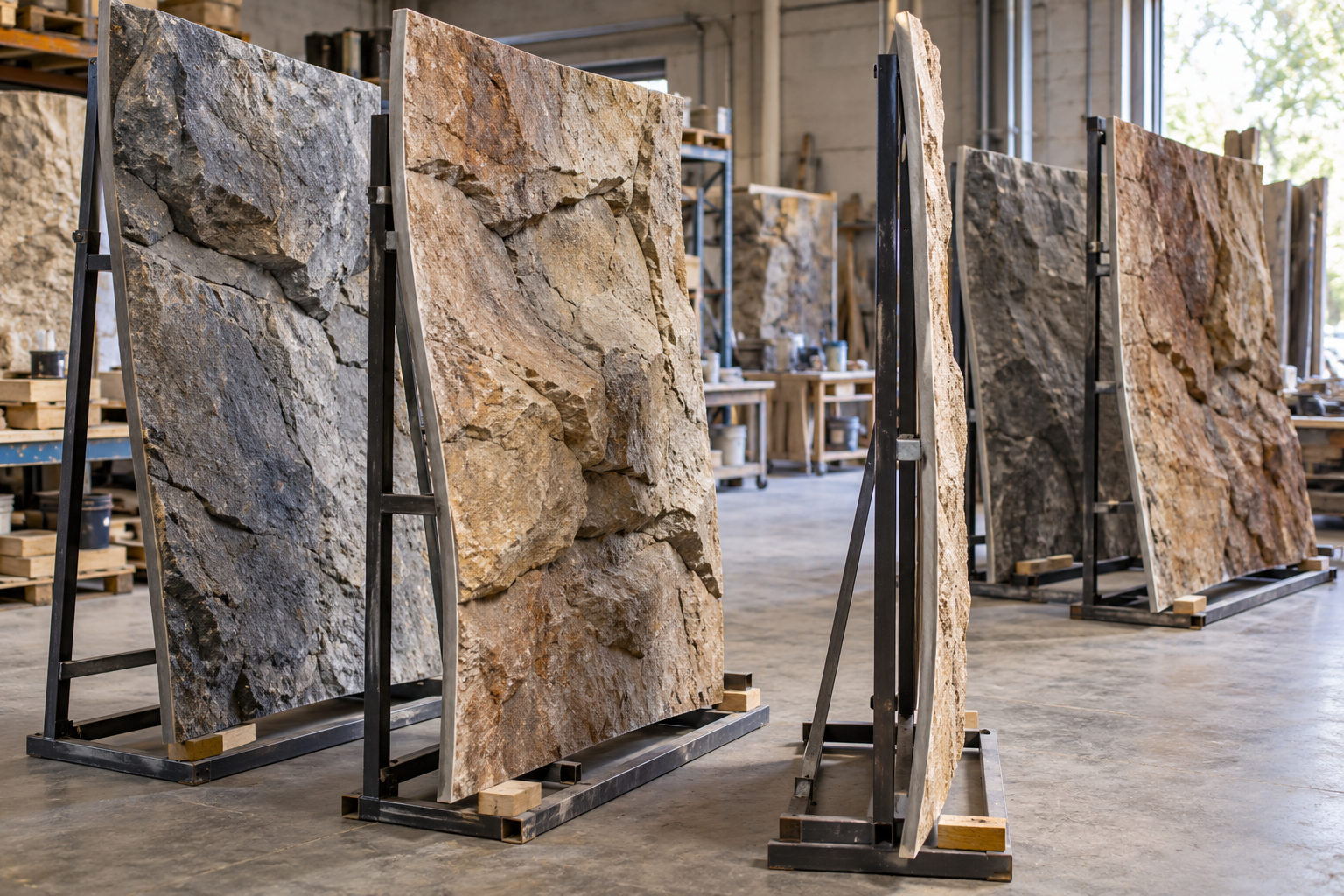
Concept illustration of thin textured rock panels on workshop racks

A rock surface can appear massive while using a relatively thin manufactured panel. That contrast makes lightweight systems attractive for some grotto projects, but it also makes terminology important. GFRC refers to glass fiber reinforced concrete, not every product marketed as artificial or lightweight rock. This collection examines panels as parts of complete assemblies, with attention to fabrication, geometry, edges, supports, connections, and the conditions in which they will operate. Explore how molded surfaces can reproduce geological detail, how panel divisions influence a larger composition, and why installation access may affect component size. Weight savings do not remove the need for engineering, suitable connections, or coordinated handling. Nor does a material name establish that a panel is suitable for immersion, overhead placement, or visitor contact. Readers comparing proposals can learn to ask about the specified system rather than relying on a broad label. The most useful comparison considers the finished assembly from fabrication through maintenance, including what happens when a concealed connection needs inspection or a damaged section eventually needs replacement within the grotto setting.

GFRC: Glass fiber reinforced concrete is a specific material family.
Panel: A component belongs to a larger assembly.
Support: Connections transfer loads to supporting structure.
Geometry: Shape influences fabrication and installation.
Edges: Panel boundaries affect scenic continuity.
Exposure: Suitability must match actual conditions.
Specification: Use system-specific requirements and data.
Handling: Lightweight does not mean casually movable.
Access: Concealed connections may need inspection.
Replacement: Plan how components can be removed.
Terminology: Artificial rock and GFRC are not synonyms.
Thin profiles: Apparent mass can exceed actual shell thickness.
Molded faces: Surface detail can be reproduced repeatedly.
Panel divisions: Breaks influence both fabrication and appearance.
System variation: Manufacturers may use different assemblies.
Connection design: Hardware is part of performance.
Overhead use: Application requires appropriate technical assessment.
Water contact: Immersion suitability cannot be assumed.
Transport limits: Delivery can influence component dimensions.
Finish continuity: Adjacent panels need coordinated treatment.
Manufacturer data: Identify the precise proposed system.
Shop drawings: Review component and connection information.
Engineering documents: Establish project-specific support requirements.
Sample panels: Examine face, edge, and rear construction.
Finish mockups: Include a representative panel joint.
Handling plans: Coordinate delivery and installation methods.
Access drawings: Preserve inspection and replacement routes.
Quality records: Retain relevant fabrication documentation.
Care instructions: Match maintenance to the specified finish.
Component schedules: Track panels and their locations.
Assembly performance: A material label does not describe every connection.
Weight comparison: Compare complete installed systems, not skins alone.
Geometric coordination: Complex shapes can complicate tolerances and fit.
Joint function: Scenic concealment must respect movement requirements.
Fabrication repeatability: Consistency and naturalistic variation need balance.
Support visibility: Concealed frames still occupy space.
Exposure qualification: Different conditions require suitable evidence.
Repair strategy: Local damage may involve more than surface color.
Installation sequence: Later panels can conceal earlier connections.
Lifecycle records: Accurate component information supports future intervention.
Large appearance: Thin shells can suggest geological mass.
Hidden frameworks: Much of the assembly is invisible when finished.
Repeated origins: Several distinct-looking panels may share a mold.
Edge importance: A narrow joint can determine the whole illusion.
Transport influence: Road and site access can shape panel design.
Removable scenery: Some assemblies permit planned service openings.
Material names: Similar sales language can describe different products.
Curved faces: Geometry changes how light reveals texture.
Quiet backs: Rear surfaces differ greatly from scenic faces.
Future matching: Saved finish references help replacement work.
Q: Is all lightweight rock GFRC?
A: No. Other materials and assemblies also exist.
Q: Does lightweight mean nonstructural design is unnecessary?
A: No. Supports and connections still require appropriate design.
Q: Can any GFRC panel be submerged?
A: Suitability must be established for that application.
Q: Are panels from different manufacturers interchangeable?
A: Their systems and requirements may differ.
Q: Why inspect the panel back?
A: It reveals information absent from the scenic face.
Q: Should joints be included in mockups?
A: Yes. They strongly affect the completed appearance.
Q: Can panels support climbing automatically?
A: No. Intended loading must be specifically addressed.
Q: What determines panel size?
A: Design, fabrication, transport, handling, and access all contribute.
Q: Why retain component records?
A: They support inspection, repair, and replacement.
Q: What should proposals identify?
A: The exact material system, support approach, finishes, and applicable performance information.