
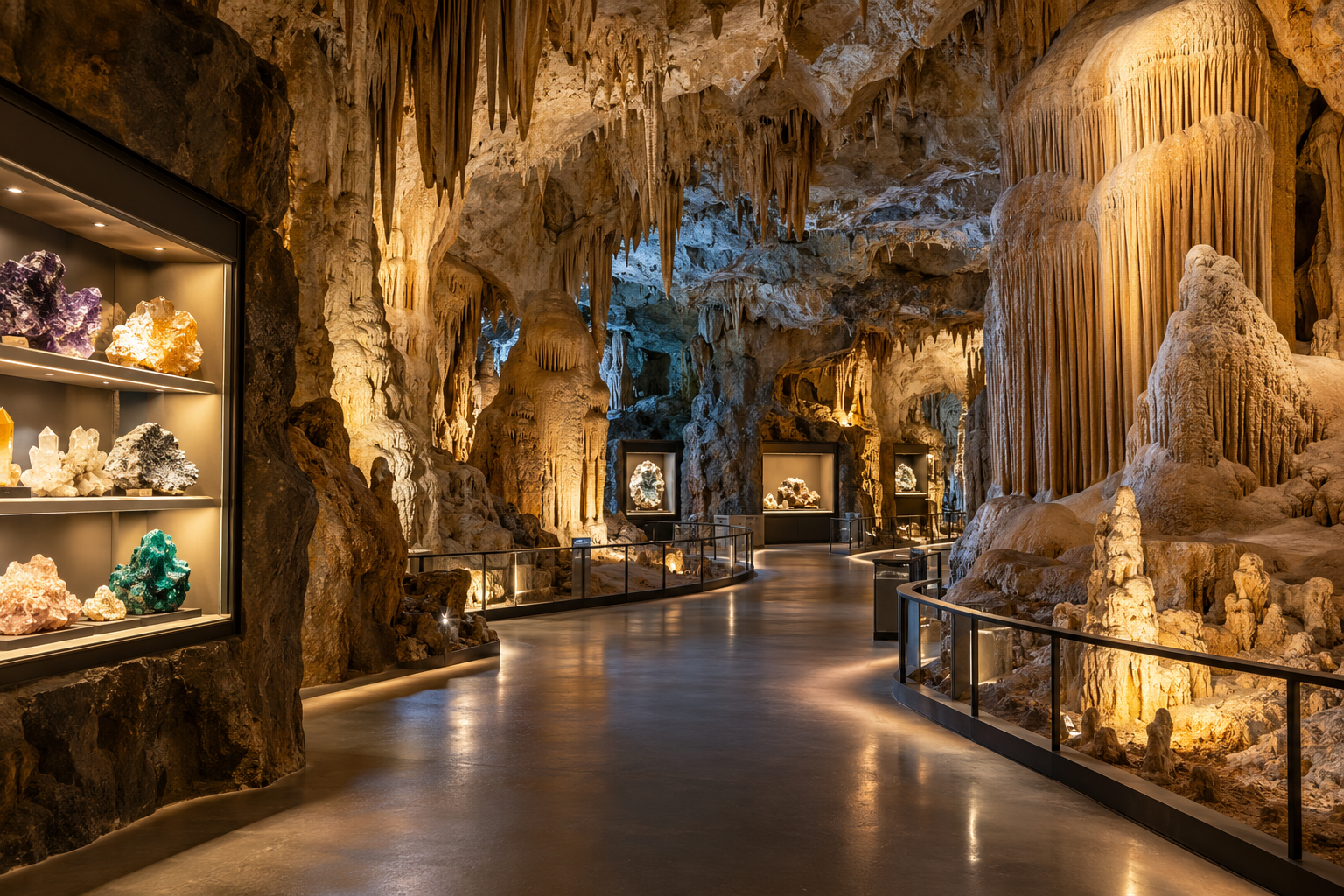
A museum cavern can turn an abstract process into a place visitors can examine. A passage suggests how water moves underground; a formation invites questions about mineral growth; a change in rock layers introduces geological time. Museums & Interpretive Environments explores how grotto settings can support learning without blurring the distinction between evidence and invention. The strongest exhibits identify what is reproduced, what is simplified, and what visitors are being invited to notice. Topics include interpretive sequences, specimen displays, tactile elements, scenic reconstructions, accessible viewpoints, and the relationship between physical scenery and digital media. A dramatic environment can attract attention, but its educational value depends on an idea and a route through that idea. This collection also considers practical needs such as conservation conditions, replaceable components, cleaning, and the movement of school groups. Readers can explore how a small display or a large immersive gallery connects sensory experience with accurate explanation. The goal is curiosity that continues beyond the room, supported by a setting that makes its subject approachable, memorable, and open to further investigation.
A: An imagined setting can teach clearly if its purpose is explained.
A: Yes. Visitors should understand what they are examining.
A: They help when tied to a clear interpretive goal.
A: Familiar wording to specialists may confuse new readers.
A: Provide gathering, visibility, and movement without blocking others.
A: Materials, collection care, and user needs determine suitability.
A: Different formats reveal different kinds of information.
A: Accuracy, clarity, access, care requirements, and visitor understanding.
A: Research, technology, and visitor needs can change.
A: A coherent setting that helps visitors notice and understand its subject.