
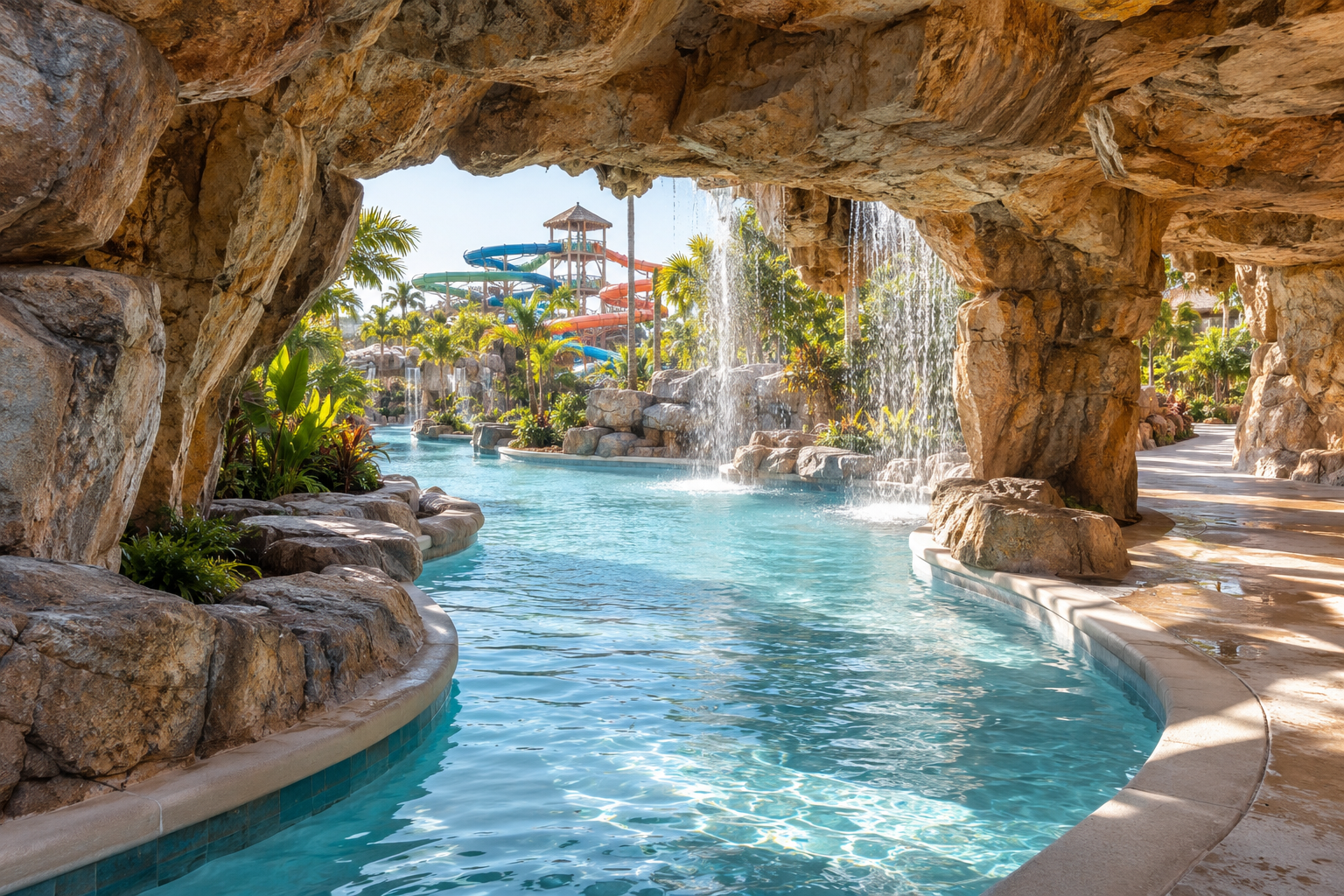
An aquatic attraction is experienced in motion. Visitors arrive with wet feet, follow friends around bends, pause at entrances, and move between water and deck. A cavern that looks convincing in a still image must also function within that changing pattern. Water Parks & Aquatic Attractions examines themed rock environments as parts of larger circulation, supervision, and operating systems. Topics include lazy river scenery, grotto passages, waterfall features, waiting areas, and the transitions between active attractions and quieter spaces. The emphasis is on understanding the experience before adding complexity: where attention goes, where groups gather, what staff can observe, and how an attraction returns to service after maintenance. Scenic design belongs in the same conversation as water management, accessibility, emergency planning, and equipment access. Readers can compare the appeal of enclosure with the practical value of clear routes and legible boundaries. From a modest shaded feature to a major immersive setting, the goal is a coherent attraction whose visual story supports the way people actually move, wait, interact, and use water throughout an operating day.
A: Its geometry can affect circulation and supervision.
A: Specialist aquatic and structural coordination is essential.
A: Visitor groups change sightlines and movement.
A: No. Permitted routes and uses need clarity.
A: Only coordinated systems with suitable access and protection.
A: Match the experience to technical and operating requirements.
A: Companions also need usable routes and waiting spaces.
A: It is often harder once scenic work is complete.
A: Documented checks of the installed systems and intended operation.
A: Applicable authorities, standards, and qualified aquatic professionals.