
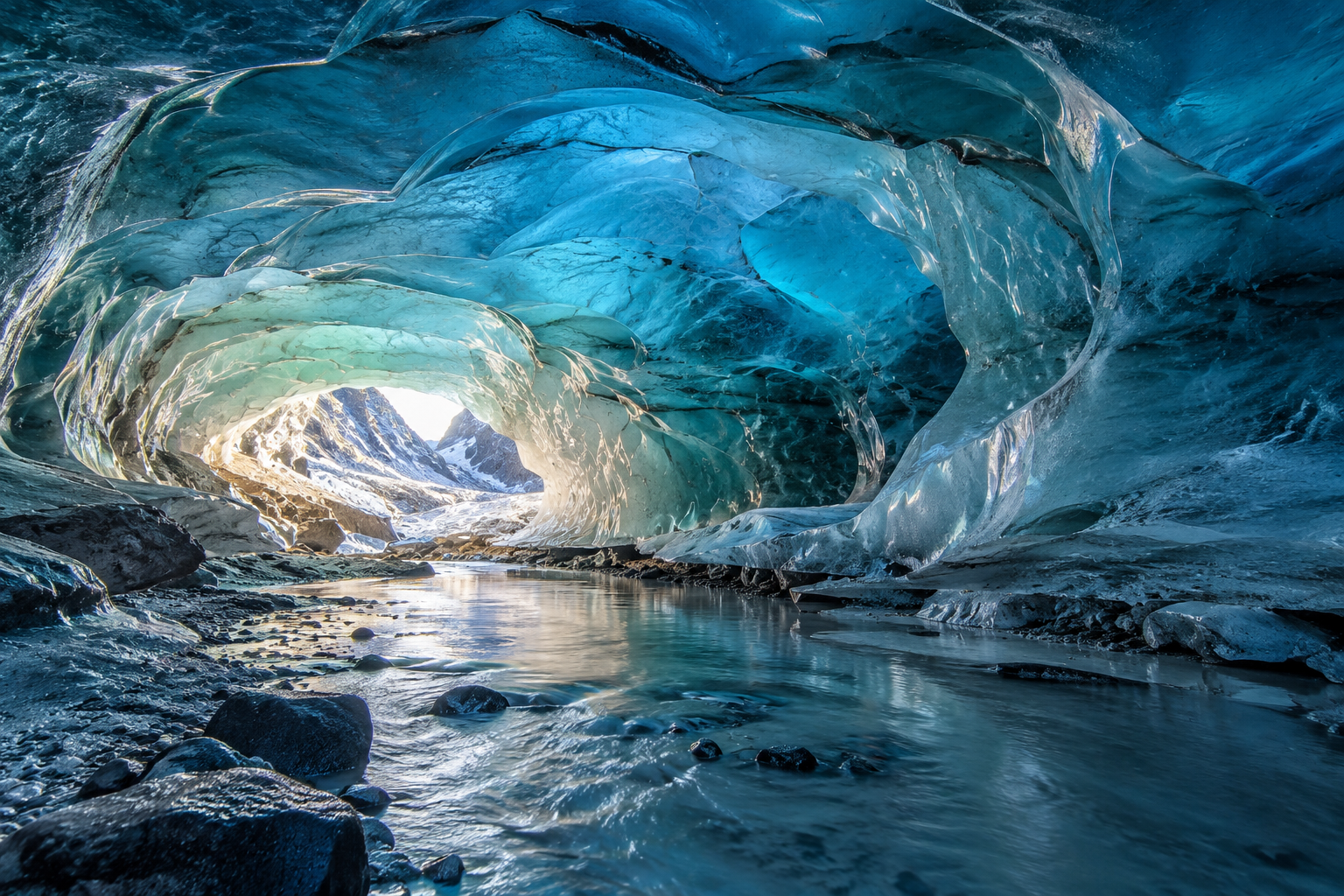
Blue walls and frozen floors can conceal two very different stories. Some caves are passages within glacier ice, shaped by melting and moving water. Others are rock cavities where ice accumulates and persists because local conditions allow it. Treating both as the same phenomenon misses the most interesting questions. Ice Caves & Glacier Caverns explores the distinction, following the relationships among temperature, airflow, seasonal change, meltwater, and the material surrounding a passage. Learn to read photographs more carefully: an icy floor beneath a stone ceiling describes a different setting from a translucent chamber enclosed entirely by ice. These environments also offer a distinctive palette for visual interpretation, from milky layers and scalloped surfaces to reflected blue light and sharply defined openings. For students, photographers, and designers, the collection connects those appearances with the processes behind them. Their beauty should never imply permanence or predictable access. Use documented examples and current site information to understand each setting, while recognizing that ice and the spaces around it can change substantially between one observation and the next visit.
A: No. Ice can occupy a rock cave, while a glacier cave occurs within glacier ice.
A: The passage of light through ice can favor a blue appearance, with conditions affecting the result.
A: No. Color does not establish structural conditions.
A: Yes. Some volcanic caves have conditions that preserve it.
A: Many do, although the pattern depends on the location.
A: It documents the past and cannot establish current conditions.
A: Identify the location, date, and whether the enclosure is rock or glacier ice.
A: No. Passage conditions vary.
A: Consider translucency, layering, flowing forms, and light together.
A: Glacier researchers, geological organizations, and responsible land managers provide useful context.