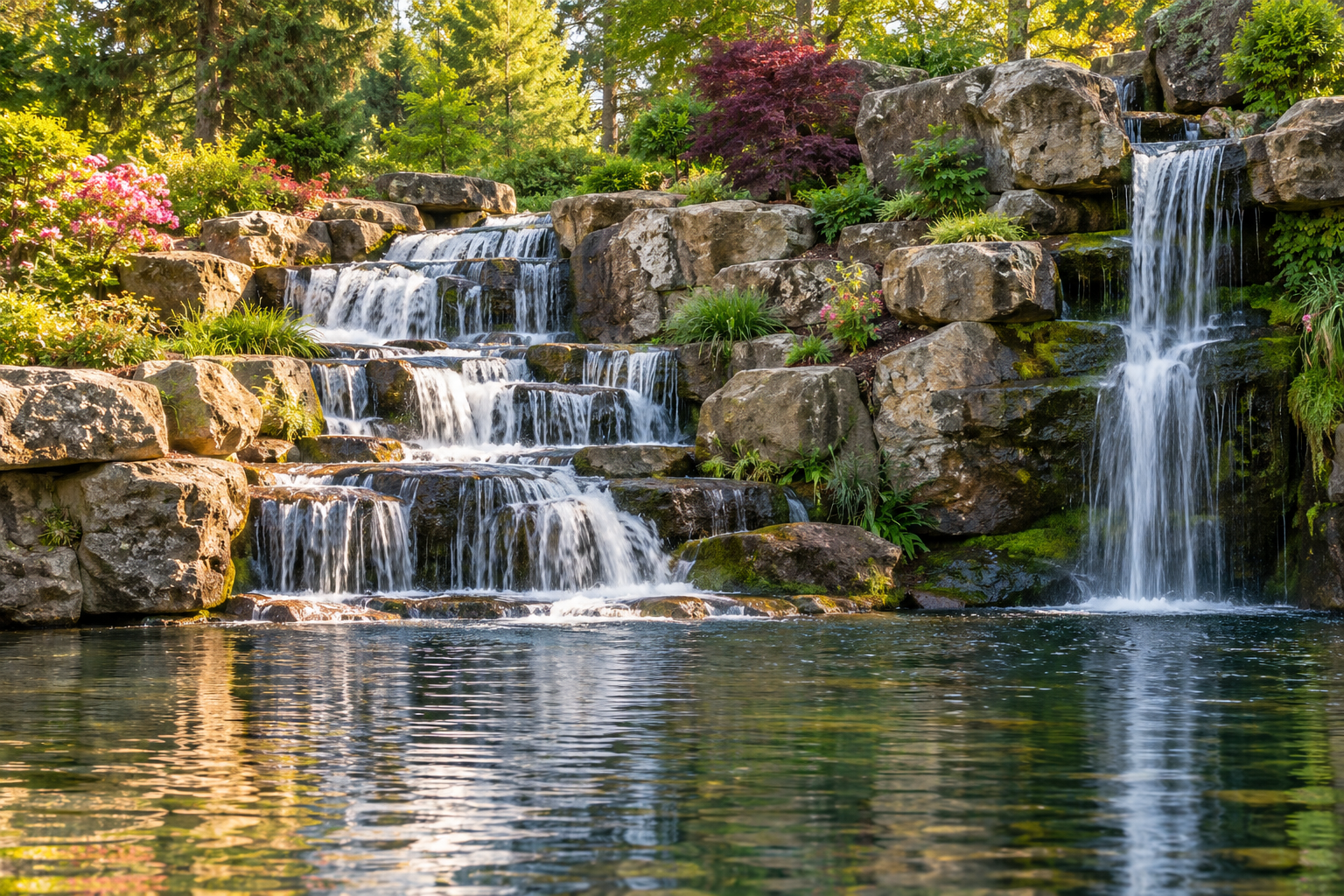
A waterfall is a shape made partly from moving water. Change the edge where it leaves the rock, interrupt its fall with a ledge, or alter the receiving surface, and the entire character changes. A smooth veil becomes separate ribbons; a quiet descent becomes a broken cascade. Waterfall Shapes & Flow studies those visible relationships without reducing every feature to a larger pump. Explore sheets, streams, stepped falls, rock-hugging movement, splash, and the spaces where water lands. Learn to describe a desired effect precisely enough that designers and aquatic specialists can discuss it together. Photographs freeze a moment, so moving references and operating observations often reveal distinctions that still images miss. The collection also considers sound, wind, lighting, and the appearance of a feature when its flow stops. Whether the waterfall frames a grotto entrance or provides a smaller garden accent, its success depends on the whole route. Follow water from the point it appears to the place it returns, noticing how each contact with rock contributes to the visual and acoustic experience around it.
A: No. Outlet geometry and system conditions also govern the effect.
A: Water meets intermediate surfaces during its descent.
A: They show motion, variation, and rhythm that still photographs omit.
A: Yes. Exposed falling water can be redirected or fragmented.
A: It determines important splash, sound, and surrounding-use effects.
A: No. Scale changes can alter water behavior.
A: Yes. The feature remains part of the landscape when inactive.
A: Build-up at an outlet can affect how water leaves it.
A: State the intended pattern and operating context alongside technical requirements.
A: Yes. Water must move through the complete system coherently.