
Accessibility & Inclusive Use

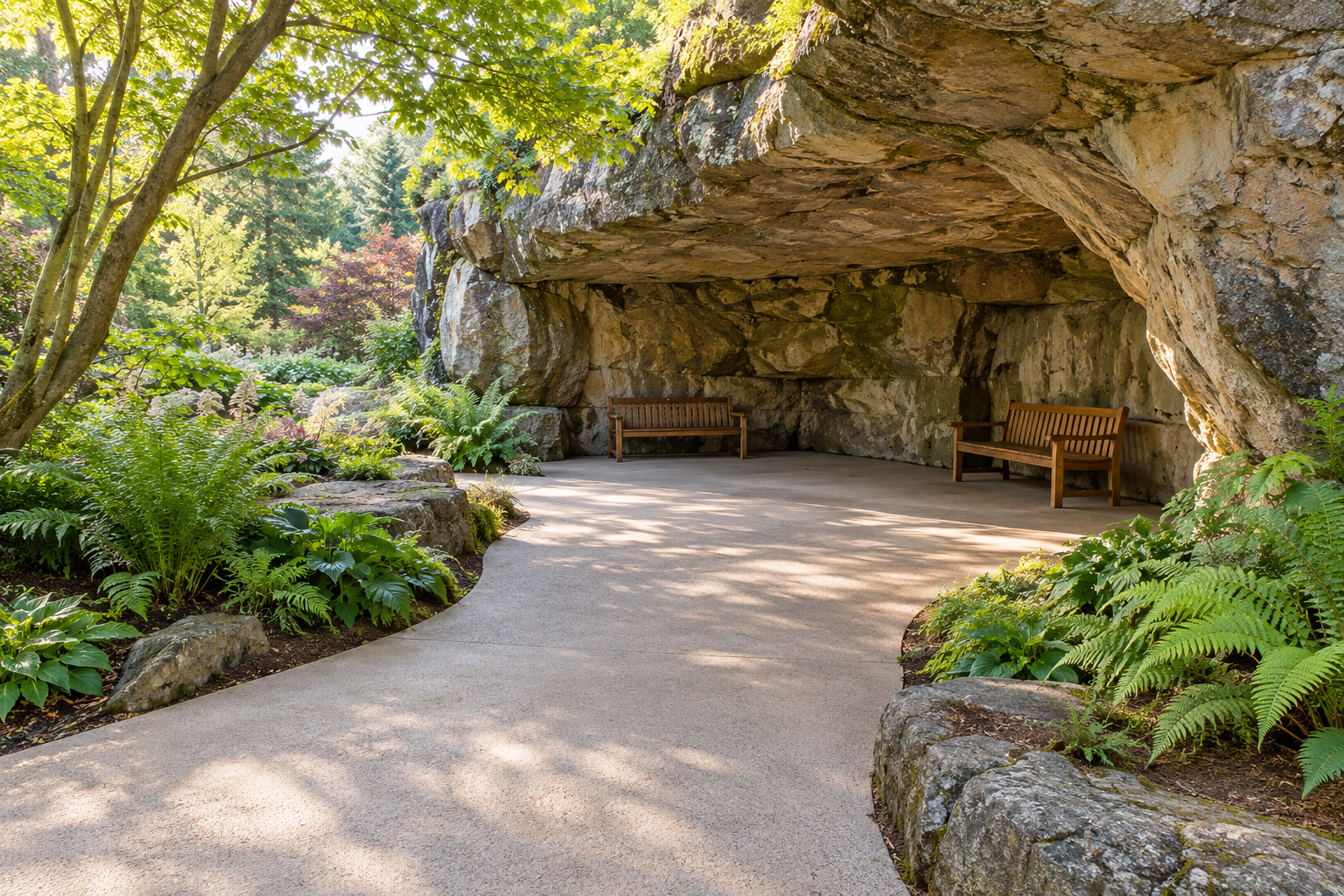
Concept illustration of a broad level path into a rock shelter with benches and open companion space

An inviting grotto experience begins before its entrance. The route from arrival, the information available beforehand, the places to rest, and the ability to share the setting with companions all influence participation. Accessibility & Inclusive Use explores that complete journey. Physical access is part of the subject, alongside lighting, sound, communication, sensory intensity, and the clarity of choices within the space. A person may want to approach a waterfall, sit near it, understand an exhibit, or simply enjoy the same view as friends. Those goals deserve attention during planning rather than being treated as late additions. This collection considers how naturalistic forms can coexist with understandable routes and usable amenities, including the special coordination required around pools and public facilities. It encourages consultation with people who bring different access needs and with professionals familiar with applicable requirements. Inclusive design recognizes that visitors vary in mobility, vision, hearing, stamina, and comfort with enclosed settings. The result should offer meaningful ways to participate, supported by accurate information and ongoing maintenance that preserves access after construction is complete.

Complete journey: Review arrival through departure.
Shared experience: Offer meaningful participation with companions.
Physical access: Routes and amenities require coordinated design.
Sensory access: Consider light, sound, and intensity.
Information access: Explain conditions in understandable formats.
Rest opportunities: Seating supports varied stamina.
Choice: Provide alternatives where experiences differ.
User consultation: Include people with relevant lived experience.
Applicable requirements: Confirm standards for the project and location.
Ongoing access: Maintenance must preserve usable conditions.
Entrance alone: An accessible doorway does not resolve the whole visit.
Companion space: Social participation needs room.
Viewpoint height: Scenic features look different from seated positions.
Sound intensity: Water effects may overwhelm some visitors.
Contrast: Boundaries need to remain perceivable.
Route surfaces: Wear and debris can change usability.
Advance information: Clear descriptions support informed choices.
Pool access: Aquatic settings have specific requirements.
Rest intervals: Long approaches affect participation.
Temporary closures: Alternative information should remain clear.
Journey maps: Include transport, arrival, amenities, and return.
Access reviews: Use qualified assessment for applicable requirements.
User walkthroughs: Learn from varied perspectives.
Seated-view studies: Compare experience from different heights.
Sensory descriptions: Explain enclosure, lighting, and sound.
Communication formats: Provide information through suitable alternatives.
Maintenance checks: Track obstructions and surface changes.
Seating plans: Include companion relationships.
Wayfinding prototypes: Test clarity before installation.
Feedback channels: Make access concerns easy to report.
Equivalence of experience: A separate route should still offer meaningful enjoyment.
Access as a system: One missing connection can limit an entire visit.
Naturalistic clarity: Scenic complexity can coexist with legible movement.
Comfort variation: Preferences differ even among people with similar needs.
Early coordination: Integrated solutions are easier before forms are fixed.
Operational inclusion: Staff knowledge supports physical design.
Choice without stigma: Alternatives can be part of the normal experience.
Information honesty: Describe actual conditions rather than vague assurances.
Maintenance consequences: Small obstructions can have large effects.
Continuous improvement: Feedback can reveal barriers missed in drawings.
Seated horizons: Lower viewpoints reveal different rock compositions.
Quiet discovery: A reduced-sensory route can reveal overlooked details.
Shared pauses: Resting places encourage social interaction.
Texture cues: Materials can help distinguish spaces when appropriately designed.
Light transitions: Entrances create changes in visual adaptation.
Sound perspective: Distance changes the perceived waterfall experience.
Route stories: A journey can remain interesting at different speeds.
Companion views: Side-by-side positions support shared attention.
Descriptive language: Good information can enrich anticipation.
Inclusive details: Useful features often benefit many kinds of visitors.
Q: Is accessibility only about wheelchair routes?
A: It also includes sensory, communication, and other participation needs.
Q: Can a grotto remain naturalistic?
A: Yes. Access should be integrated with the scenic design.
Q: Why assess the entire journey?
A: Barriers may occur before or after the grotto itself.
Q: Should users be consulted?
A: Their experience can reveal practical issues beyond drawings.
Q: Are pool grottos different?
A: Aquatic access requires specific professional and regulatory coordination.
Q: What should advance information describe?
A: Routes, surfaces, enclosure, sound, lighting, amenities, and limitations.
Q: Can one experience suit everyone?
A: Meaningful choices help accommodate different preferences and needs.
Q: Why review seated viewpoints?
A: Shared scenery should be considered from more than standing height.
Q: Does compliance end at construction?
A: Maintenance and operation affect continuing access.
Q: Who confirms technical requirements?
A: Qualified designers and the relevant authorities for the site.