
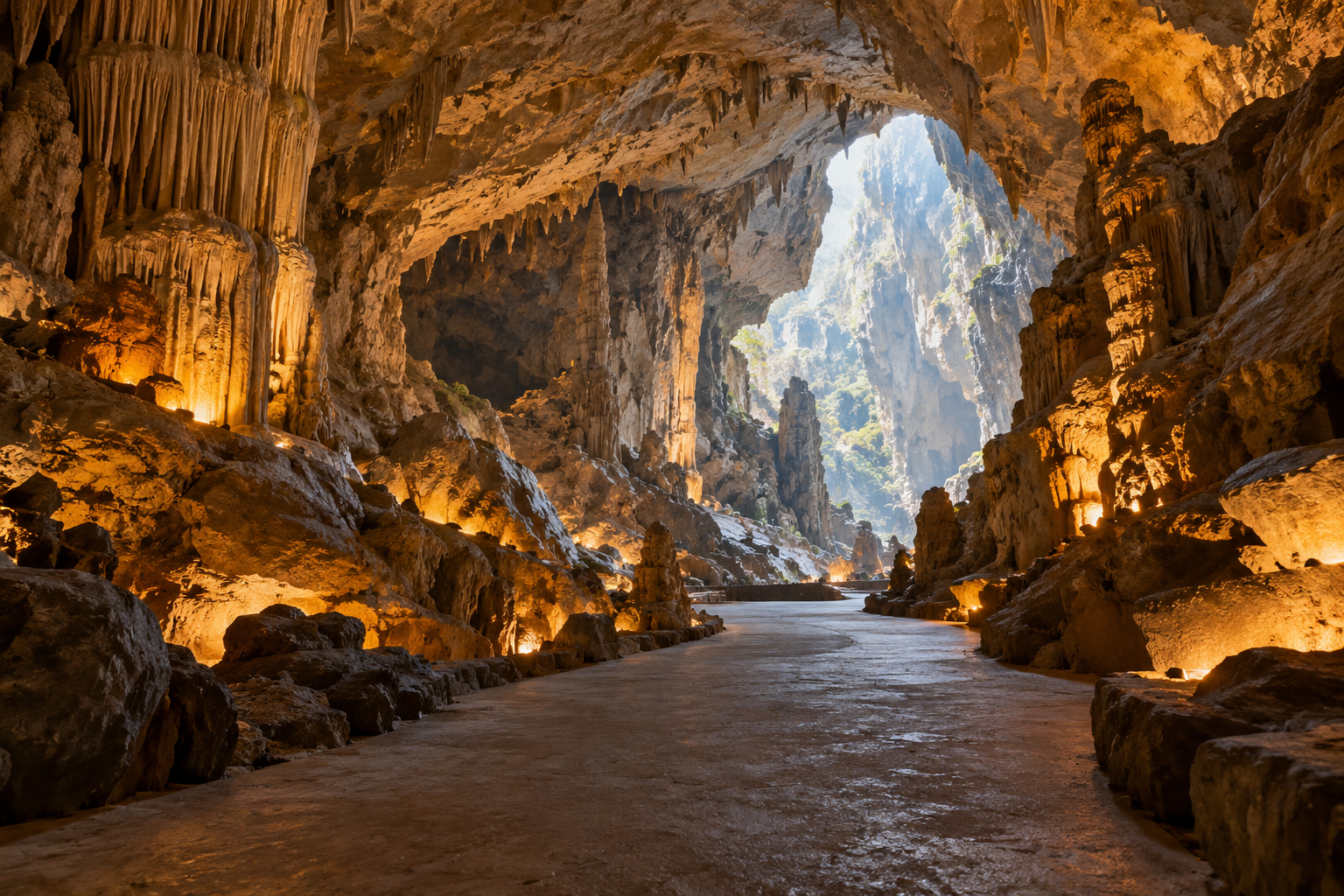
A themed cavern can make a short walk feel like a journey into another world. The effect often begins outside, with an opening that hints at scale, history, or something partly concealed. Inside, rock forms, sound, light, and the timing of each reveal shape the story. Theme Parks & Immersive Caverns examines that sequence from the first glimpse to the final transition back into the wider park. Explore believable geological cues, stylized environments, queue scenes, hidden equipment, scenic aging, and the relationship between spectacle and visitor orientation. Immersion becomes stronger when its practical framework is resolved: people can move comfortably, staff can operate the space, and maintenance can reach the systems behind the illusion. This collection is for readers interested in how scenic environments communicate through form rather than relying entirely on signs or screens. A compelling cavern does not need to show everything at once. It can use contrast, rhythm, and a carefully chosen focal point to create curiosity while keeping the overall experience coherent across visits and changing operational conditions throughout the year.
A: Stylization can work when its visual logic is coherent.
A: Enough for understanding without replacing the spatial experience.
A: Scale, texture, and lighting interact differently in physical space.
A: Circulation and orientation still need deliberate attention.
A: Inconsistent details, exposed equipment, and poorly resolved transitions.
A: Detail is most useful where visitors can notice it.
A: Hidden systems still require dependable access.
A: Use pacing, views, and details suited to waiting.
A: Layered details can enrich the same coherent experience.
A: Approved scenes, finishes, control settings, access routes, and repair references.