Materials & Construction

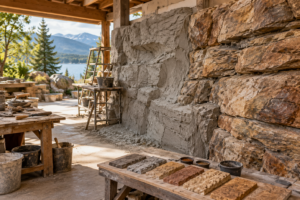
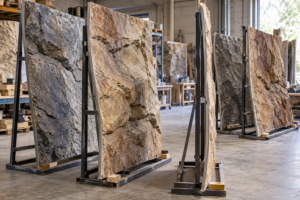
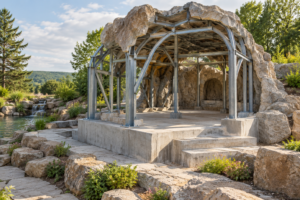
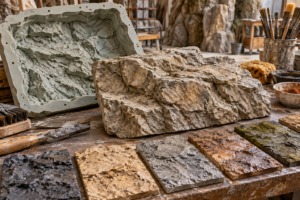
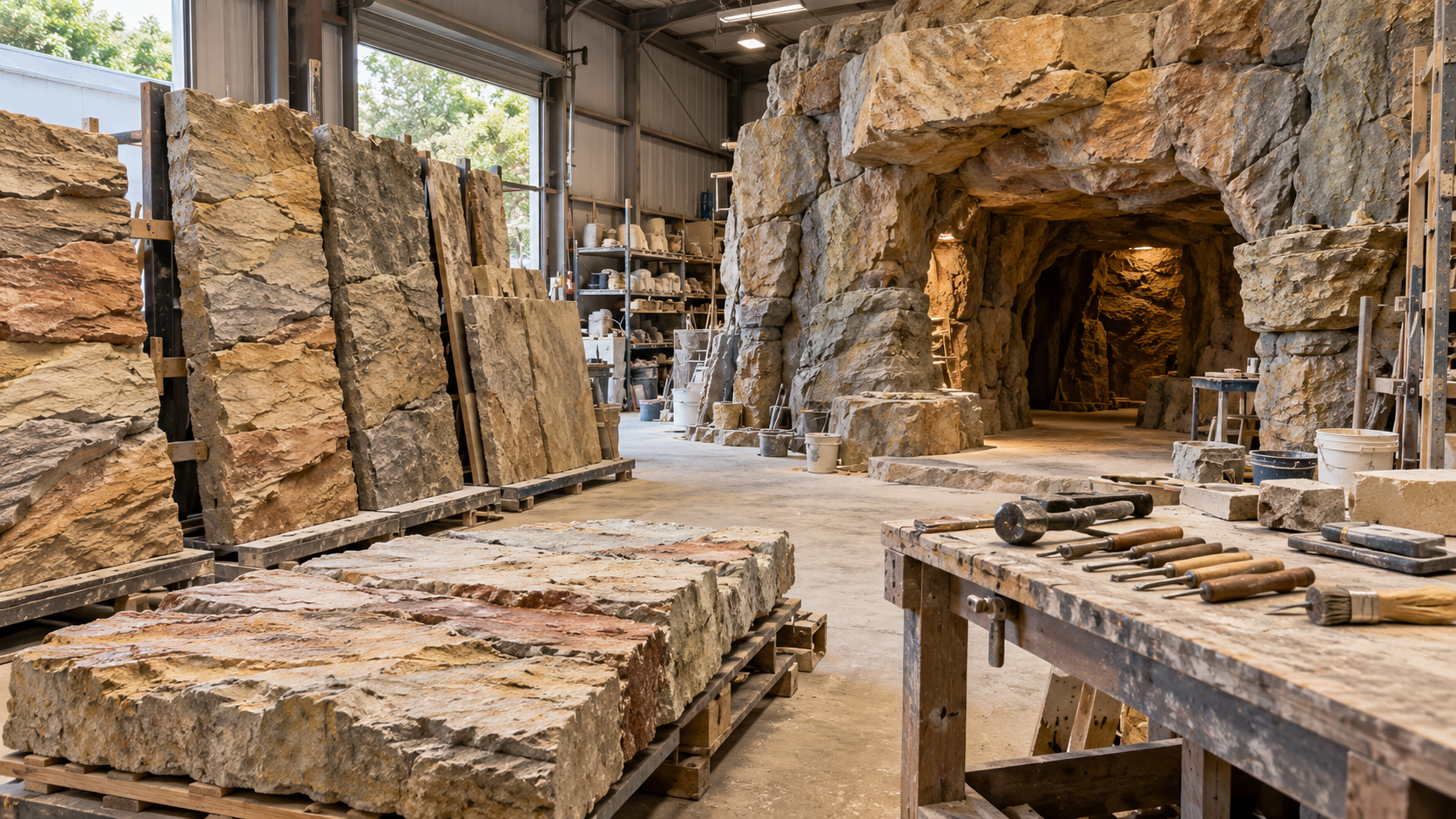
Illustration of textured artificial rock panels and a cave portal in a fabrication workshop

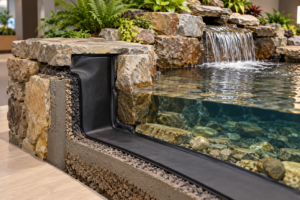
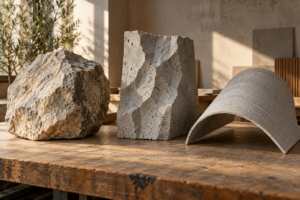
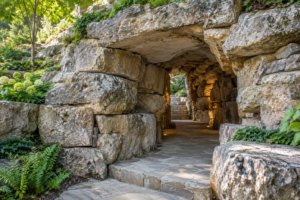
Behind a convincing rock face lies a set of decisions that visitors rarely see. A natural stone assembly, a sculpted concrete shell, and a lightweight scenic panel may suggest similar geology while relying on very different supports, joints, and construction methods. Materials & Construction opens that concealed side of grotto making. Examine how foundations, structural framing, rock surfaces, waterproofing, and drainage fit together, and why their interfaces deserve as much attention as their individual specifications. Follow the craft of shaping texture, making molds, arranging stone, and coordinating work that becomes difficult to reach after an enclosure is complete. Material selection involves more than appearance: exposure, weight, repairability, installation access, and the intended use of a surface all influence a suitable system. This collection helps project owners read proposals more thoughtfully and gives curious makers a vocabulary for discussing construction with specialists. It does not reduce an overhead structure to a decorative recipe. Instead, explore how a grotto can look effortless because its visible forms and hidden assembly have been considered together from the earliest design.

Assembly: Identify the full build-up behind a finished rock face.
Load path: Structural support must account for how forces reach the ground.
Natural stone: Individual pieces vary in shape, bedding, weight, and surface character.
Sculpted concrete: Carved or modeled finishes can interpret rock without using full stone masses.
GFRC: Glass fiber reinforced concrete is a material system with its own design and fabrication requirements.
Joints: Connections must accommodate the intended assembly and its movement.
Waterproofing: A decorative finish is not automatically a water-containment layer.
Drainage: Water needs a designed destination beyond the visible surface.
Access: Installation and future replacement affect panel size and connection choices.
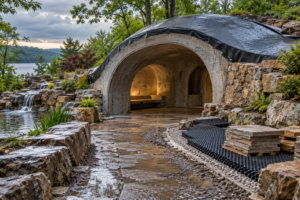
Documentation: Concealed work should be recorded before finishing hides it.
Stone selection: Bedding and weathering can guide the orientation of a visible rock face.
Sculptural layers: Broad masses establish geological form before fine textures are added.
Molded repetition: Reused impressions need thoughtful arrangement to avoid recognizable duplicates.
Panel edges: A convincing transition can matter more visually than the center of a panel.
Mockups: A representative sample can test shape, color, joint treatment, and lighting together.
Service openings: Removable rockwork can blend into a larger composition.
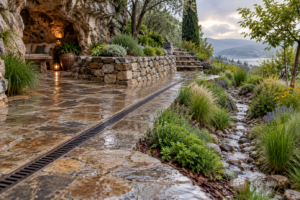
Drain outlets: Their positions must work with the surrounding landscape rather than merely disappear.
Finish samples: Wet and dry appearances can differ noticeably.
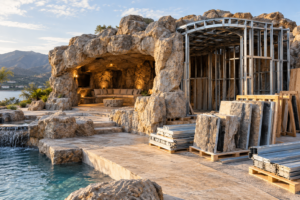
Construction access: A finished opening may be smaller than the components brought through it earlier.
Repair strategy: Keeping material records makes future matching less speculative.
Compare systems: Examine natural stone, sculpted concrete, and panel assemblies against the same project needs.
Read a section: Locate the scenic surface, support, waterproofing, and drainage layers.
Study connections: Ask how adjacent pieces meet and how those joints remain accessible.
Review exposure: Identify immersion, splash, sunlight, and temperature conditions separately.
Develop a sample: Evaluate the finish at the intended viewing distance.
Sequence hidden work: Coordinate services before enclosing the rock structure.
Inspect interfaces: Pay particular attention where different materials or trades meet.
Plan replacement: Consider how a failed component could be removed later.
Record concealed details: Preserve photographs and approved drawings with the project documents.
Revisit the budget: Compare complete installed systems rather than isolated material prices.
Q: Is artificial rock always lightweight?
A: No. Weight depends on the material, thickness, support system, and complete assembly.
Q: Does GFRC mean the same thing as ordinary concrete?
A: No. Its glass fiber reinforcement and manufacturing methods require appropriate specifications.
Q: Can a scenic shell support people?
A: Only where the complete structure has been designed for that use.
Q: Is waterproof paint enough for a grotto?
A: A coating cannot be assumed to solve every joint, penetration, substrate, or water-pressure condition.
Q: Why make a full-size mockup?
A: It reveals texture, joint, color, and lighting relationships that small samples may miss.
Q: Can natural stone be installed in any orientation?
A: Its properties and the proposed assembly must inform placement and support.
Q: Should every seam be rigidly concealed?
A: No. Movement and service requirements may call for joints that remain functional.
Q: What should be photographed before enclosure?
A: Supports, connections, service routes, waterproofing details, and other concealed work are useful records.
Q: Are thin panels interchangeable between manufacturers?
A: No. Their properties, connections, and intended applications can differ.
Q: Why coordinate drainage before carving finishes?
A: Finished rock shapes can obstruct or redirect water if drainage is treated as an afterthought.

Latest Materials & Construction Articles