
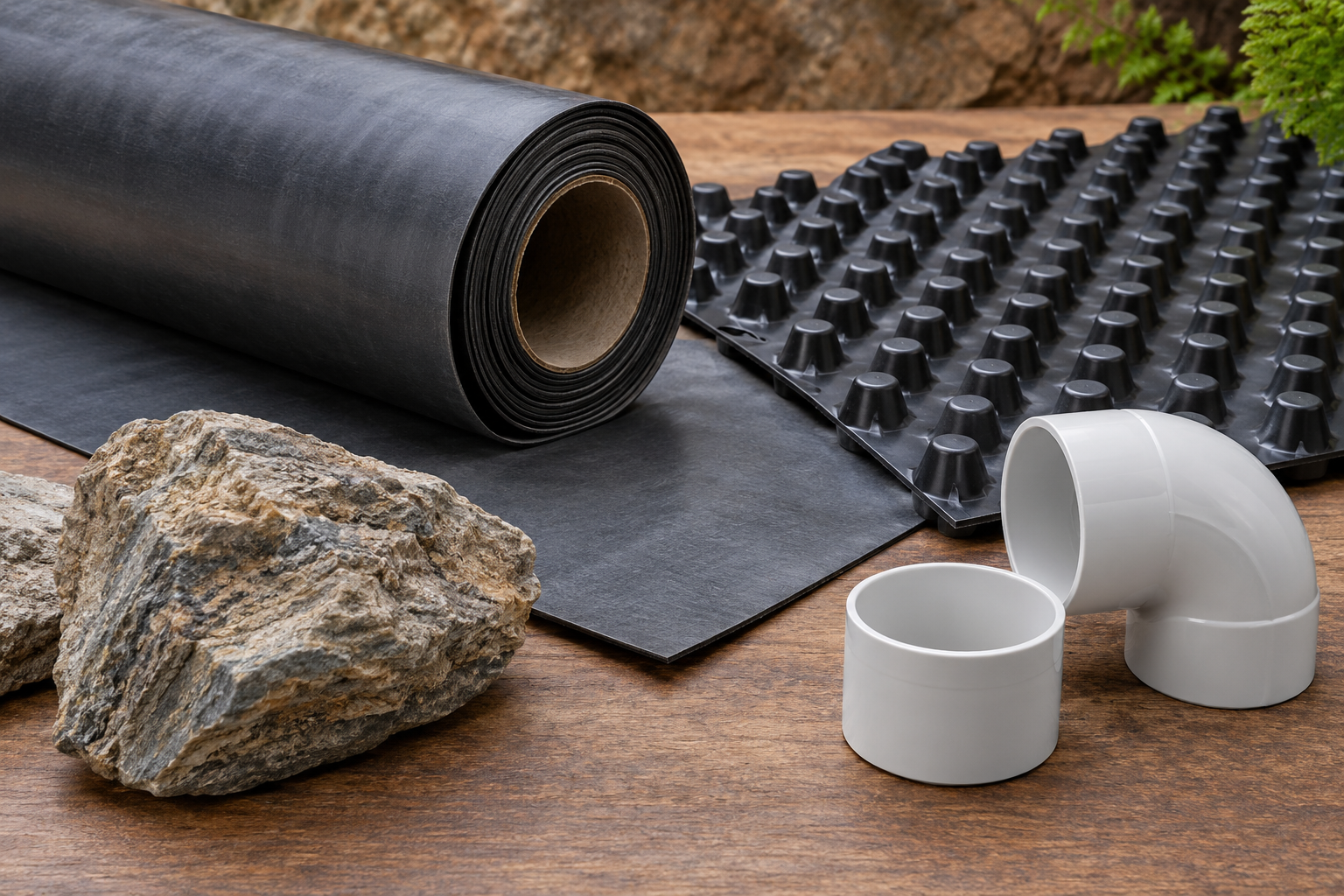
Water can arrive at a grotto as rainfall, groundwater, spray, condensation, or an intentional scenic flow. The words used to manage it describe different tasks: excluding water, directing it, collecting it, or allowing an assembly to dry. The Waterproofing & Drainage Glossary separates those tasks so that a surface treatment is not mistaken for a complete water-management system. Explore membranes, joints, penetrations, drainage layers, outlets, slopes, and the conditions that influence moisture movement. A leak names an unwanted passage of water, while dampness describes a condition that may have several causes. Knowing the difference helps readers record observations without jumping to a repair prescription. This reference also explains why continuity and interfaces matter: a junction can connect several materials and responsibilities. Definitions support clearer discussions with designers, installers, and maintenance teams, but do not specify products or details for an unknown site. The useful question is not whether something is waterproof. It is how the complete assembly handles the water conditions it will encounter, where that water goes, and how the system can be inspected.
A: No. Its documented purpose and limits must be checked.
A: The tasks differ and need coordinated design.
A: Condensation and other moisture sources may contribute.
A: They interrupt layers and require coordinated detailing.
A: Connected details must preserve the intended water barrier or drainage path.
A: Restrictions can change where water accumulates or escapes.
A: Performance, compatibility, and installation conditions determine suitability.
A: Timing, location, weather, operating conditions, and assembly records.
A: Qualified professionals familiar with the conditions and selected system.
A: Hidden components may need assessment and maintenance later.