Pool Grottos & Waterfalls

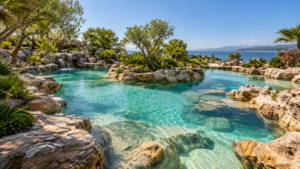
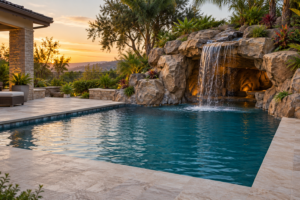
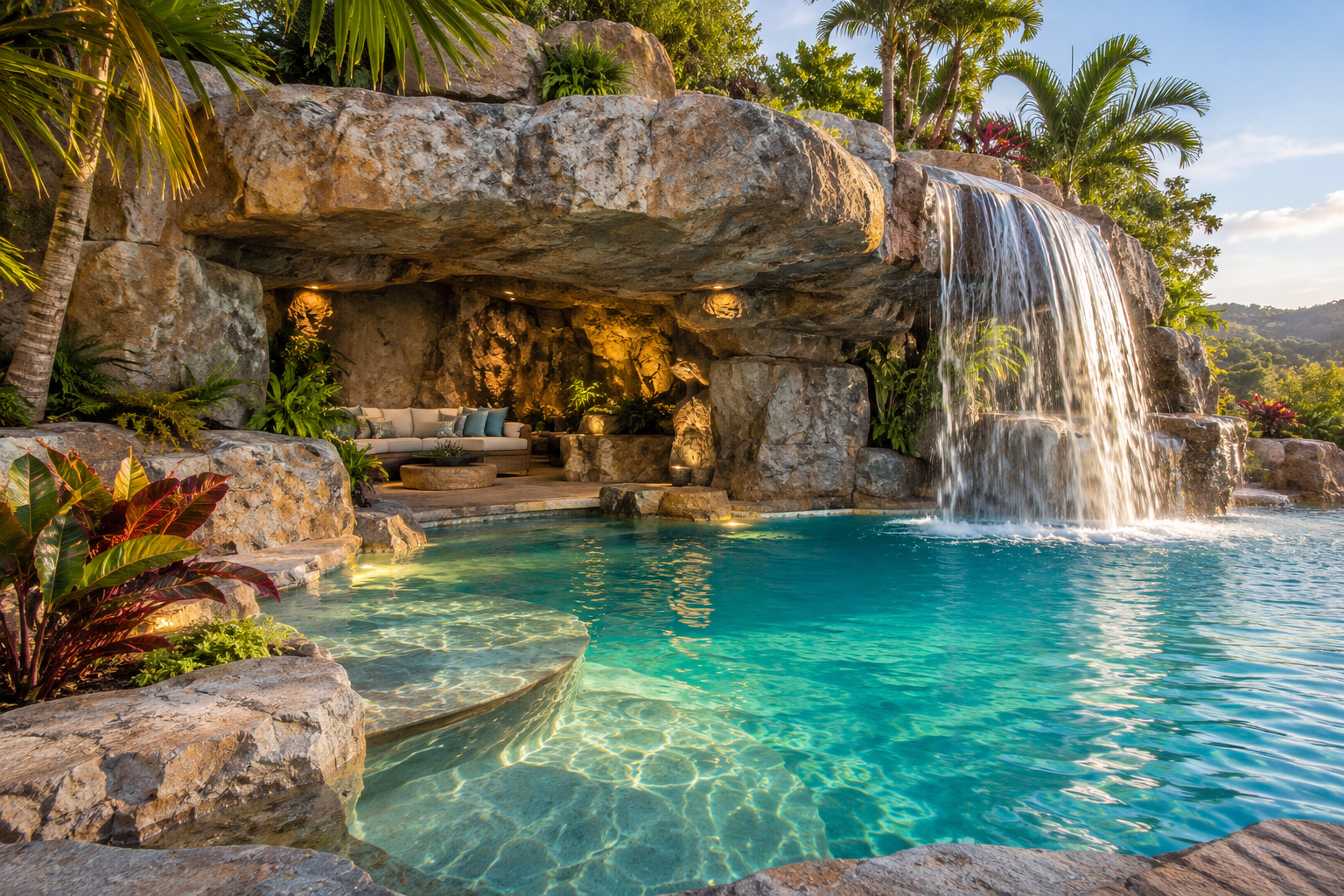
Illustration of a pool grotto with a rock canopy and broad waterfall

Water changes a grotto from a sheltered room into a moving environment. A falling sheet can frame its entrance, scattered cascades can animate its edges, and a still lagoon can reflect the ceiling overhead. Those effects also change sound, visibility, splash, and the way swimmers move through a pool. Pool Grottos & Waterfalls follows the relationship between the rock enclosure and the water system that brings it to life. Explore pool caves, swimming passages, spa retreats, streams, and renovations that add new features to an existing setting. Compare the visual character of different waterfalls while learning why circulation, plumbing access, drainage, and operating conditions belong in the same conversation. This is a place for homeowners developing an idea, designers arranging aquatic spaces, and readers curious about the machinery behind a convincing cascade. A beautiful water feature must still make sense when pumps stop, lights change, or maintenance begins. Look beyond the dramatic photograph to understand how the water arrives, where it lands, what surrounds it, and how the whole setting functions through an ordinary day.

Water path: Follow the complete route from supply to discharge and return.
Pool relationship: A grotto may border a pool, shelter part of it, or remain entirely dry.
Waterfall lip: The discharge edge influences the appearance of falling water.
Landing zone: Splash and turbulence affect the space below a cascade.
Circulation: Decorative movement and pool treatment requirements are related but distinct design questions.
Visibility: Rock projections and falling water can interrupt views into an aquatic space.
Operating modes: A feature looks and sounds different when its pump is stopped.
Maintenance access: Concealed valves and connections still need reachable service locations.
Water level: Changing levels alter the relationship between rock, outlets, and pool edges.
Coordination: Aquatic professionals must reconcile the scenic concept with the applicable project requirements.
Sheet falls: A relatively continuous veil emphasizes a clear edge and an open drop.
Broken cascades: Several rock contacts create a more fragmented movement pattern.
Pool caves: An overhead enclosure gives part of the pool a distinct spatial identity.
Dry ledges: A sheltered outlook can connect people with water without requiring immersion.
Swim-through routes: Openings require careful attention to visibility, circulation, and supervision.
Lagoon edges: Irregular outlines can connect water visually with planting and rockwork.
Spa settings: Warm-water use introduces different operating expectations from a decorative pond.
Stream approaches: A smaller watercourse can lead the eye toward a larger grotto feature.
Retrofit opportunities: Existing pools may offer useful viewpoints while imposing significant physical constraints.
Reflected ceilings: Ripples can animate overhead rock even when the lighting itself stays still.
Compare falling patterns: Observe how sheets, ribbons, and stepped cascades create different moods.
Listen at seating areas: Consider the sound where people converse rather than only beside the waterfall.
Sketch the splash zone: Separate desired wet surfaces from dry circulation.
Review the stopped condition: Examine exposed outlets and empty channels when water is off.
Trace equipment access: Identify the route needed to inspect or replace components.
Study pool sightlines: Look for areas concealed by rock forms or a water curtain.
Explore lighting positions: Consider reflections and glare from occupied viewpoints.
Investigate retrofit records: Gather existing pool drawings before assuming where new connections can go.
Coordinate planting: Select locations with the expected splash and service conditions in mind.
Compare operating scenarios: Discuss quiet, active, evening, and maintenance modes with the project team.
Q: Is a waterfall pump automatically the pool circulation pump?
A: No. The system arrangement depends on the design and treatment requirements.
Q: Can a grotto be added to an existing pool?
A: Sometimes, but structural conditions, access, plumbing, and operating requirements need project-specific review.
Q: Does more water always create a better waterfall?
A: No. The desired pattern depends on the outlet geometry and the intended effect.
Q: Why does a cascade sound different from a sheet fall?
A: The number and character of water impacts change the sound produced.
Q: Should a grotto hide all equipment?
A: Visual concealment should still allow the access needed for inspection and maintenance.
Q: Can a decorative rock ledge serve as seating?
A: Only where its design and intended use support that function.
Q: Why review the feature with its pump off?
A: The stopped condition exposes edges, channels, and surfaces that moving water may conceal.
Q: Are spa grottos simply smaller pool grottos?
A: No. Temperature, equipment, occupancy, and use patterns can differ substantially.
Q: Can a photograph establish swimmer visibility?
A: It shows only one viewpoint and operating condition, so a broader review is needed.
Q: What should a waterfall brief describe?
A: Include the visual pattern, sound expectations, splash tolerance, operating schedule, and service needs.
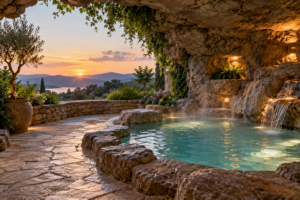
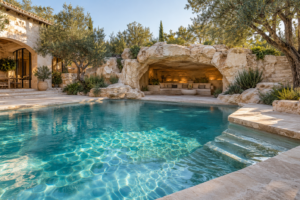
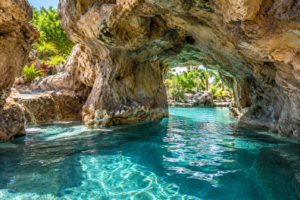
Illustration of a broad pool cave with a rock canopy and dry terrace

Pool Cave Design

Explore pool cave design through rock canopies, openings, visibility, water edges, lighting, and connections with surrounding pool areas.
Read More »
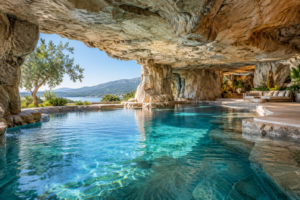
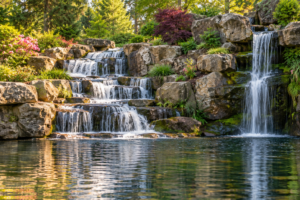
Illustration of an open rock passage connecting two pool areas

Swim-Through Grottos

Examine swim-through grotto concepts through open passages, visibility, orientation, aquatic circulation, and the experience of moving between spaces.
Read More »
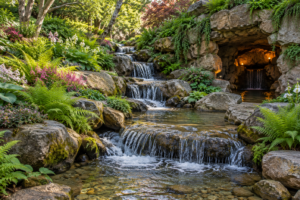
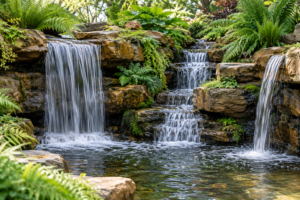
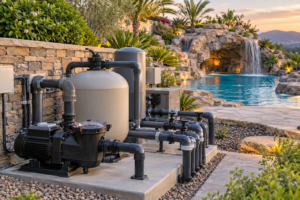
Illustration of a garden stream cascading toward a grotto

Streams & Cascades

Explore grotto streams and cascades through channels, stepped drops, rock placement, planting, splash, return paths, and garden composition.
Read More »

Latest Pool Grottos & Waterfalls Articles