
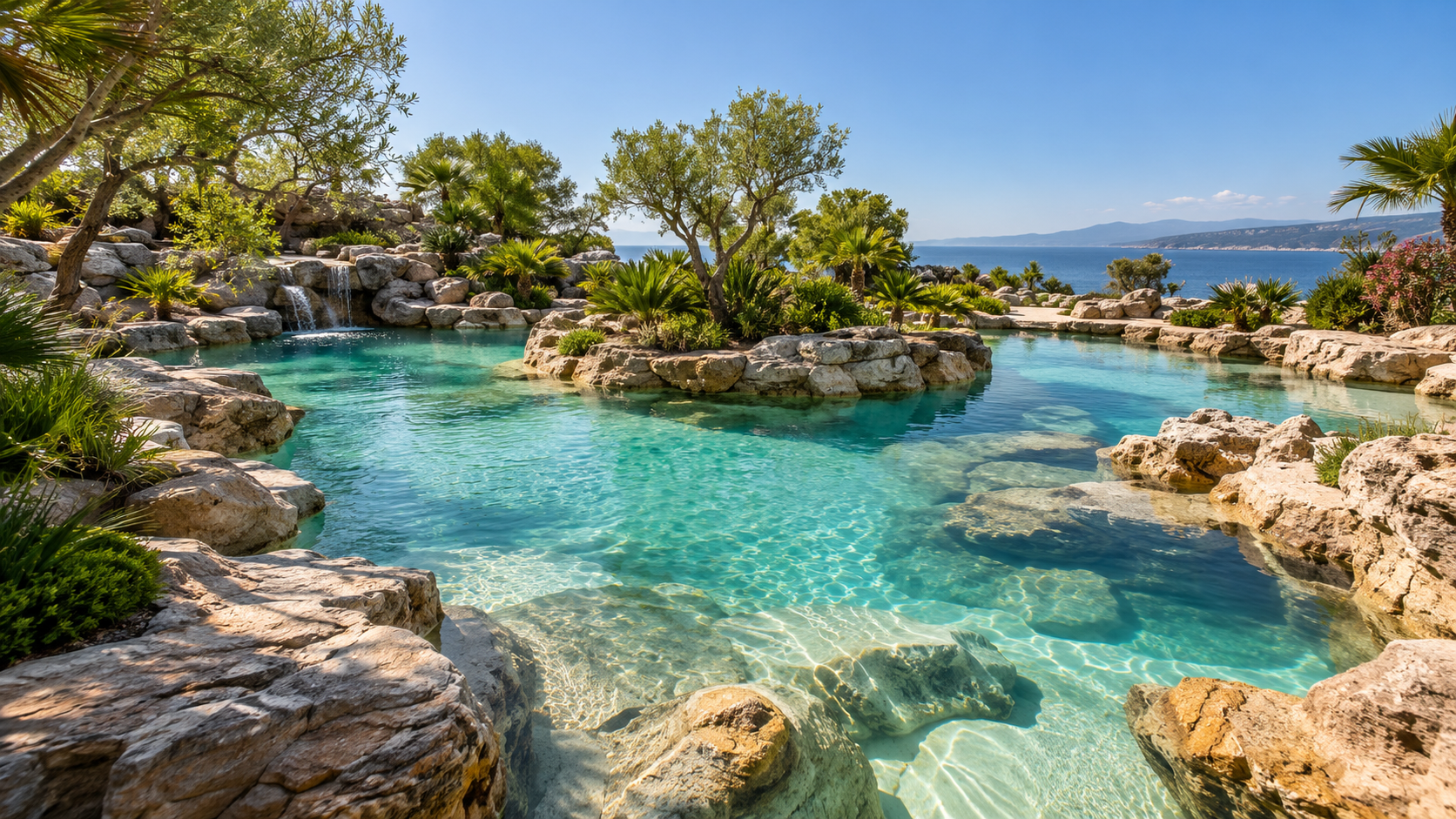
A shoreline can make a pool feel discovered rather than drawn with a ruler. Rock ledges, planting pockets, and changing views suggest a lagoon, but the apparent naturalness depends on careful decisions at the water’s edge. Rock Pools & Lagoons explores that boundary between scenic form and aquatic use. Compare broad open water with intimate coves, planted islands with clear sightlines, and rough-looking scenery with surfaces intended for contact. The collection looks at how pool outlines connect with grottos, paths, terraces, and surrounding landforms. It also separates natural appearance from natural water treatment: a lagoon-inspired swimming pool still requires the systems appropriate to its actual design and use. Readers planning a retreat can investigate the character they want without assuming every picturesque rock is suitable for every location. Study the composition from the house, the deck, and the water, then consider how it changes during cleaning and seasonal care. A convincing rock pool combines an expressive shoreline with understandable circulation, practical maintenance, and a relationship between the swimming environment and the landscape that frames it.
A: No. Appearance does not establish its treatment system.
A: Surface suitability depends on intended contact and project requirements.
A: Yes. Their location and mature growth should be reviewed.
A: They balance complex edges and support the intended activities.
A: It can introduce access and operating considerations that need planning.
A: It may anchor the composition, but its role depends on the brief.
A: No. Their intended use and systems differ.
A: Different levels expose different parts of the shoreline.
A: Root space, irrigation, exposure, access, and the aquatic environment.
A: Use a clear hierarchy of major masses, quieter edges, and open areas.