
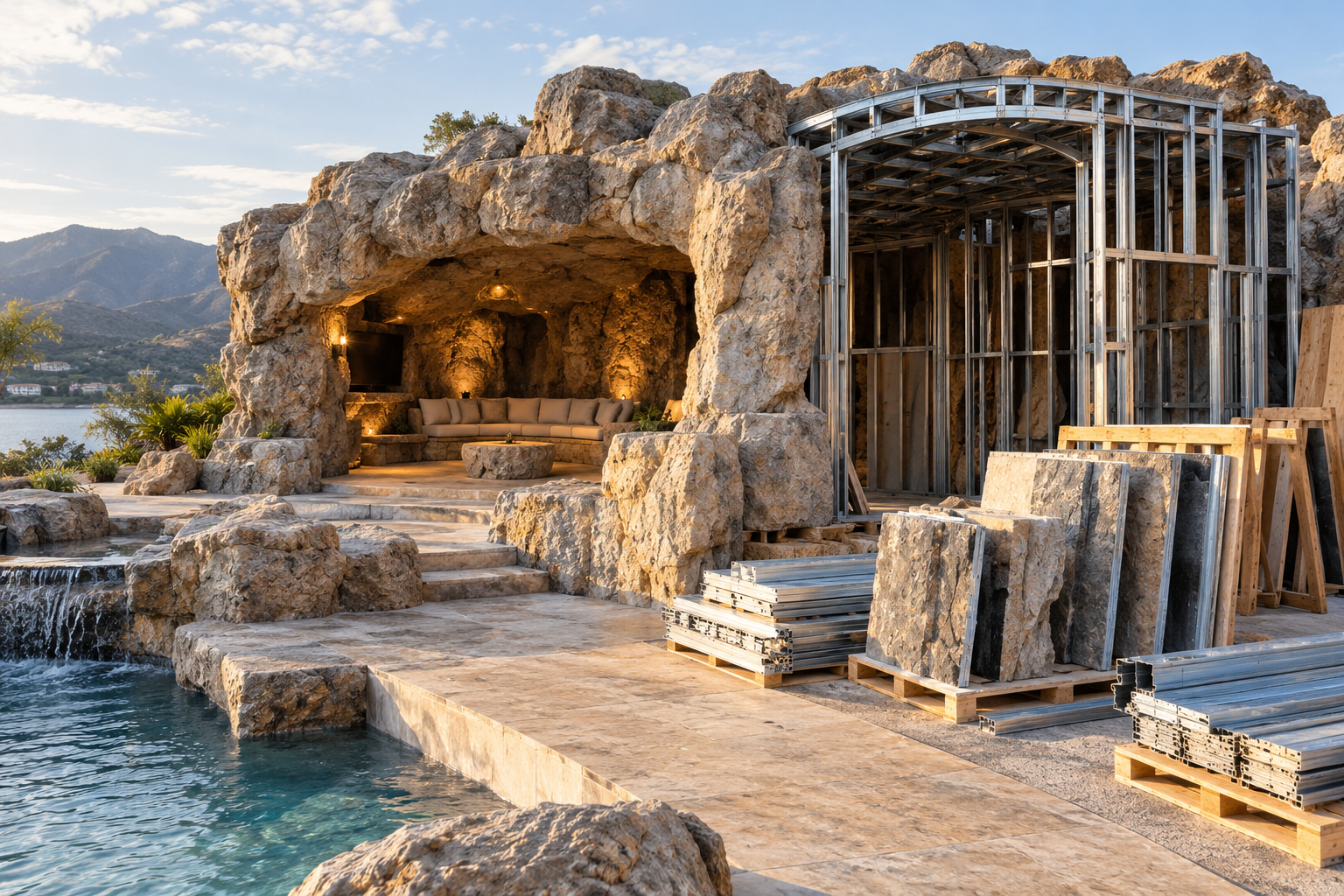
A grotto is assembled in time as well as in space. Some connections must be inspected before they disappear, some equipment must enter before an opening narrows, and some finishes depend on earlier work reaching the appropriate condition. Construction Methods & Sequencing follows these relationships from preparation to closeout. Compare site-built and prefabricated approaches, the coordination of scenic and technical work, and the decisions that determine when a structure can be enclosed. The subject is less about a universal order of tasks than about recognizing dependencies in a particular project. A beautiful final surface should not prevent access to an unfinished service connection behind it. This collection helps owners understand schedules and helps designers communicate the information needed by fabricators, installers, and specialist trades. It also considers mockups, delivery routes, temporary protection, inspections, and the records handed over when work is complete. By examining how the assembly comes together, a grotto proposal becomes easier to evaluate beyond its finished appearance, with attention to the moments when different systems meet and responsibility needs to be clear.
A: No. Methods and dependencies depend on the project.
A: Later finishes may hide important details.
A: No. Components still need to fit actual conditions.
A: It identifies who resolves a connection between systems or trades.
A: Access can limit component size and timing.
A: No. Concealed work and verification may remain.
A: Yes. Revisions can affect downstream tasks and future maintenance.
A: During the project, not only after completion.
A: It answers a defined question at representative scale.
A: Verified work plus usable operating, maintenance, and installation records.