
Daylight & Shadow

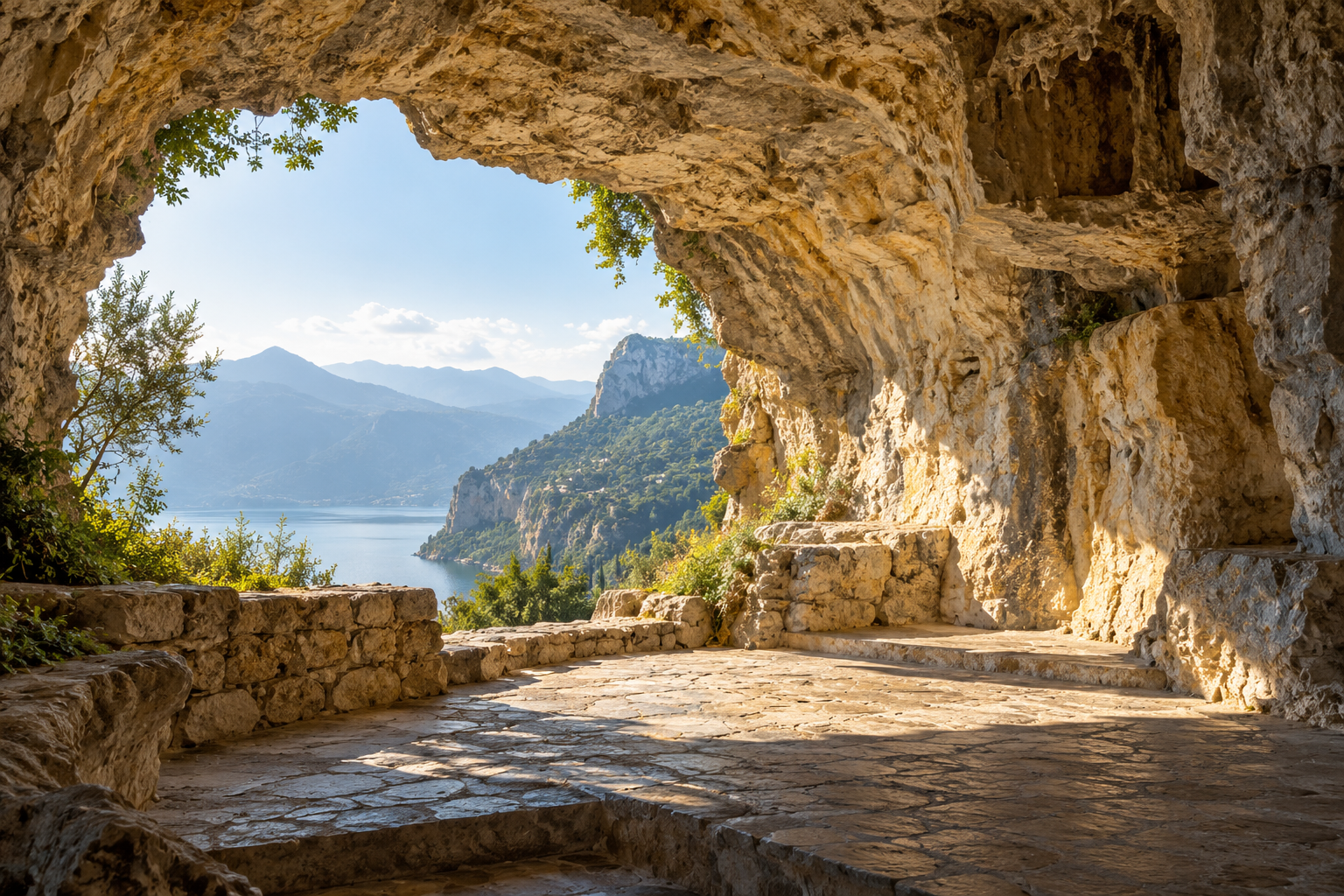
Concept illustration of sunlight entering a naturalistic grotto through a broad opening, sharp and soft shadows revealing layered stone, quiet dry terrace

The sun redraws a grotto throughout the day. An entrance that glows in the morning may become a dark outline by afternoon, while an overhead opening can send a patch of light across the floor. Daylight & Shadow explores this changing architecture. Study orientation, opening shape, overhang depth, reflected light, and the contrast between exterior brightness and interior shelter. These relationships influence more than atmosphere: they affect which details remain visible and how comfortable different places feel for their intended use. The collection invites readers to observe a site over time rather than choosing a design from one ideal view. Compare direct sunlight with diffuse sky light, deep recesses with open canopies, and planted edges with bare rock thresholds. Seasonal changes deserve attention too, especially where trees or adjacent buildings alter exposure. For designers and homeowners, daylight studies can reveal opportunities before fixtures are added. A grotto uses the movement of natural light as part of its identity, preserving useful shade while allowing selected surfaces and views to emerge clearly at moments throughout the day.

Orientation: The opening relates to the sun path.
Direct light: Sunlight creates stronger directional shadows.
Diffuse light: Sky illumination produces softer transitions.
Overhang: Depth changes the sheltered area.
Reflection: Nearby surfaces can brighten a recess.
Contrast: Exterior brightness affects interior visibility.
Season: Solar position changes through the year.
Planting: Leaves modify light and shadow.
Observation: Several times reveal more than one photograph.
Use: Evaluate shade where people actually sit or move.
Morning identity: Early light may favor one surface.
Afternoon shift: The same opening can become silhouetted.
Overhead aperture: A small opening can create a moving accent.
Pale surfaces: Reflected light can soften darkness.
Deep recess: Greater enclosure changes sky exposure.
Tree canopy: Seasonal growth alters screening.
Adjacent buildings: Existing structures affect daylight availability.
Water bounce: Reflections can illuminate ceilings.
Cloud conditions: Overcast skies change the scene.
Viewing position: Bright exterior views can hide interior detail.
Sun-path studies: Compare relevant dates and times.
Site photographs: Record viewpoint and time consistently.
Physical models: Explore openings under directional light.
Section drawings: Examine overhang and aperture geometry.
Landscape records: Include mature planting dimensions.
Material samples: Compare surface reflectance.
View sketches: Identify details that should remain visible.
Time-lapse references: Observe changing shadows.
Design software: Use appropriate location and geometry inputs.
Observation diary: Note comfort and visibility alongside appearance.
Temporal design: The grotto has several daily compositions.
Contrast management: More daylight does not always reveal more detail.
Opening depth: Thick thresholds create layered shadow.
Borrowed illumination: Exterior surfaces contribute to interior light.
Seasonal expectations: A summer image cannot describe winter conditions.
Plant growth: Future canopy changes should inform planning.
Activity alignment: Match favored daylight with intended use times.
Form emphasis: Shadows can clarify geological layers.
Night transition: Daylight strategy informs evening lighting needs.
Site specificity: Orientation effects cannot be copied unchanged between locations.
Moving patches: Small apertures create traveling accents.
Leaf drawings: Wind animates plant shadows on rock.
Soft mornings: Diffuse light reveals color differently from direct sun.
Dark frames: A shaded entrance can intensify a landscape view.
Reflective water: Light can reach surfaces beyond direct sunlight.
Seasonal surprises: A winter opening may admit unexpected sun.
Quiet ceilings: Reflected daylight can reveal overhead texture.
Cloud edits: Passing weather changes contrast quickly.
Layered thresholds: Deep openings create several tones of shadow.
Daily renewal: The same structure offers changing visual experiences.
Q: Should daylight be studied only at noon?
A: No. Intended use times and seasonal conditions matter.
Q: Can a small opening light a large chamber?
A: Its effect depends on geometry and surrounding surfaces.
Q: Why record photograph times?
A: They explain the observed light conditions.
Q: Do trees change the daylight plan?
A: Growth and leaf cycles can alter exposure.
Q: Is deeper shade always more comfortable?
A: Comfort depends on the broader environment and use.
Q: Can reflected light matter inside?
A: Yes. Water and pale surfaces can contribute illumination.
Q: Why compare cloudy conditions?
A: Diffuse light produces a different scene.
Q: Can a design be copied between orientations?
A: Its daylight behavior will change.
Q: What do sections reveal?
A: They show how overhangs and openings control sky exposure.
Q: How should success be evaluated?
A: Observe visibility and experience at relevant positions and times.