Resorts & Themed Environments

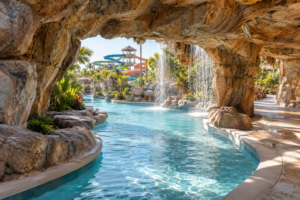
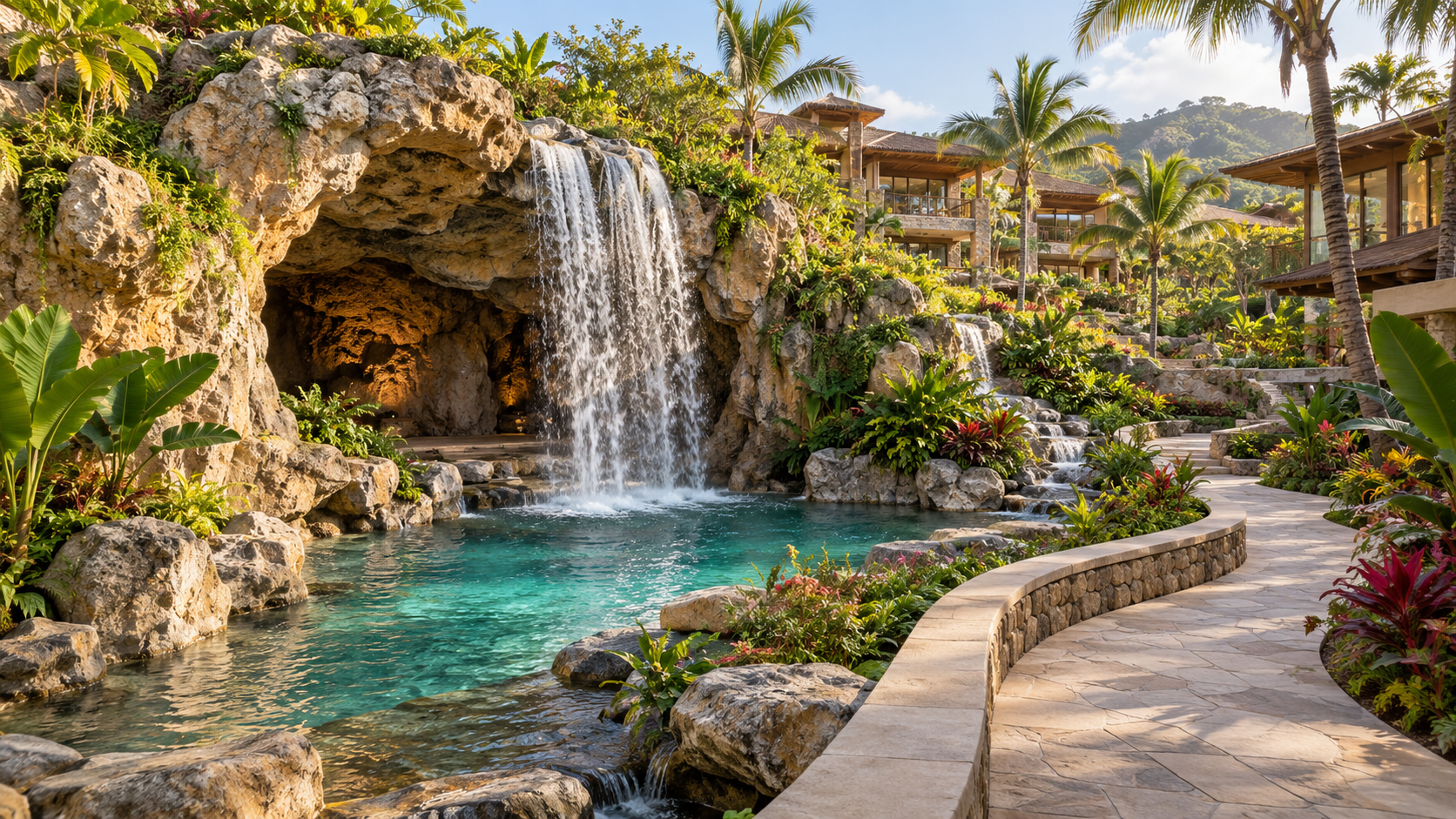
Illustration of a resort grotto and waterfall beside a landscaped promenade

A cavern beside a hotel pool has a different job from a cave inside a museum. One may offer retreat and shade; the other may guide a story, explain geology, or frame an encounter with wildlife. Resorts & Themed Environments examines how grottos take on meaning through their setting. Explore hospitality spaces, aquatic attractions, public gardens, immersive entertainment, residential courtyards, and interpretive environments where rock forms become part of a visitor experience. The interesting questions extend beyond visual spectacle. How does a guest discover the entrance? Where do groups pause? What should remain visible to staff, and how does the setting operate when attendance changes? A convincing environment also needs boundaries between public experience and service activity, along with materials and details suited to its particular use. This collection connects scenic ambition with the everyday realities of circulation, interpretation, upkeep, and inclusive access. Compare settings to understand why a successful idea cannot simply be copied from one venue into another. The strongest grotto belongs to its audience, its surroundings, and the story of that place.

Venue purpose: Define the grotto's role within the destination.
Guest journey: Arrival, discovery, occupation, and departure form a connected sequence.
Audience: Families, diners, swimmers, and museum visitors bring different expectations.
Capacity: A scenic pause can become a circulation bottleneck when groups gather.
Operations: Staff access and service routes belong in the initial spatial plan.
Interpretation: A cave-like setting can communicate a subject through form and experience.
Habitat needs: Animal environments require species-specific expertise beyond scenic appearance.
Public durability: Frequent contact changes the demands placed on finishes and details.
Identity: Rock character can connect an attraction with its broader landscape or narrative.
Inclusive experience: The defining feature should be considered from different users' viewpoints.
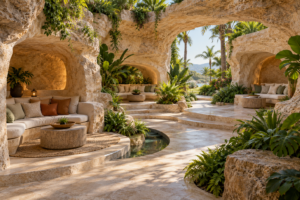
Resort retreat: A shaded recess can provide an alternative to an active pool terrace.
Aquatic passage: A grotto can mark a transition between different water experiences.
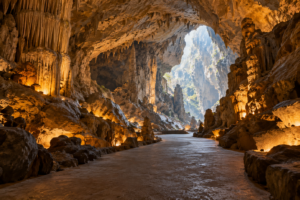
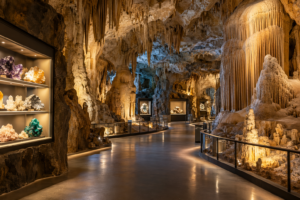
Museum chamber: Controlled enclosure can focus attention on geological interpretation.
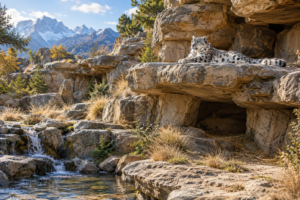
Zoo rockwork: Scenic forms may frame views while supporting specialized habitat requirements.
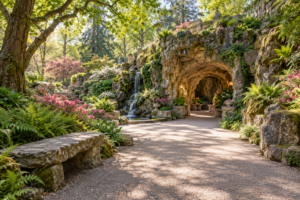
Garden destination: A grotto at the end of a walk can reward gradual discovery.
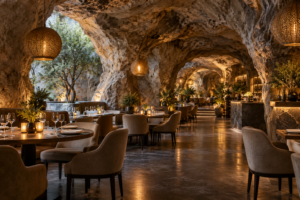
Dining enclosure: Rock and light can establish intimacy around hospitality seating.
Themed threshold: A cavern entrance can introduce a change in narrative setting.
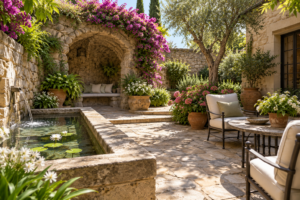
Courtyard refuge: A small residential grotto can organize a quieter part of the garden.
Queue environment: Scenic detail can give waiting visitors something meaningful to notice.
Seasonal presentation: Planting and operating schedules can change the same space's character.
Map visitor flows: Trace individual movement and group gathering separately.
Compare venue types: Study how similar rock forms support different activities.
Locate staff viewpoints: Consider operational visibility alongside guest privacy.
Develop the narrative: Decide what the space communicates before selecting scenic motifs.
Review dwell time: Distinguish a passing impression from an experience people occupy.
Test service access: Follow deliveries and maintenance movement through the plan.
Examine contact surfaces: Identify where frequent touching or seating will occur.
Coordinate interpretation: Match exhibits and messages with the environment's actual subject.
Plan quiet alternatives: Consider visitors who prefer reduced sound or visual stimulation.
Evaluate closure modes: Review how the surrounding venue works when the grotto is unavailable.
Q: Can a residential grotto concept be enlarged for a resort?
A: Its appearance may inspire a project, but public use introduces different operational requirements.
Q: Does immersion require hiding every exit?
A: No. A coherent theme can coexist with clear circulation and appropriate wayfinding.
Q: Why does dwell time matter?
A: Spaces occupied for conversation or rest need different arrangements from brief transitions.
Q: Can artificial rock alone create a wildlife habitat?
A: No. Habitat design must address the needs of the intended species and care team.
Q: Should a museum cave reproduce a real location?
A: It can, but the interpretation should distinguish documented reconstruction from imaginative scenery.
Q: How can a grotto support a public garden?
A: It may frame views, offer shelter, or become a destination within a longer walk.
Q: Are themed restaurants mainly a visual design problem?
A: Sound, service, seating, lighting, and cleaning also shape the experience.
Q: What happens when a waterfall is closed?
A: The venue needs a workable circulation and presentation plan for that condition.
Q: Can a quiet grotto sit beside an active attraction?
A: Potentially, if the layout and environmental design address the competing activities.
Q: What makes a themed cavern convincing?
A: Consistent spatial, material, lighting, and narrative decisions reinforce each other.

Latest Resorts & Themed Environments Articles