
Resort & Hotel Grottos

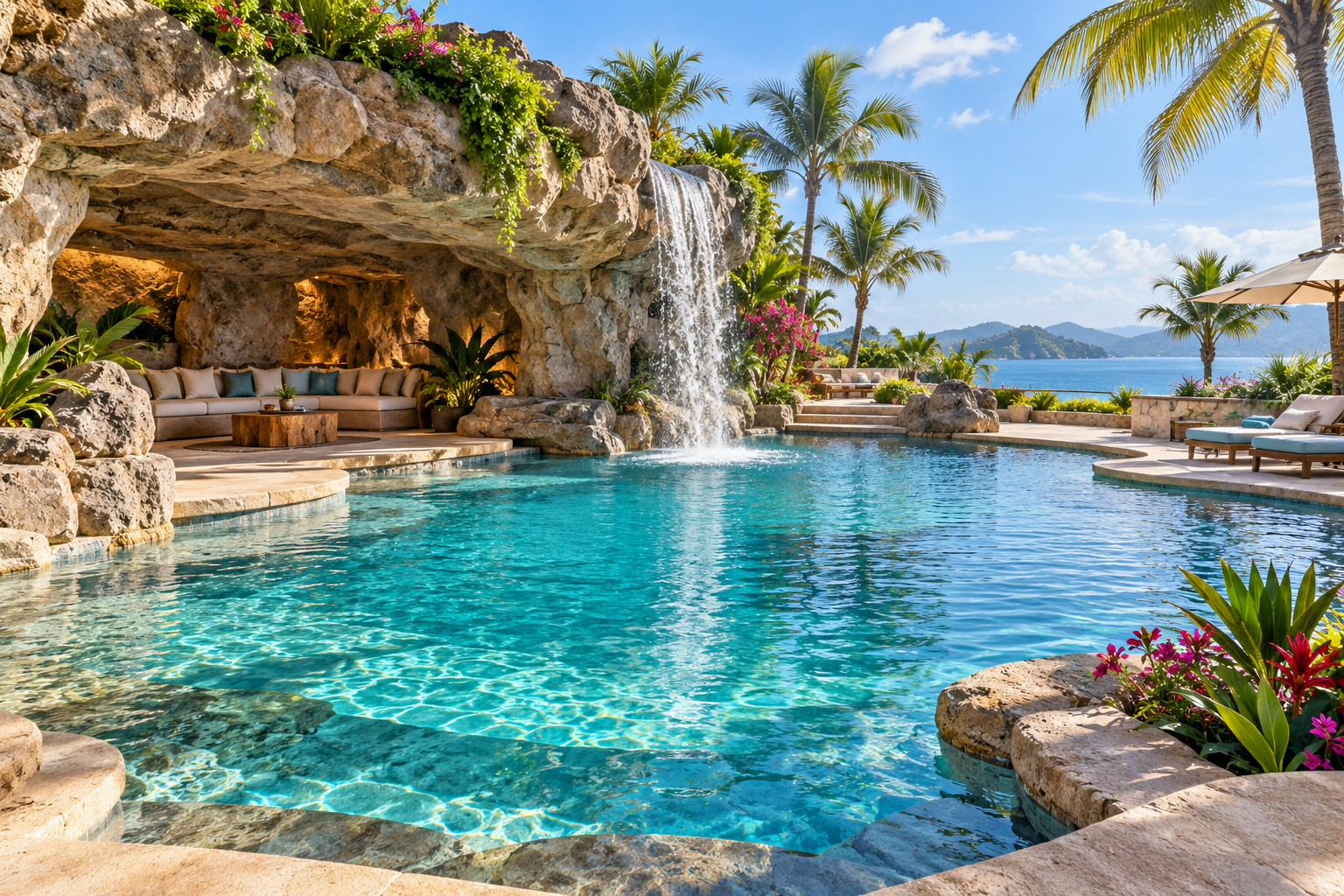
Concept illustration of an elegant resort swimming pool with a broad naturalistic stone grotto lounge at one edge, palm garden, bright tropical morning, spacious terraces

A resort grotto has more than one audience. Guests see a place to linger, photographers see a distinctive backdrop, and operators see an amenity that must fit daily service. Those perspectives meet at the water edge, along the approach, and behind the scenic shell. Resort & Hotel Grottos explores how a memorable retreat can belong to the larger property rather than feel like an isolated attraction. Consider the relationship to guest rooms, food service, pool activity, quiet seating, and evening lighting. A dramatic waterfall may suit an active recreation area while overwhelming a neighboring relaxation terrace. A secluded lounge may need a clearer connection to staff circulation. Here, design inspiration is paired with questions about guest expectations, operating hours, cleaning access, capacity, and seasonal change. Owners, hospitality designers, and curious travelers can examine how rockwork creates identity without losing sight of everyday use. The aim is a setting that feels special on arrival and continues to work during busy afternoons, quiet mornings, maintenance visits, and the many ordinary moments that shape a guest’s overall impression.

Amenity role: Define what guests will do here.
Property identity: Rock character should suit the wider setting.
Guest journey: Connect arrival, use, and departure.
Activity zoning: Separate energetic and restful experiences.
Operating model: Decide who manages the space.
Pool relationship: Coordinate wet and dry areas.
Service routes: Staff need practical access.
Room adjacency: Consider nearby accommodation and privacy.
Seasonal use: Plan for changing demand and conditions.
Guest information: Explain access and operating arrangements.
Morning use: Quiet guests may value different settings.
Peak periods: Crowding changes comfort and circulation.
Evening character: Lighting can support a calmer atmosphere.
Sound reach: Water effects extend beyond their source.
Service visibility: Discreet routes still require adequate space.
Photo appeal: A viewpoint should not obstruct circulation.
Towel handling: Wet amenities affect adjacent furnishings.
Mixed groups: Families and couples may seek different experiences.
Closure planning: Maintenance interrupts guest expectations.
Property context: A grotto should connect to surrounding amenities.
Guest journey maps: Trace practical movements through the amenity.
Adjacency diagrams: Compare rooms, pools, dining, and service.
Operational briefs: Record staffing and opening assumptions.
Finish samples: Review appearance alongside care requirements.
Lighting scenes: Compare daytime and evening uses.
Furniture layouts: Preserve usable circulation around seating.
Maintenance schedules: Coordinate work with guest activity.
Acoustic studies: Assess relationships to sensitive neighbors.
Capacity reviews: Evaluate intended occupancy with qualified designers.
Guest feedback records: Track recurring experience problems.
Signature without excess: One strong feature can establish identity.
Quiet boundaries: Shelter and separation support relaxation.
Service realism: Hidden operations need deliberate design attention.
Experience continuity: Paths and planting connect the grotto to the property.
Revenue assumptions: Additional complexity requires an operational purpose.
Time-based design: The same space can serve different daily rhythms.
Material continuity: Repeated finishes can connect new and existing areas.
Staff perspective: Cleaning and inspection routes reveal overlooked constraints.
Privacy balance: Seclusion should preserve appropriate oversight.
Long-term value: Reliable everyday use supports lasting appeal.
Arrival framing: A glimpse can create anticipation before entry.
Changing reflections: Pool light animates nearby stone.
Morning shadows: The retreat can feel new at different hours.
Small gestures: A shaded seat may be more valued than spectacle.
Sound gradients: Moving away from water changes the atmosphere.
Framed views: An opening can borrow distant scenery.
Night silhouettes: Dark rock outlines can remain visually powerful.
Seasonal planting: Vegetation shifts the perceived character.
Tactile contrasts: Dry furnishings and rough rock create variety.
Memory anchors: A distinctive entrance can become a guest landmark.
Q: Must a resort grotto contain water?
A: No. A dry lounge can provide a retreat.
Q: Should every grotto be secluded?
A: Privacy must be balanced with access and operational oversight.
Q: Why involve hotel staff early?
A: They understand service, cleaning, and recurring guest needs.
Q: Can a waterfall affect rooms nearby?
A: Its sound and operating hours deserve review.
Q: What makes a grotto feel integrated?
A: Coherent routes, materials, planting, and amenity relationships.
Q: How should peak demand be considered?
A: Review occupancy, movement, seating, and service together.
Q: Does dramatic lighting need to run all night?
A: Scenes can reflect the operating schedule.
Q: Why plan temporary closures?
A: Guests and staff need clear alternatives during maintenance.
Q: Can an existing resort add a grotto?
A: Feasibility depends on site, structure, utilities, and operations.
Q: What belongs in the initial brief?
A: Intended guests, activities, adjacencies, atmosphere, and operating responsibilities.
Latest Resort & Hotel Grottos Articles