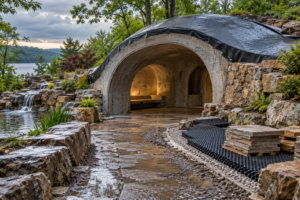
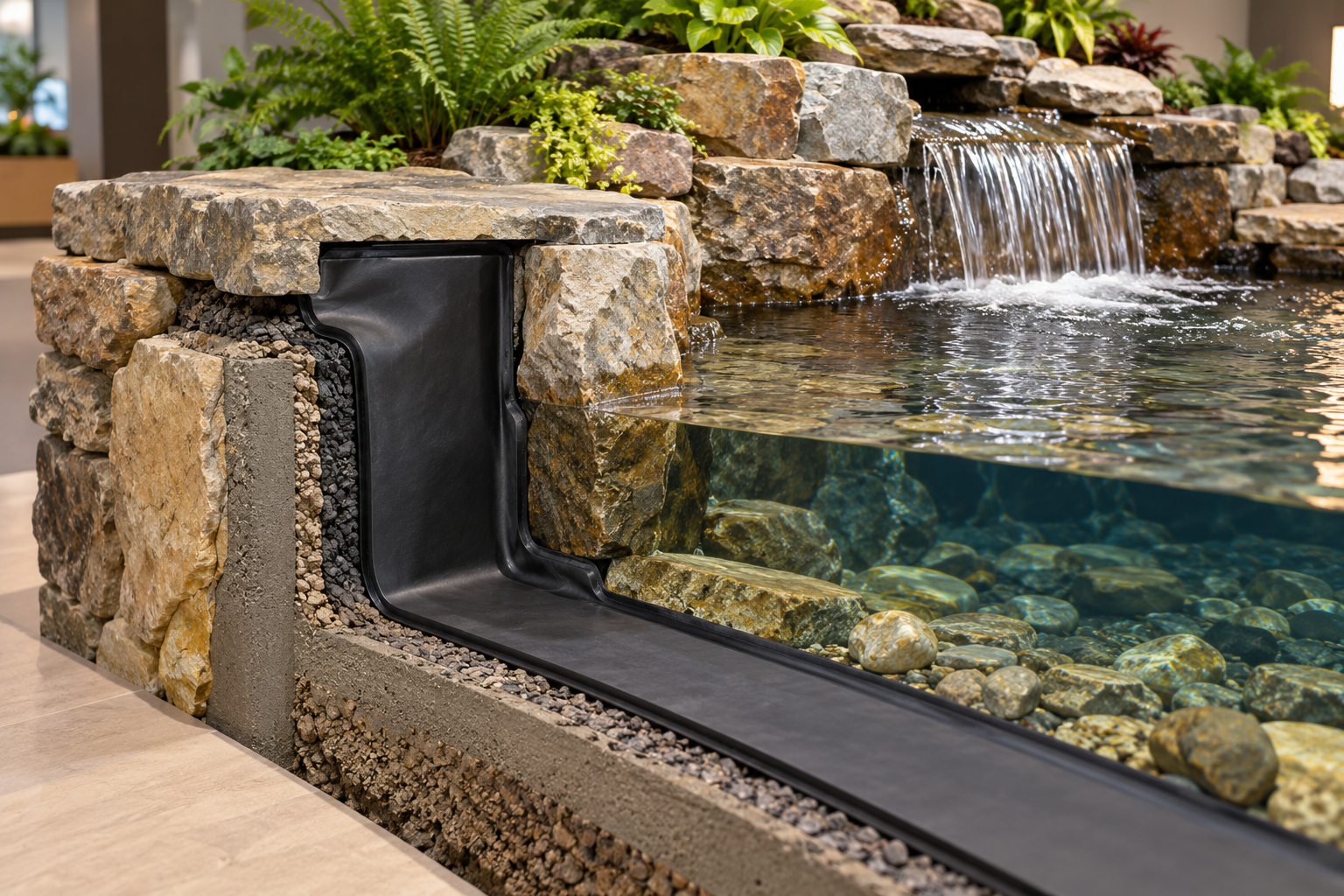
A damp mark on grotto rock does not explain where the water came from. It may relate to intended splash, moisture moving through an assembly, a failed interface, or conditions elsewhere in the enclosure. Waterproofing & Moisture Control begins with those distinctions. Explore the roles of substrates, membranes, coatings, joints, penetrations, drainage interfaces, and ventilation in managing water around constructed grottos. The finish is only one layer, and making it look sealed does not establish that the whole system contains or excludes water appropriately. This collection helps readers understand why details at corners and service penetrations deserve attention before the scenic surface is complete. It also separates waterproofing from other moisture questions, including condensation and the drying behavior of materials. Owners can use the terminology to read proposals and maintenance reports more carefully, while designers can consider how hidden layers connect across changing geometry. The aim is a coordinated water-management strategy with suitable materials, documented details, and service access, rather than confidence in a single product applied over an unexplained problem after construction has finished.
A: No. The source and complete assembly must be understood.
A: Yes. The visible mark may not locate entry.
A: No. Their mechanisms differ.
A: They interrupt water-control continuity.
A: Only where its specified application supports it.
A: Movement requirements must inform detailing.
A: Later inspection may not reveal them.
A: Appearance alone rarely establishes the cause.
A: Before finishes conceal the relevant interfaces.
A: Appropriate qualified specialists should investigate the actual system.