
Ventilation & Thermal Comfort

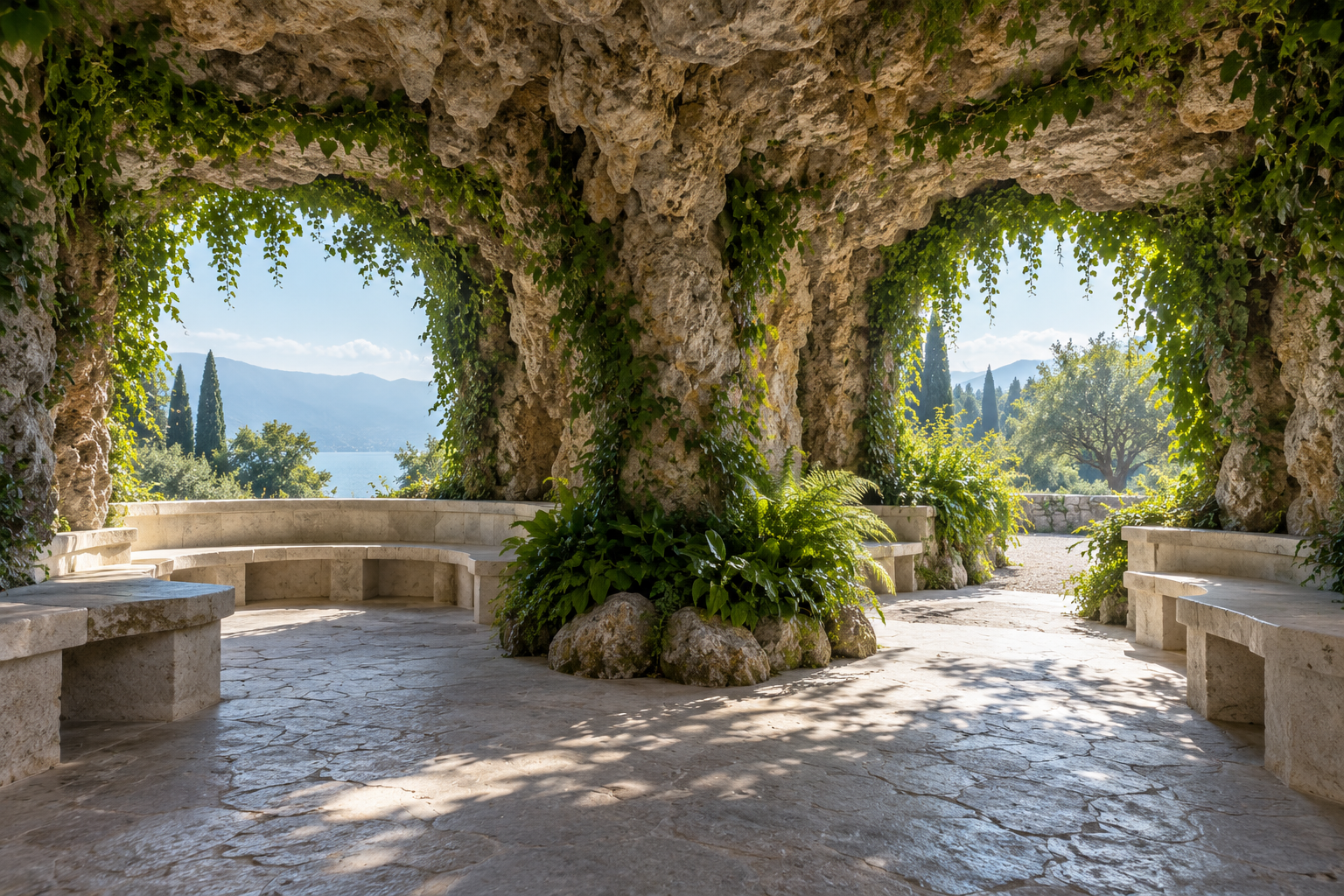
Concept illustration of an airy open-sided garden grotto with opposite openings, deep shade, pale stone seating and soft daylight, visible clear air and

Shade is only one part of a comfortable grotto. Air movement, moisture, surfaces, occupancy, and the conditions outside the opening all influence how the enclosure feels. Ventilation & Thermal Comfort explores those relationships without assuming that every cave-like space behaves like a natural cave. A garden shelter, an enclosed hospitality room, and a heated spa grotto have different environmental demands. Compare open edges, deeper recesses, sun exposure, mechanical equipment, and the pathways through which air enters and leaves. The collection helps readers describe discomfort more precisely than simply calling a space hot or stuffy. It also distinguishes atmosphere from performance: mist, dim light, or cool-colored finishes do not establish a comfortable thermal environment. Designers can use the topics to coordinate enclosure with environmental systems, while owners can understand why operating conditions and maintenance access belong in the brief. The aim is a retreat that remains pleasant during its use, with ventilation and moisture questions addressed through suitable assessment rather than assumptions based on the apparent thickness of the rock or the darkness of the room.

Air exchange: Air enters and leaves through defined pathways.
Air movement: Local circulation influences perceived conditions.
Moisture: Humidity contributes to environmental behavior.
Shade: Reduced sun exposure is one comfort factor.
Occupancy: People change the conditions inside.
Enclosure: Depth and openings affect environmental options.
Surface temperature: Surroundings contribute to thermal experience.
Mechanical systems: Equipment may be needed for the use.
Maintenance: Filters and components require access.
Assessment: Conditions must be evaluated for the actual setting.
Open shelters: Outdoor relationships remain strong.
Deep recesses: Air pathways may differ from exposed terraces.
Spa moisture: Heated water changes the environmental brief.
Sunlit rock: Exterior exposure influences surrounding surfaces.
Equipment heat: Machinery can contribute unwanted warmth.
Seasonal change: A comfortable month does not represent every season.
Crowd effects: Occupied conditions differ from an empty room.
Mist appearance: Visual coolness is not proof of comfort.
Noise coordination: Ventilation equipment can affect soundscape.
Service space: Environmental systems need maintainable arrangements.
Environmental brief: State use, occupancy, and operating times.
Site observations: Compare weather and seasonal conditions.
Enclosure sections: Show openings and concealed spaces.
Professional assessment: Resolve ventilation and moisture requirements.
Equipment specifications: Review the exact proposed systems.
Control descriptions: Explain intended operating modes.
Maintenance schedules: Preserve routine service requirements.
Condition logs: Record observations consistently.
Coordination drawings: Align air routes with scenic geometry.
User feedback: Describe discomfort with location and timing.
Multiple variables: Comfort cannot be inferred from temperature alone.
Natural-cave distinction: Constructed enclosures do not inherit cave climates.
Air-path coordination: Scenic elements can obstruct intended movement.
Moisture interaction: Ventilation relates to condensation and material behavior.
Use dependence: Dining, swimming, and resting impose different demands.
Seasonal realism: Design assumptions should reflect relevant conditions.
System integration: Concealment must not compromise operation.
Local variation: Different seats can experience different conditions.
Control balance: Quiet modes still need appropriate environmental performance.
Lifecycle care: Poor maintenance can change the intended environment.
Cool colors: Blue light can suggest coolness without changing temperature.
Quiet shade: A sheltered seat can feel different from nearby sun.
Moving air: Gentle airflow may be noticeable without visible movement.
Hidden openings: Scenic forms can conceal environmental pathways.
Occupied change: A gathering alters the conditions of an empty grotto.
Seasonal reversals: A welcome winter sun patch may be unwanted in summer.
Warm surfaces: Rock-like finishes can have different thermal behavior.
Mist effects: Atmosphere and environmental performance are separate questions.
Different corners: One enclosure can contain several local experiences.
Maintenance influence: Clean accessible systems support consistent operation.
Q: Does shade guarantee comfort?
A: No. Air movement, moisture, surfaces, and use also matter.
Q: Will an artificial grotto behave like a natural cave?
A: Not automatically; its construction and conditions differ.
Q: Can scenic panels block airflow?
A: They can interfere with intended routes if uncoordinated.
Q: Does mist prove a space is cooler?
A: Appearance alone does not establish thermal conditions.
Q: Why record occupancy?
A: People affect the environmental load and experience.
Q: Should spa grottos receive special assessment?
A: Heated water and enclosure create relevant moisture considerations.
Q: Can one seat feel different from another?
A: Yes. Local exposure and airflow vary.
Q: Why plan service access?
A: Environmental equipment requires maintenance.
Q: When should ventilation be considered?
A: During enclosure design and system coordination.
Q: Who resolves technical requirements?
A: Appropriate environmental design professionals assess the actual project.