
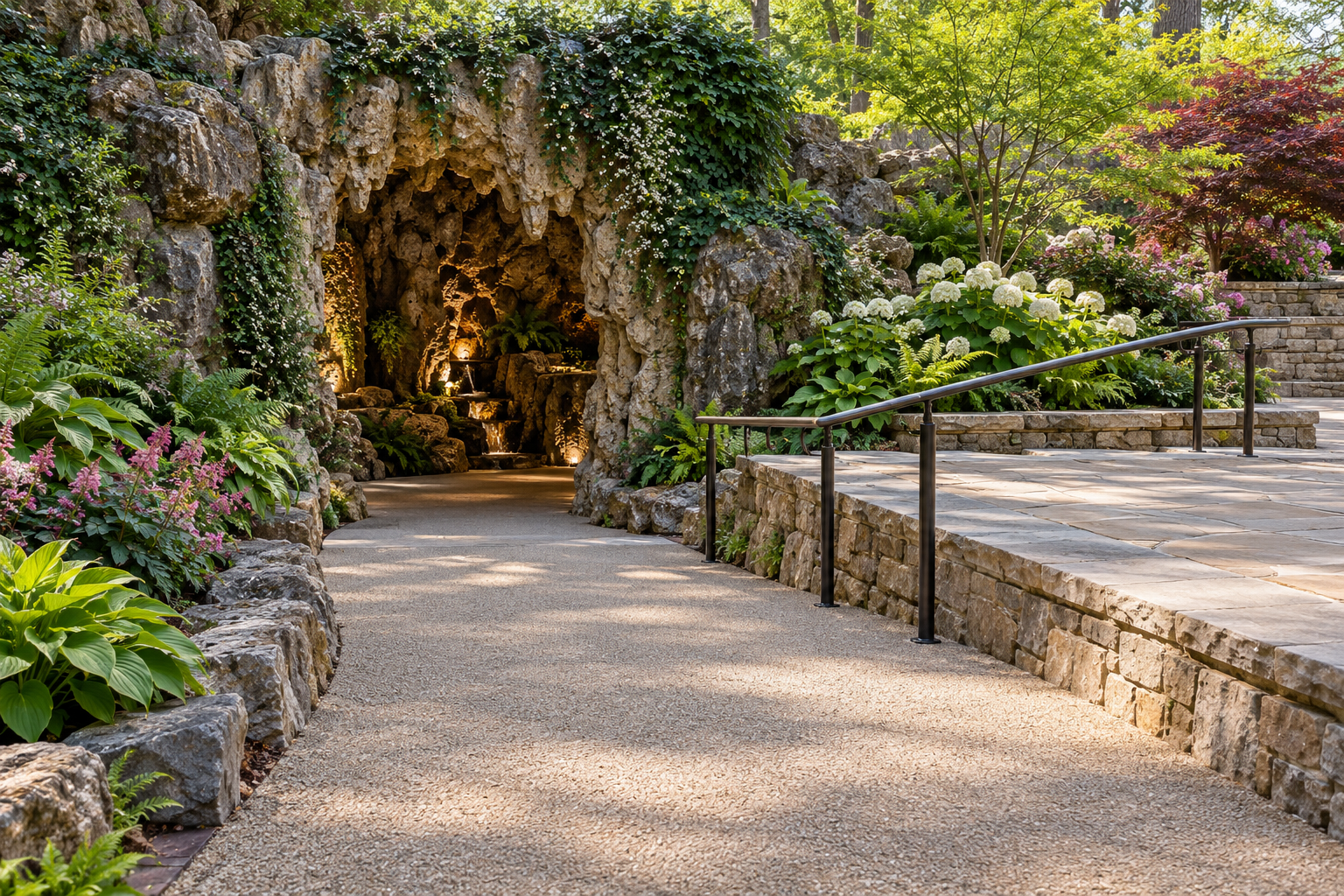
People rarely experience a grotto exactly as its designer imagined. They stop for photographs, follow children, carry bags, look upward, or turn back toward a companion. Visitor Safety & Risk Management begins with that behavior and asks how a setting responds. The subject includes circulation, water boundaries, changing surfaces, lighting, supervision, emergency access, and the responsibilities that continue after opening. A natural cave, a private garden shelter, and a public pool grotto have different conditions and require different assessments. This collection helps readers distinguish those contexts and organize useful questions for qualified professionals and operators. It also examines the value of clear records: inspections, reported concerns, corrective actions, and decisions about temporary closure all contribute to responsible management. Scenic realism should be considered alongside the ability to recognize routes and understand permitted use. The aim is a place whose appeal is supported by thoughtful planning and consistent operation. Good risk management develops with the setting, responding to weather, wear, visitor patterns, and changes in equipment rather than relying on a single review at opening day.
A: Yes. Appearance does not establish safe operation.
A: Context, users, water, and activities differ.
A: Competent professionals appropriate to the specific systems and setting.
A: They connect observations, decisions, and corrective actions.
A: Urgent conditions need prompt restriction and qualified assessment.
A: They are only one part of a suitable management approach.
A: Real behavior can differ from design assumptions.
A: After changes, incidents, unusual conditions, or scheduled review points.
A: Responsibilities, reporting routes, operating limits, and response procedures.
A: No. Site-specific assessment and applicable requirements remain essential.