
Scenic Effects & Projection

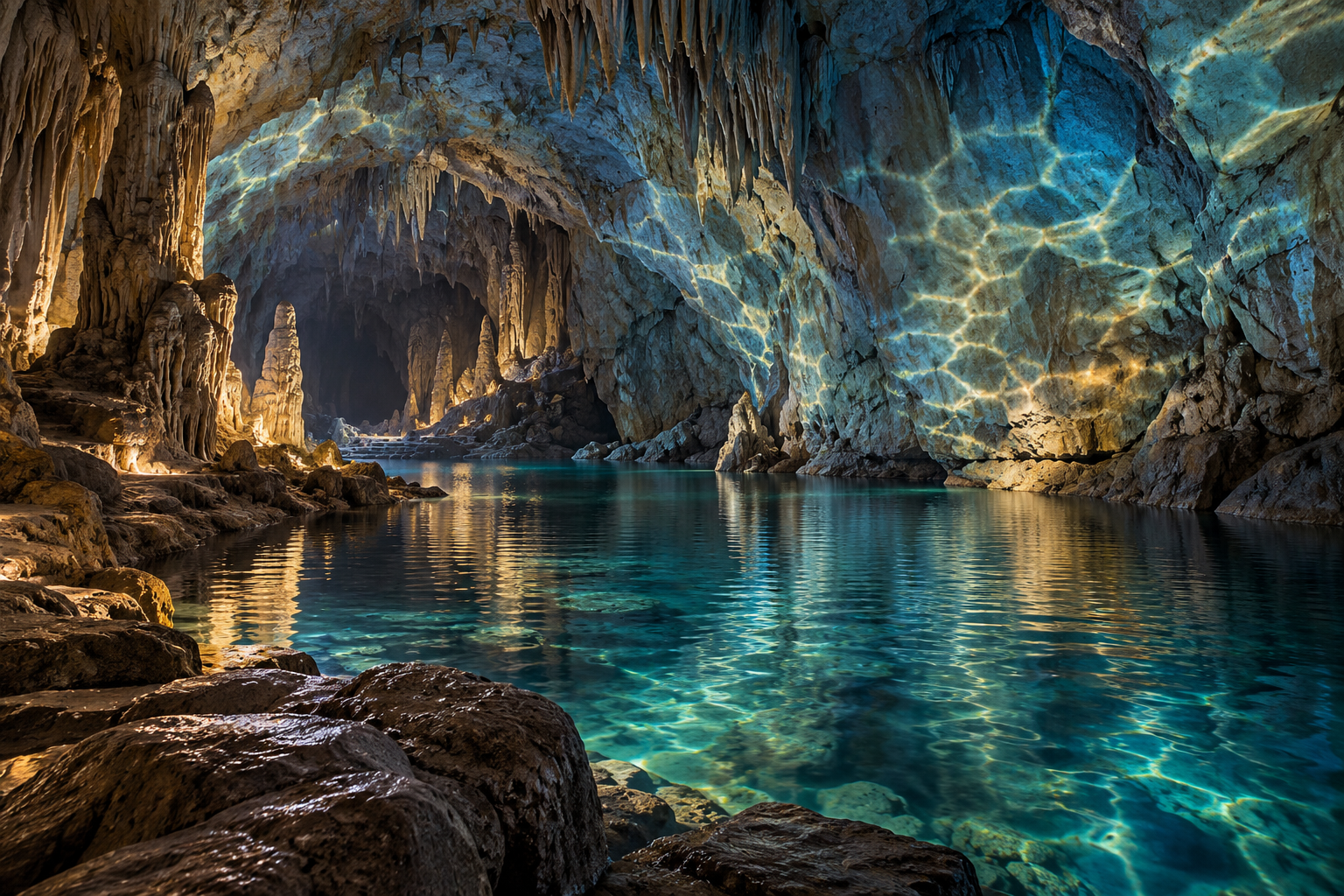
Concept illustration of a themed cavern interior with restrained projected rippling light patterns across broad rock walls, elegant immersive environment

A grotto wall can become a changing scene without physically changing its form. Projected ripples, subtle color transitions, reflected patterns, and chosen atmospheric effects can introduce movement or support a narrative. Scenic Effects & Projection explores that additional layer while keeping the underlying space central. An effect is most useful when it reinforces the rock geometry, the audience’s position, and the reason people are there. Examine projection surfaces, viewing angles, ambient light, control sequences, equipment concealment, and the difference between an environmental accent and a theatrical presentation. The collection also considers the inactive condition, when a projector is off or an effect is unavailable. A convincing grotto should remain coherent beyond a single programmed moment. Designers, venue planners, and curious owners can use these topics to separate creative intent from the work needed to deliver it reliably. Start by describing what the effect contributes to the experience, then assess the surface, light, access, and operating conditions that shape its result. Restraint often gives a moving accent greater impact than continuous competition across every visible surface.

Effect purpose: Define the experience before choosing technology.
Projection surface: Geometry and finish influence the image.
Ambient light: Existing illumination affects visibility.
Viewpoint: The audience position shapes perceived alignment.
Content: Visual material should suit the environment.
Sequence: Timing organizes changing effects.
Concealment: Equipment needs ventilation and service access.
Inactive mode: The space must work without effects.
Controls: Operating logic connects the presentation.
Technical design: Equipment must suit the actual conditions.
Ripple patterns: Subtle movement can suggest reflected water.
Color transitions: Slow change can alter mood.
Mapped content: Imagery can relate to defined surfaces.
Broad planes: Simpler geometry may support clearer projection.
Deep relief: Shadows can interrupt projected images.
Audience movement: Different positions see different distortions.
Moisture exposure: Equipment location requires appropriate assessment.
Sound pairing: Audio and visual effects can reinforce each other.
Maintenance scenes: Practical access differs from visitor presentation.
Fallback scene: A coherent alternative supports downtime.
Surface models: Represent the actual projection geometry.
Content storyboards: Explain intended visual moments.
Equipment data: Review optics and environmental requirements.
Ambient-light tests: Evaluate realistic operating conditions.
Viewpoint studies: Compare audience positions.
Control plans: Document triggers and sequences.
Access layouts: Preserve maintenance and replacement routes.
Sample projections: Test on representative finishes.
Operating guides: Explain routine use and fallback modes.
Version records: Keep current content and settings identifiable.
Narrative economy: Effects should contribute something beyond novelty.
Geometry alignment: Surface changes can alter mapped content.
Contrast limits: Ambient brightness affects the achievable result.
Material response: Color and sheen influence projected appearance.
Audience variability: One ideal viewpoint may not represent all visitors.
Operational resilience: A failed effect should not destroy the setting.
Sensory balance: Continuous motion can compete with rest or conversation.
System coordination: Power, cooling, access, and control need space.
Content maintenance: Digital presentations require version management.
Scenic integrity: The physical environment remains the foundation.
Moving stone: Light can suggest motion on a static wall.
Quiet animation: Small changes may be more evocative than spectacle.
Hidden sources: The audience may see an effect without seeing its equipment.
Surface surprises: Irregular relief can transform simple imagery.
Night advantage: Reduced ambient light changes visual possibilities.
Different views: Projection can appear differently around a corner.
Digital aging: Content may need renewal before the rockwork does.
Fallback beauty: A well-lit physical scene can stand on its own.
Timed reveals: A brief effect can reward attention.
Layered storytelling: Light, sound, and form can communicate together.
Q: Can projection work on any rock surface?
A: Results depend on geometry, finish, light, and equipment.
Q: Does a brighter projector solve every problem?
A: No. Surface and viewing conditions also matter.
Q: Should the grotto work with effects off?
A: Yes. Inactive and maintenance conditions deserve design.
Q: What is projection mapping?
A: Content is arranged to relate to particular surface geometry.
Q: Can moving visitors see distortion?
A: Viewpoint changes can alter the perceived image.
Q: Why test actual materials?
A: Color, sheen, and relief affect projection.
Q: Should equipment be sealed into scenery?
A: It needs appropriate environmental and service arrangements.
Q: Can effects overwhelm a retreat?
A: Excessive movement or sound can conflict with the intended use.
Q: What should a storyboard show?
A: The purpose and sequence of the intended moments.
Q: How should changes be managed?
A: Keep documented versions of content, settings, and operating instructions.