
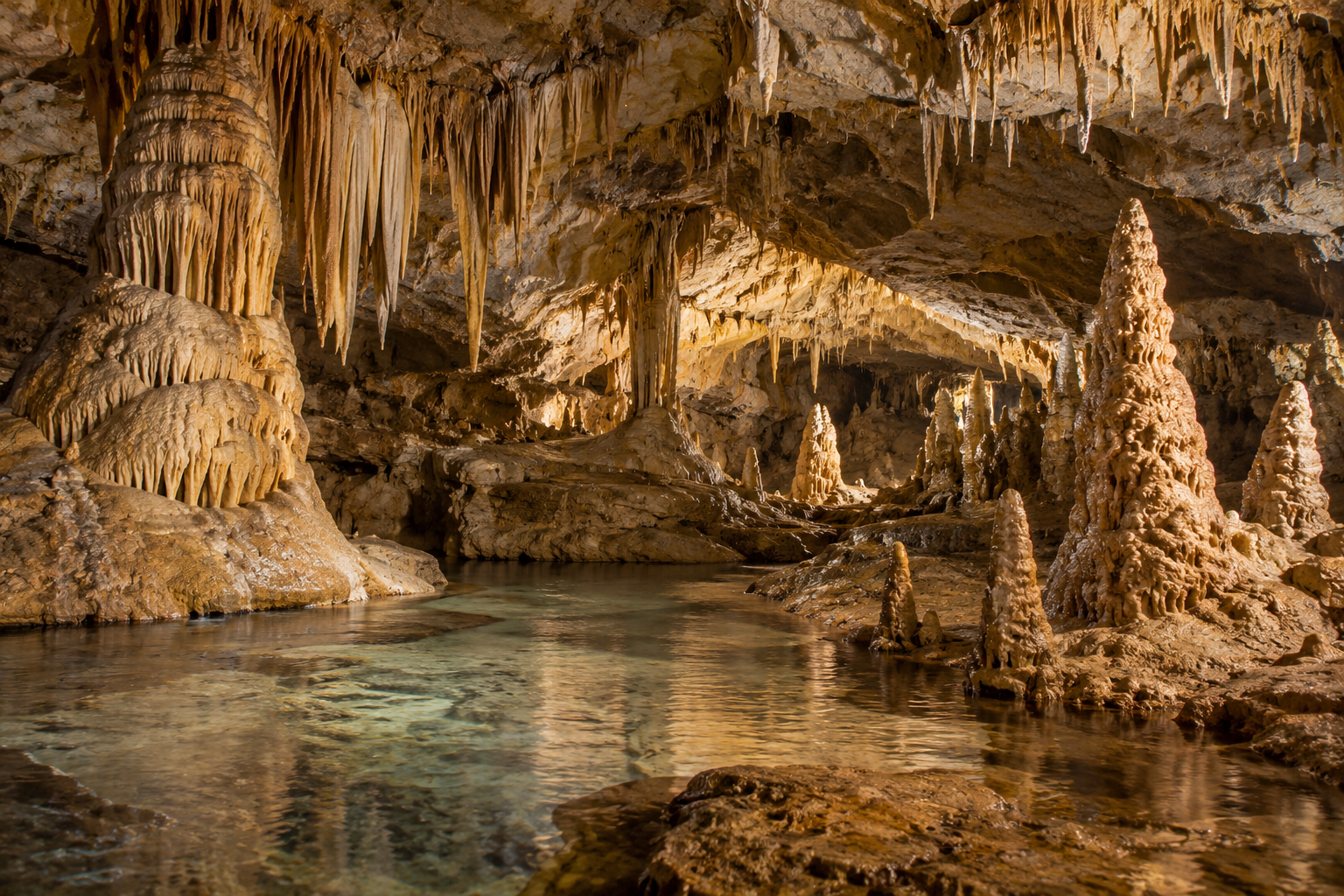
The language of caves describes both what can be seen and the processes that remain hidden. A stalactite names a hanging formation; recharge describes water entering a groundwater system; karst connects surface landforms with the dissolution of soluble rock. The Cave & Karst Glossary brings these ideas together without treating every underground space as the same kind of cave. Begin with passages, chambers, entrances, and formations, then explore the vocabulary of water movement, rock structure, and cave environments. The distinctions matter when reading a landscape description or interpreting a photograph. A mineral deposit is not the cave itself, and an underground stream may be only one visible part of a wider drainage network. This reference is designed for curious readers, students, and people using natural cave forms as design inspiration. It offers concise explanations and comparisons while leaving detailed scientific questions to fuller sources. Learning the terms can sharpen observation, but responsible understanding also recognizes what a picture cannot reveal about a cave’s origin, age, ecology, water connections, or suitability for entry under changing conditions.
A: No. Caves have several origins and host materials.
A: No. One hangs down; the other rises from the floor.
A: It specifically concerns dissolution-related terrain and drainage.
A: The opening and individual deposits can have different histories.
A: Other minerals can occur.
A: Water entering the groundwater system.
A: Underground routes may require separate investigation.
A: No. Access conditions require current qualified guidance.
A: Their primary origin is volcanic flow rather than rock dissolution.
A: They help distinguish visible forms from the processes that created them.