
Seasonal Care & Winterization

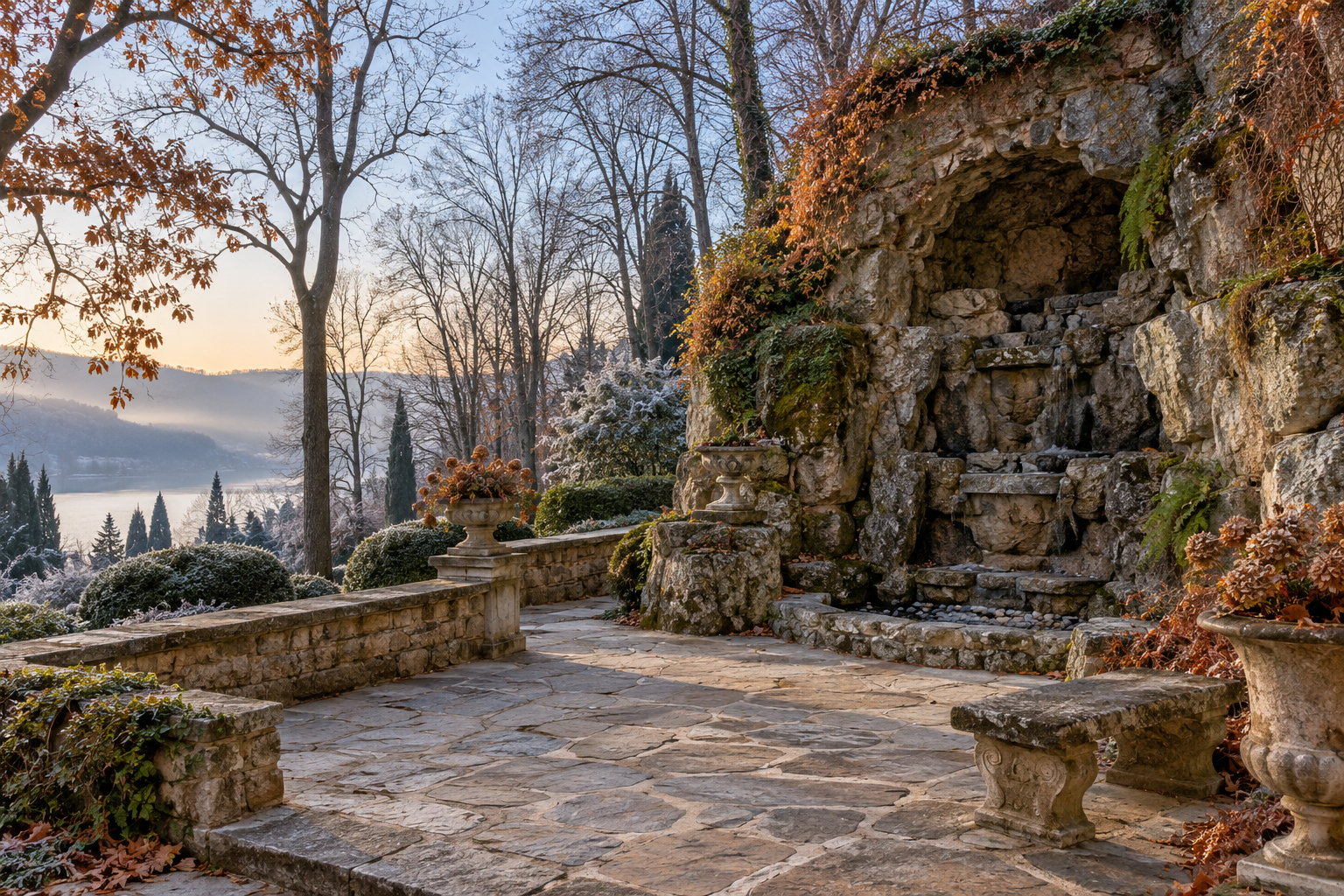
Concept illustration of a quiet garden grotto in late autumn with its small ornamental waterfall turned off, bare trees, carefully cleared dry terrace and a little frost on distant planting

Seasonal change reaches a grotto through more than temperature. Leaves collect in sheltered corners, rainfall changes drainage patterns, daylight shifts, and visitor use may slow or stop. Seasonal Care & Winterization examines how those changes interact with the installed systems and the surrounding landscape. A dry garden alcove, a heated pool grotto, and an ornamental waterfall cannot share one shutdown checklist. Their materials, equipment, climate exposure, and operating plans determine the appropriate work. This collection helps readers organize that information and coordinate qualified service before conditions become difficult. Topics include seasonal inspections, debris management, equipment documentation, closure planning, protective arrangements, and the checks needed before reopening. It also considers what remains active during a closure, such as drainage, monitoring, or systems that require continued operation. Manufacturer instructions and site-specific professional guidance are essential where freezing, water retention, or specialized equipment are involved. The aim is an orderly transition between seasons, with responsibilities and records clear enough that the next opening does not depend on memory, missing notes, or assumptions about what happened during the shutdown.

System inventory: Identify what needs seasonal attention.
Climate exposure: Local conditions shape the plan.
Operating decision: Define closure or continued use.
Equipment guidance: Follow installed-system requirements.
Debris management: Keep relevant routes and drainage maintained.
Closure responsibility: Assign tasks and verification.
Protection strategy: Match measures to materials and equipment.
Monitoring: Closed features may still need checks.
Reopening plan: Define readiness criteria.
Seasonal records: Document completed work and outstanding issues.
Different climates: Winterization needs vary widely.
Retained water: Hidden locations may require specialist attention.
Leaf fall: Debris can accumulate quickly.
Power needs: Some systems may require continued operation.
Storm exposure: Closed features still face weather.
Protective covers: Suitability depends on the feature.
Wildlife use: Quiet spaces may attract animals.
Access restrictions: Closed areas need clear boundaries.
Spring assumptions: Appearance alone does not establish readiness.
Repeated issues: Seasonal records can reveal patterns.
Equipment manuals: Keep model-specific instructions available.
Seasonal task lists: Tailor work to the installed systems.
Drainage records: Identify routes and known problem locations.
Service appointments: Coordinate qualified work before severe conditions.
Closure photographs: Record the condition left behind.
Monitoring schedules: Assign checks during downtime.
Protection specifications: Use suitable materials and arrangements.
Reopening checklists: Confirm systems and visitor areas together.
Issue registers: Carry unresolved concerns into the next season.
Weather observations: Record unusual exposure or events.
Tailored shutdown: Generic advice can miss critical system differences.
Continuity through closure: Responsibility remains even without visitors.
Drainage independence: Turning off a waterfall does not stop rainfall.
Timing coordination: Several trades may need a planned sequence.
Documentation discipline: Record actual work rather than intended tasks.
Reopening as verification: Restarting equipment is only one step.
Material exposure: Seasonal protection should not create new moisture problems.
Operational choices: Year-round use changes maintenance demands.
Learning cycle: Review each season before planning the next.
Access preservation: Service routes must remain usable during closure.
Winter silhouettes: Bare planting reveals hidden rockwork.
Autumn accumulation: Sheltered ledges can collect unexpected debris.
Low sun: Seasonal light exposes different surface details.
Quiet watercourses: A stopped cascade reveals its geometry.
Frost patterns: Exposure varies across one structure.
Spring discoveries: New growth can conceal old access points.
Weather diaries: Unusual events can explain later observations.
Off-season wildlife: Reduced activity changes how spaces are used.
Stored components: Labels and records preserve installation knowledge.
Annual rhythms: Good care develops through repeated seasonal learning.
Q: Does every grotto require winter shutdown?
A: Climate, use, and system design determine the answer.
Q: Can one checklist cover every water feature?
A: Equipment and site conditions require tailored procedures.
Q: Should power always be disconnected?
A: Some systems need continued operation; follow qualified guidance.
Q: Why inspect drainage during closure?
A: Rain and runoff continue even when attractions are off.
Q: Can covers cause problems?
A: Unsuitable protection can trap moisture or interfere with systems.
Q: Who should winterize specialized equipment?
A: Qualified service providers following the installed equipment guidance.
Q: What should closure records include?
A: Condition, completed tasks, remaining systems, responsibilities, and unresolved issues.
Q: Is restarting the pump enough for reopening?
A: The complete feature and visitor areas need appropriate checks.
Q: Why review last year’s notes?
A: Recurring issues can improve the next seasonal plan.
Q: When should planning begin?
A: Early enough to coordinate materials, service, and weather-dependent work.