
Acoustics & Soundscapes

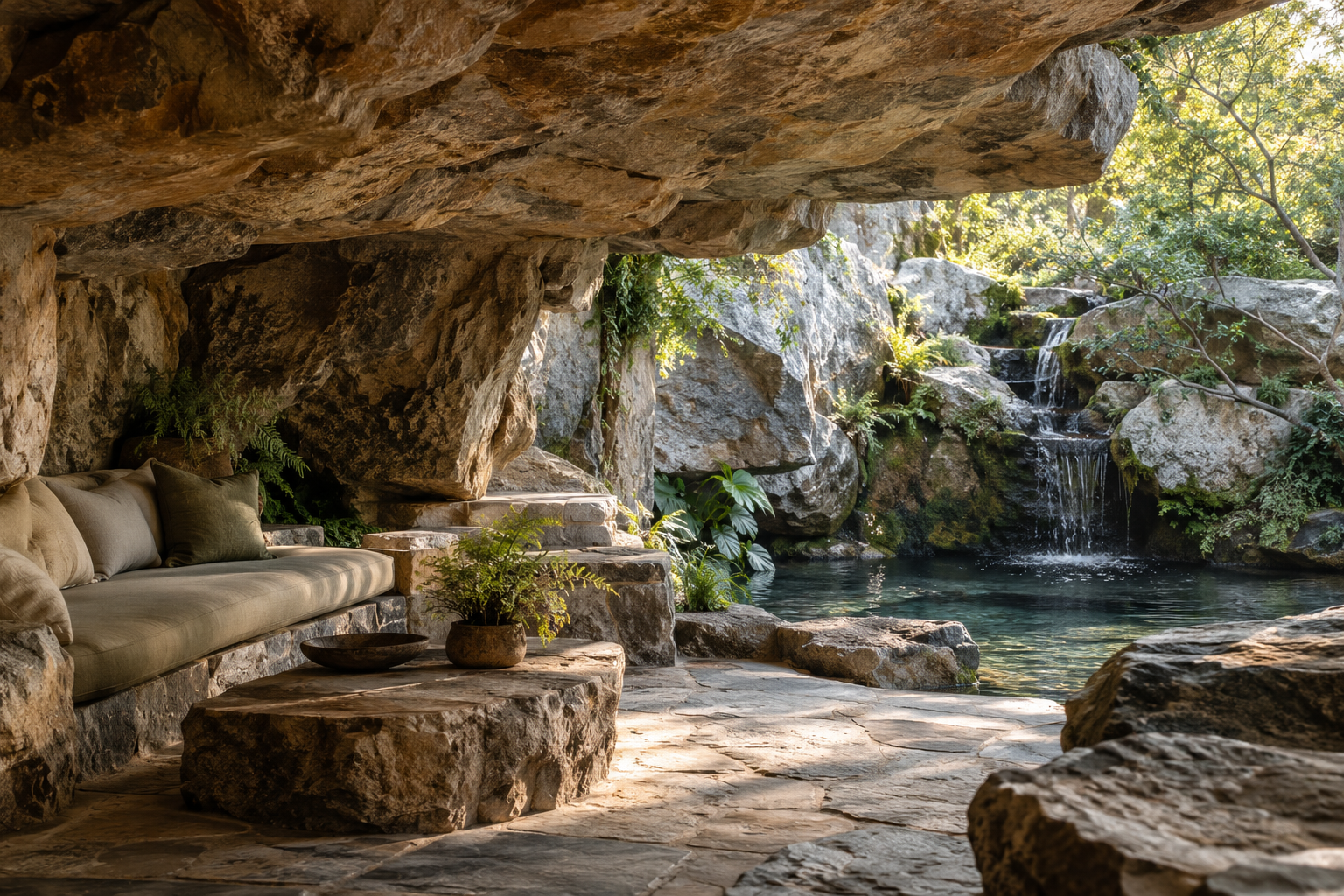
Concept illustration of a quiet grotto seating nook with a small gentle trickle at a distance and broad rock surfaces, atmospheric calm architectural photograph

A waterfall that sounds pleasant from a path can dominate conversation beneath a rock canopy. Hard surfaces, enclosure, distance, and the water’s impact points all influence what people hear. Acoustics & Soundscapes treats the grotto as a listening environment as well as a visual one. Explore the difference between a background trickle and a cascade, the effect of reflected sound, and the quieter places that may be created through layout. The collection also considers equipment noise and sound arriving from neighboring activities. Adding more water is not a universal way to make an unwanted sound disappear; the resulting environment must be evaluated where people actually spend time. Designers and owners can use these topics to describe priorities such as conversation, contemplation, theatrical impact, or separation from a busy pool terrace. Recorded references help communicate character, but a phone recording cannot replace assessment of a proposed space. Begin with the desired listening experience, then coordinate water, surfaces, seating, and machinery so the grotto’s sound supports its purpose through changing levels of activity and different operating modes.

Source: Identify what produces each audible sound.
Listener: Evaluate the actual occupied position.
Reflection: Hard boundaries redirect sound.
Reverberation: Repeated reflections extend the sound field.
Background: Existing site noise forms the starting context.
Water impact: Landing geometry influences sound character.
Equipment: Pumps and ventilation may be audible.
Conversation: Speech needs differ from theatrical effects.
Zoning: Layout can separate louder and quieter areas.
Assessment: Complex acoustic questions require suitable expertise.
Cascade rhythm: Multiple impacts create layered sound.
Single drop: One landing can dominate the scene.
Canopy effect: Cover changes the listening environment.
Distance: Nearby sources can overwhelm subtle sounds.
Quiet pockets: Seating placement can change the experience.
Operating variation: Different pump modes alter the sound.
Neighbor context: Nearby activities influence perceived calm.
Recording limits: Playback does not recreate the entire space.
Surface changes: Finishes affect acoustic behavior.
Use priorities: A dining grotto differs from a dramatic attraction.
Listening notes: Record location and operating conditions.
Sound references: Describe character alongside recordings.
Site observations: Compare busy and quiet periods.
Layout studies: Relate sources to occupied areas.
Acoustic consultation: Assess demanding or sensitive settings.
Equipment data: Review relevant noise information.
Mockup visits: Listen to representative water effects.
Operating scenarios: Include maintenance and reduced modes.
Material information: Understand proposed surface properties.
Review checklist: Evaluate conversation and intended atmosphere.
Masking limits: Added sound does not solve every noise problem.
Geometry interaction: Enclosure changes how sources combine.
Spectral character: Equal loudness does not imply equal experience.
Source control: Equipment placement can matter more than scenic concealment.
Activity conflict: A strong waterfall may undermine quiet occupation.
Spatial choice: Different listening zones can broaden usability.
Time variation: Crowds and operating schedules change the soundscape.
Measurement context: Technical data needs stated methods and conditions.
Sensory balance: Sound should support the visual environment.
Design coordination: Acoustic intent belongs before final rock geometry.
Hidden machinery: An invisible source can dominate the mood.
Soft water: A small trickle can carry a distinct identity.
Rock echoes: Enclosure makes familiar sounds feel different.
Quiet contrast: Silence between effects can be expressive.
Changing seats: Moving a short distance can alter the mix.
Night listening: Reduced background activity reveals new sounds.
Layered falls: Several impacts can create an audible sequence.
Conversation clues: People raising their voices signal competing sound.
Open edges: A partially open canopy sounds unlike a chamber.
Memory: The sound may define a grotto as strongly as its appearance.
Q: Will a waterfall block all outside noise?
A: No. The result depends on sources, levels, geometry, and listener position.
Q: Why listen from the seating?
A: That is where conversation and relaxation occur.
Q: Can hidden pumps still be heard?
A: Yes. Visual concealment does not establish acoustic control.
Q: Are phone recordings sufficient for design?
A: They communicate character but have important limitations.
Q: Does a bigger fall always sound better?
A: No. The intended use determines suitability.
Q: Can layout create quieter areas?
A: Source and seating relationships can help.
Q: Why compare operating modes?
A: Flow and equipment changes alter the soundscape.
Q: Should acoustics be considered early?
A: Yes. Geometry and equipment locations affect options.
Q: When is specialist input useful?
A: For demanding, public, enclosed, or noise-sensitive settings.
Q: What belongs in an acoustic brief?
A: Desired activities, sources, listening positions, and acceptable sound character.
Latest Acoustics & Soundscapes Articles