
Parks & Public Gardens

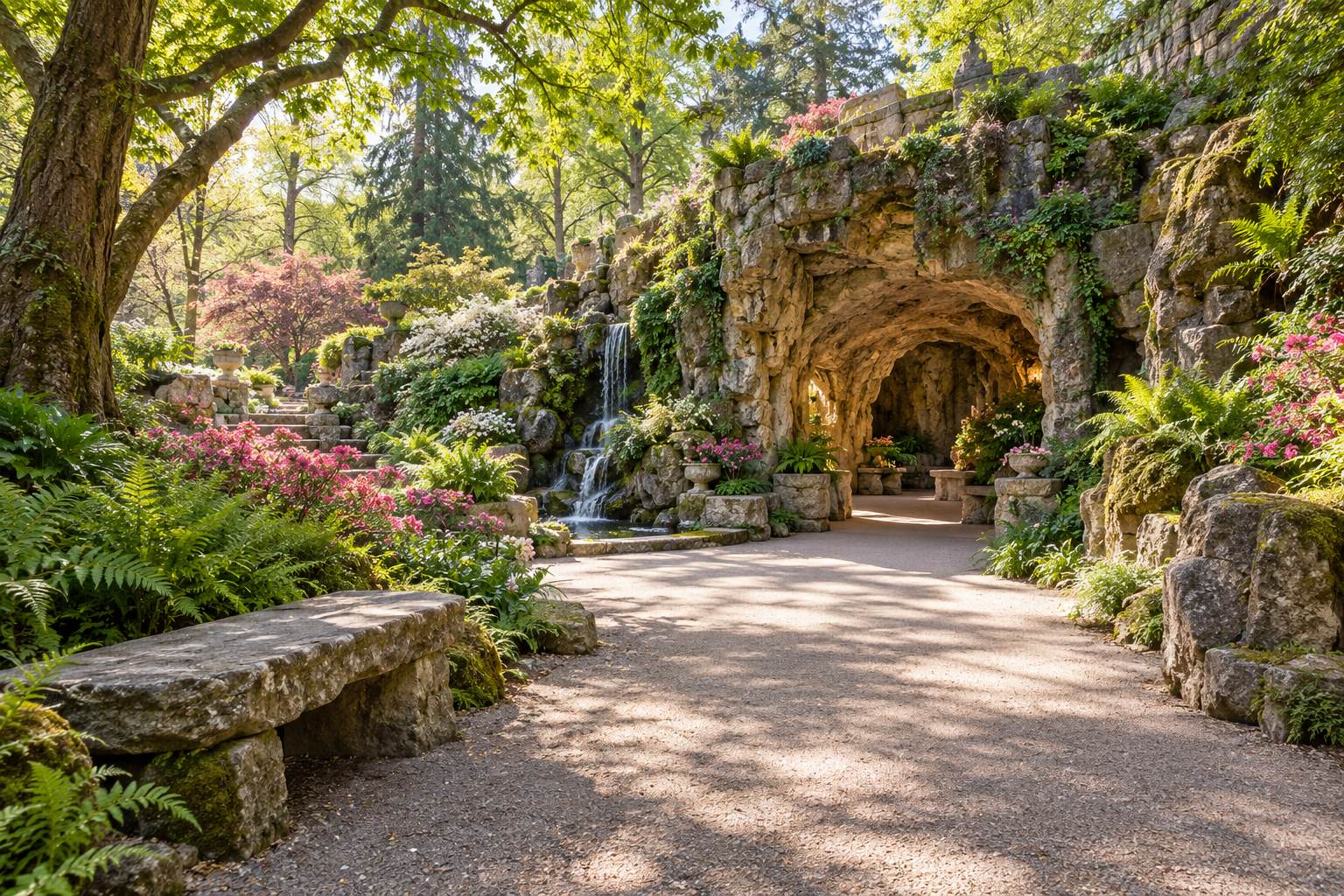
Concept illustration of a peaceful botanical garden grotto with a broad level path, ferns and stone seating, spring flowers and mature trees, daylight

In a public garden, a grotto can offer a pause between open lawns, busy paths, and changing planting displays. Its value may be a cool seat, a framed view, a sheltered conversation, or the pleasure of discovering a quieter corner. Parks & Public Gardens considers these modest experiences alongside larger scenic statements. Explore the placement of grotto features within path networks, the relationship to planting and water, and the way entrances remain inviting through different seasons. Public use brings a varied audience: solitary walkers, families, school groups, older visitors, and people using mobility aids may share the same place. Their routes and resting needs deserve attention alongside visual composition. This collection also looks at stewardship, including cleaning, vegetation growth, drainage, inspection, and the practical limits of available maintenance resources. A garden grotto changes as its surroundings mature. Good planning leaves room for that evolution while preserving the intended view, usable space, and connection to the wider landscape. The result can be a memorable landmark that rewards both a first discovery and return visits over time.

Landscape role: Define the reason for the grotto.
Path connection: Link the feature to existing movement.
Resting space: Seating supports varied visit lengths.
Public welcome: Entrances should communicate intended use.
Seasonal character: Planting and light change over time.
Water relationship: Distinguish ornamental water from visitor routes.
Stewardship: Match complexity to maintenance resources.
Sightlines: Review approaches and surrounding activity.
Garden identity: Materials can connect to local landscape character.
Shared use: Consider diverse visitors together.
Mature planting: Growth can narrow openings and views.
Leaf litter: Seasonal debris affects surfaces and drains.
Group visits: Gathering needs differ from solitary use.
Wet weather: Sheltered areas may attract more visitors.
Summer shade: Its position changes through the day.
Winter views: Bare branches reveal different compositions.
Nearby paths: A shortcut can emerge where routes are unclear.
Furniture comfort: Seat position matters as much as appearance.
Public interpretation: A small feature can support learning.
Maintenance frequency: Real staffing shapes practical choices.
Path surveys: Record approaches and common movements.
Seasonal photographs: Compare views across the year.
Planting schedules: Coordinate growth with access and sightlines.
Seating studies: Review comfort and group arrangements.
Drainage observations: Note water after rainfall.
Maintenance calendars: Align care with seasonal tasks.
Access reviews: Examine the complete route to the feature.
Interpretive sketches: Connect the grotto to garden themes.
Material samples: Compare weathering and repair options.
Visitor feedback: Identify recurring comfort and wayfinding needs.
Pause within movement: A retreat works through its relationship to paths.
Garden succession: Plant growth should enrich rather than overwhelm.
Modest scale: Small shelter can provide substantial public value.
Maintenance honesty: Durable design reflects available care capacity.
Multiple uses: Quiet seating and group interpretation need coordination.
Borrowed scenery: Openings can frame existing landscape assets.
Seasonal resilience: The setting should remain understandable beyond peak bloom.
Inclusive resting: Comfortable stops can extend access to the garden.
Material continuity: Repeated stone can connect separate landscape areas.
Stewardship visibility: Well-kept boundaries help communicate care.
Framed seasons: The same opening can display changing foliage.
Rain acoustics: Shelter alters the sound of weather.
Cooling impressions: Shade and planting change perceived atmosphere.
Discovery routes: A slight turn can create a sense of arrival.
Garden silhouettes: Winter reveals the structure of rock and branches.
Lichen color: Surface character can develop gradually.
Bench viewpoints: Seated eyes discover different compositions.
Quiet landmarks: A small retreat can aid orientation.
Plant shadows: Moving leaves animate fixed stone.
Familiar surprises: Repeated visits reveal subtle seasonal changes.
Q: Does a public grotto need a waterfall?
A: A dry shaded retreat can be equally useful.
Q: Where should it sit in a park?
A: Consider routes, landscape purpose, oversight, and maintenance access.
Q: Why study mature planting?
A: Future growth can change visibility and usable space.
Q: Can the grotto support school groups?
A: Plan gathering and interpretation alongside ordinary visits.
Q: How should seating be arranged?
A: Consider comfort, access, conversation, and the intended view.
Q: What makes an entrance welcoming?
A: Clear routes and legible boundaries help visitors understand access.
Q: Should maintenance resources influence design?
A: Yes. Complexity must be supportable over time.
Q: How can seasonal change enrich the feature?
A: Frame planting, daylight, and views that evolve naturally.
Q: Why review the route beyond the grotto?
A: A usable destination depends on a usable journey.
Q: Can a small garden include a grotto?
A: Scale the shelter and planting to the available space.