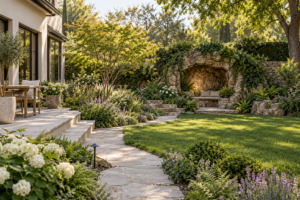
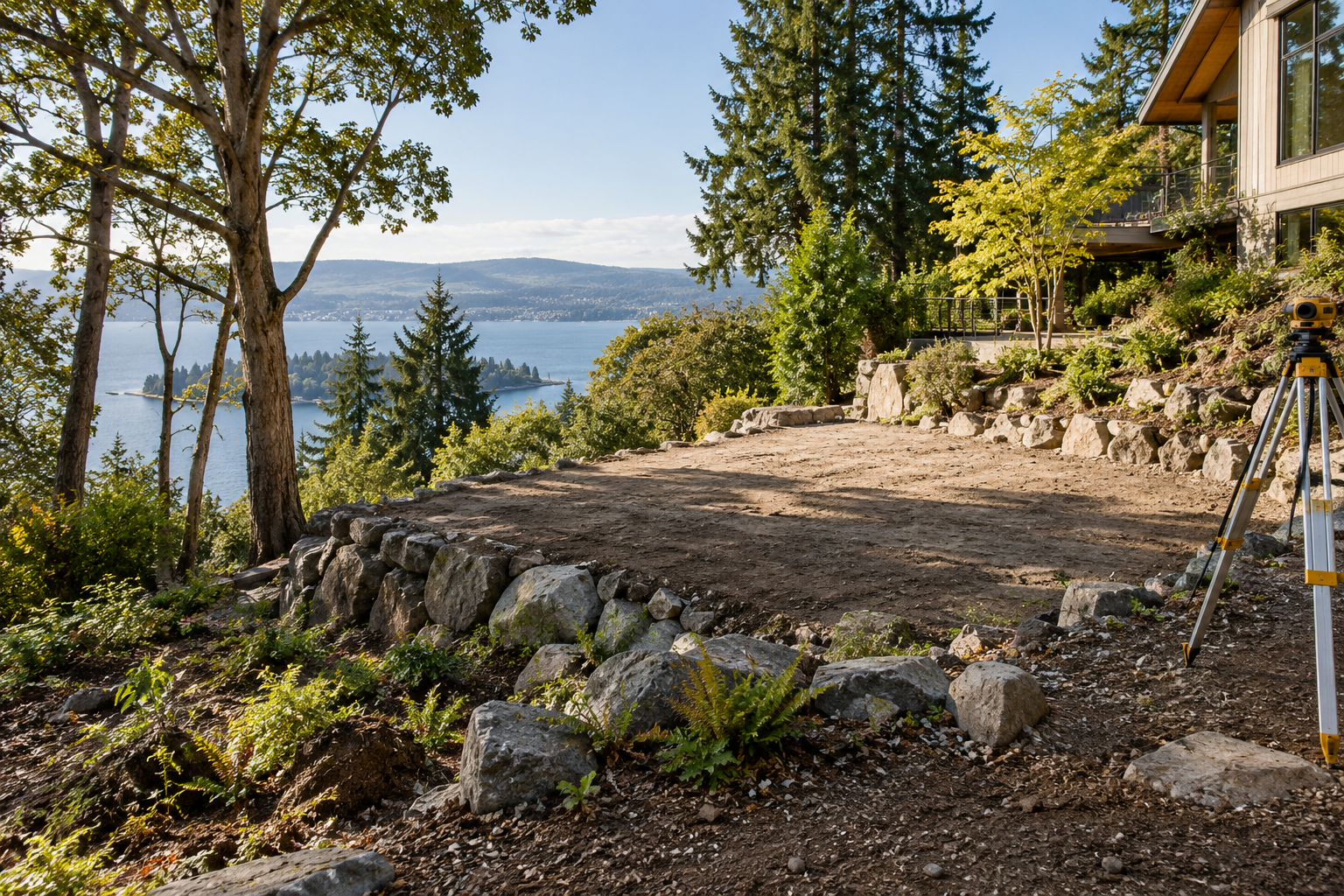
The appealing corner of a garden is not automatically the best place for a grotto. A shaded slope may offer a natural backdrop while complicating drainage, access, or relationships with existing structures. A convenient pool edge may leave too little space for the enclosure and its hidden equipment. Site Selection & Feasibility examines these early tradeoffs before an image becomes a commitment. Explore the information needed to compare locations, from topography and existing utilities to circulation, views, neighboring uses, and construction access. The collection distinguishes observations an owner can gather from questions that require surveys, investigations, or professional design input. It also considers the wider project boundary: space for maintenance, temporary works, planting, and water management can extend beyond the visible grotto footprint. A useful feasibility study does not promise that every constraint can be solved cheaply. It explains what is known, what remains uncertain, and how those uncertainties affect the next decision. Choosing a site becomes a reasoned comparison of possibilities rather than an attempt to force a favorite concept into an unsuitable location.
A: Shade is one factor among access, ground conditions, drainage, and intended use.
A: No. It omits many dimensions and concealed conditions.
A: Alternatives reveal tradeoffs before one concept becomes fixed.
A: Not automatically; it can provide a backdrop while adding complexity.
A: When decisions depend on ground, structural, utility, or other conditions that observations cannot establish.
A: No. Construction, service, and surrounding works also need consideration.
A: Their accuracy and current relevance need appropriate verification.
A: It can reveal water patterns not visible in dry conditions.
A: Opportunities, constraints, assumptions, missing information, and the recommended next steps.
A: Yes. Investigation findings may justify revisiting the initial comparison.